
TL;DR

Get workout gear delivered free with Prime
- Fast, free delivery on millions of items
- Prime Video, Amazon Music and more included
- Member-only deals all year
Yoga teacher Alina Boyett has outlined a short, four-pose recovery flow that can be done at home without equipment or prior yoga experience. The sequence uses gentle movement and breathing to stretch commonly tense areas; its benefits are presented as guidance from the teacher, not as a medically established result.
Fit&Well has published a four-move yoga flow created by Yogalina Studios founder Alina Boyett, who says the gentle, equipment-free sequence is intended to help people slow down and stretch after exercise or long periods of sitting. The routine uses familiar resting poses and does not require previous yoga experience, while Boyett advises moving within a comfortable range and not pushing through pain.
Boyett describes the sequence as a way to give recovery attention alongside workouts. She says the poses target areas that commonly feel tense after activity: the legs, hips, spine and shoulders. Yogalina teacher Misha Clarke demonstrates the four movements in a video accompanying the Fit&Well report. The article presents the sequence as an at-home option and does not describe it as treatment for an injury or medical condition.
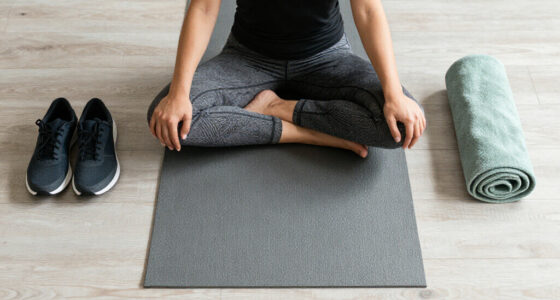
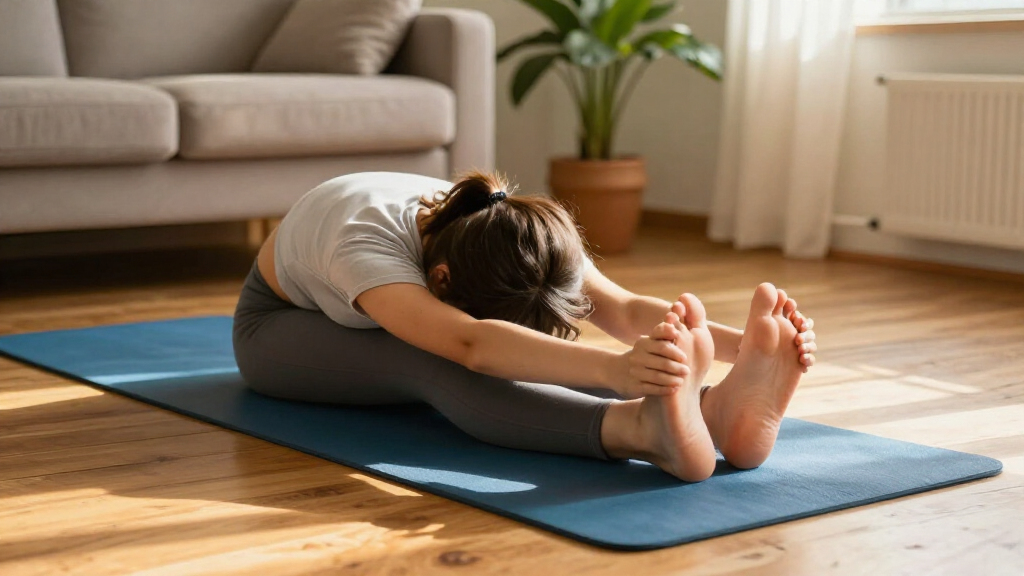
The flow begins with waterfall pose, performed on the back with the legs raised against a wall, held for three to five breaths. It moves to child’s pose for three to five breaths, followed by two rounds of a relaxed standing forward fold, also held for three to five breaths. It ends with seated spinal twists, two rounds of two to three breaths on each side. The instructions allow modifications, including bending the knees and choosing a comfortable seated leg position.
Boyett says the aim is gentle movement rather than advanced stretching. She recommends moving slowly and avoiding any forced stretch. People with an injury or relevant medical condition should seek professional guidance before attempting the sequence, she says. Fit&Well’s report does not provide research findings or measured outcomes for this particular flow.
A Short Routine for Recovery Time
The sequence offers readers a structured, low-equipment option for taking a break from exercise or desk work. Its short holds and straightforward poses may make it approachable to people who are new to yoga, though an individual’s comfort and ability to do each movement will vary. The reporting also foregrounds recovery as part of a broader exercise routine, rather than treating every session as a test of intensity.
That framing matters because the article’s practical value is in its accessible instructions and safety reminders, not evidence that the poses produce a specific health outcome. Boyett’s comments about relaxation, tension and mobility are attributed guidance from a yoga teacher. The source does not establish that this exact flow prevents injury, speeds recovery, or improves flexibility by a quantified amount.
Products Worth Considering

Bowflex PR1000 Home Gym

Therabody Theragun Mini 3rd Generation Massage Gun

Hyperice Hypervolt 3 Percussion Massage Gun with Heated Head and Premium Carry Case
As an affiliate, we earn on qualifying purchases.
How the Four Poses Fit Together
Boyett tells Fit&Well that recovery should be approached with intention and can involve gentle activity rather than doing nothing. She suggests the flow may suit different moments, including after a challenging workout, a run, or a day spent sitting. The sequence moves from a supported position on the floor to a kneeling stretch, then a standing fold and seated rotation.
The movements are described as restorative and gentle, with breath-counted holds instead of timed exertion. For waterfall pose, the wall supports the raised legs; in the forward fold, the knees can stay soft; and the twist should be limited to a comfortable rotation. Those details make the instructions adaptable, but they do not mean every pose is suitable for every person.
Evidence and Individual Suitability
The Fit&Well report does not state when the article was published, cite research testing this specific four-pose routine, or quantify any effects on flexibility, soreness or recovery. It is also not clear whether all readers will find the poses comfortable. Boyett advises people with injuries or relevant medical conditions to consult an appropriate professional, and the article does not offer individualized medical advice.
Try the Sequence With Care
The report provides step-by-step directions and a demonstration video, but does not announce a follow-up study, program or additional assessment of results. Readers choosing to try the flow can follow the stated breath counts, use the suggested modifications and stop if a movement causes pain. Anyone with an injury or relevant medical condition should seek professional guidance before beginning.
Key Questions
What is the yoga flow?
It is a four-pose routine shared by Yogalina Studios founder Alina Boyett and published by Fit&Well. It includes waterfall pose, child’s pose, a relaxed forward fold and seated spinal twists.
Does the routine require equipment or yoga experience?
Boyett presents it as suitable for home practice without specialist equipment or previous yoga experience. Waterfall pose uses a wall for support, and the instructions suggest simple adjustments such as bending the knees.
How long should each pose be held?
The instructions call for three to five breaths in waterfall pose and child’s pose, and two rounds of three to five breaths in the forward fold. The seated twist is held for two to three breaths on each side, for two rounds.
Is the flow proven to improve flexibility or speed recovery?
The Fit&Well report does not provide research or measured results for this particular sequence. Claims about stretching and relaxation are attributed to Boyett and should not be read as proof of a specific medical or fitness outcome.
Who should seek advice before trying it?
Boyett advises people with an injury or relevant medical condition to seek appropriate professional guidance. She also says not to force stretches or push through pain.
Source: fitandwell.com