
TL;DR

Get workout gear delivered free with Prime
- Fast, free delivery on millions of items
- Prime Video, Amazon Music and more included
- Member-only deals all year
Researchers reported that the AI-powered Sperm Tracking and Recovery system detected sperm in 26% of samples from 175 men previously classified as sperm-negative by manual examination. The team said sperm recovered with STAR has been used in cases resulting in at least three live births; the findings are early, and the tool requires specialist technicians.
Researchers reported that the AI-powered Sperm Tracking and Recovery system, or STAR, found sperm in samples from some men whose semen had previously been classified as sperm-negative by manual examination. In a group of 175 men with azoospermia, STAR detected at least one sperm in 26% of samples, and the researchers said sperm recovered with the tool has been used in cases resulting in at least three live births. The findings, presented at the American Society for Reproductive Medicine annual meeting, suggest the system could identify sperm that conventional examination misses, but do not establish how often it will help patients in routine care.
In a controlled test, the researchers added 40 sperm to each azoospermia sample, divided each sample between STAR and an expert examiner, and gave each 60 minutes to search. The procedure was repeated 10 times. STAR detected sperm in all 10 tests, while the clinician found sperm in three. Across those tests, the system detected 167 sperm, compared with four found by manual examination. The 41-fold difference applies to this specific spiked-sample experiment, not to patient outcomes.
The researchers also reported results from 175 consecutive patients, all of whom had been deemed sperm-negative through manual examination before STAR analysis. STAR detected at least one sperm in 26% of their samples; the team said at least five sperm were found in 22% and at least 10 in 19%. Among patients who had undergone testicular sperm extraction but were still classified as sperm-negative, STAR detected sperm in 29% of samples.
Hemant Suryawanshi, PhD, of Columbia University Fertility Center, and colleagues said sperm found with STAR has been used for intracytoplasmic sperm injection (ICSI) or cryopreservation in cases leading to at least three live births. One reported case involved sperm found in the ejaculate of a man who had undergone testicular extraction twice. The couple, who had a 19-year history of infertility, had a live birth in December 2025, according to the report. The team said two other births occurred in July 2026 and October 2026.
A Possible Route Beyond Surgery
Azoospermia means sperm are not detected in a semen sample, but the researchers’ results suggest that, for some men, this may reflect how difficult sperm are to find rather than a complete absence. That distinction could matter to couples seeking a biological child, particularly when standard laboratory examination finds no sperm and surgical retrieval is being considered.
The researchers said the usual next step in such cases may be testicular sperm extraction, including microsurgical extraction. These procedures involve surgically retrieving sperm from the testes and can fail, according to the source report. STAR is being studied as a way to search semen samples for very rare sperm. The reported births show that sperm found this way has been used in fertility treatment, but they do not establish the tool’s overall success rate or show that it can replace surgery.
Products Worth Considering

Blueair Blue Pure 511i Max Air Purifier for Home and Bedroom

Fitbit Sense Advanced Smartwatch – Sage Grey/Silver (One Size, S & L Bands Included)

Oral-B iO5 Rechargeable Electric Toothbrush with 3 Brush Heads and Travel Case, Black
As an affiliate, we earn on qualifying purchases.
How STAR Searches Samples
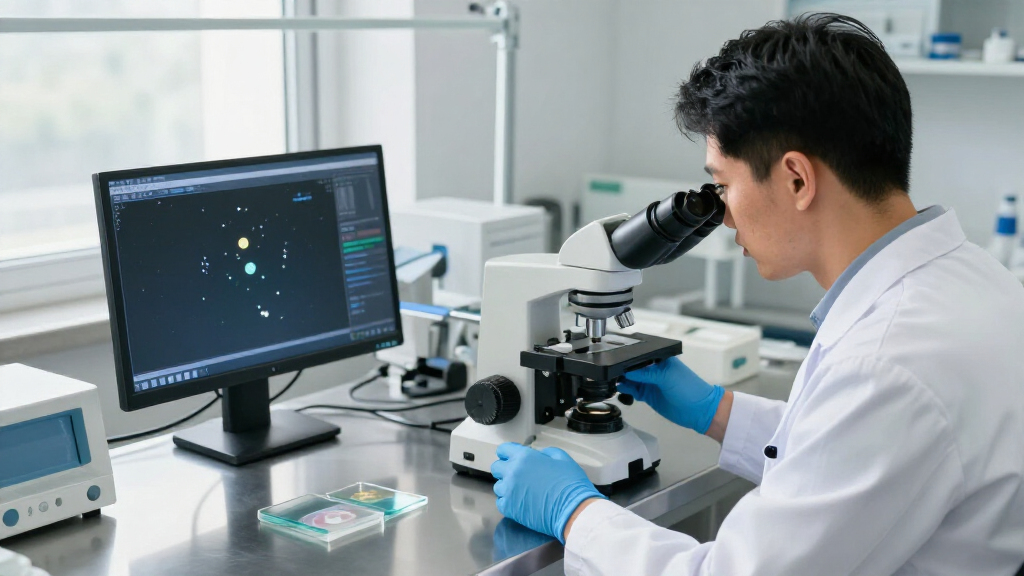
STAR combines high-speed imaging, real-time AI and microfluidic technology. The system takes and assesses about two million images, then isolates sperm identified by its software into a small volume for possible use. The project addresses a detection challenge in azoospermia, which the researchers said affects about 10% to 15% of infertile men. Male factors contribute to about half of infertility cases, according to the report.
The researchers presented both a controlled comparison using samples seeded with a known number of sperm and observations from patients referred for testing. These provide different kinds of evidence: the spiked-sample test compares STAR with manual searching under set conditions, while the patient series reports how often the system detected sperm in a selected group already considered sperm-negative. Neither result alone establishes performance across all laboratories or patients.
“A substantial number of these patients have rare sperm, and the limitation is not the biological absence of sperm for these cases, it’s actually our lack of ability to detect the sperm.”
— Hemant Suryawanshi, PhD, speaking to MedPage Today
Questions About Routine Use
The report does not establish STAR’s sensitivity, specificity or false-positive rate across a broad, independently tested patient population. The 175-patient results came from people referred for analysis after manual examination had found no sperm; the findings may not apply to every person with azoospermia. It is also unclear how many patients in that group proceeded to treatment or what proportion achieved pregnancy or live birth.
Suryawanshi identified usability as a limitation: STAR currently requires a highly trained technician. The source does not provide comparative costs, availability across clinics, or evidence that the system improves outcomes compared with existing care. The reported live births are important cases, but they do not by themselves show how likely a patient is to benefit.
Making the System Easier to Use
Suryawanshi said his team is working on a simpler version of STAR, while other groups are developing similar tools. Further evaluation would need to clarify how reliably the system detects sperm in varied clinical samples, how findings guide treatment, and whether results can be reproduced by teams beyond the developers. Until more evidence and practical details are available, patients should discuss test results and treatment options with a fertility specialist rather than treating STAR as a proven substitute for established procedures.
Key Questions
What is STAR?
STAR is an experimental sperm-detection system combining high-speed imaging, artificial intelligence and microfluidics. It scans images and isolates sperm identified by the software into a small volume.
How often did STAR find sperm in the patient group?
Researchers reported that STAR detected at least one sperm in 26% of samples from 175 men whose samples had previously been classified as sperm-negative by manual examination. This result applies to the reported group, not all men with azoospermia.
Has STAR led to live births?
The researchers reported at least three live births in which sperm recovered with STAR was used for ICSI or cryopreservation. The report does not give an overall live-birth rate for patients tested with the system.
Can STAR replace testicular sperm extraction?
The findings do not show that STAR can replace testicular sperm extraction. The system searches semen samples for rare sperm, and its performance and role in routine care require further study.
Source: rss