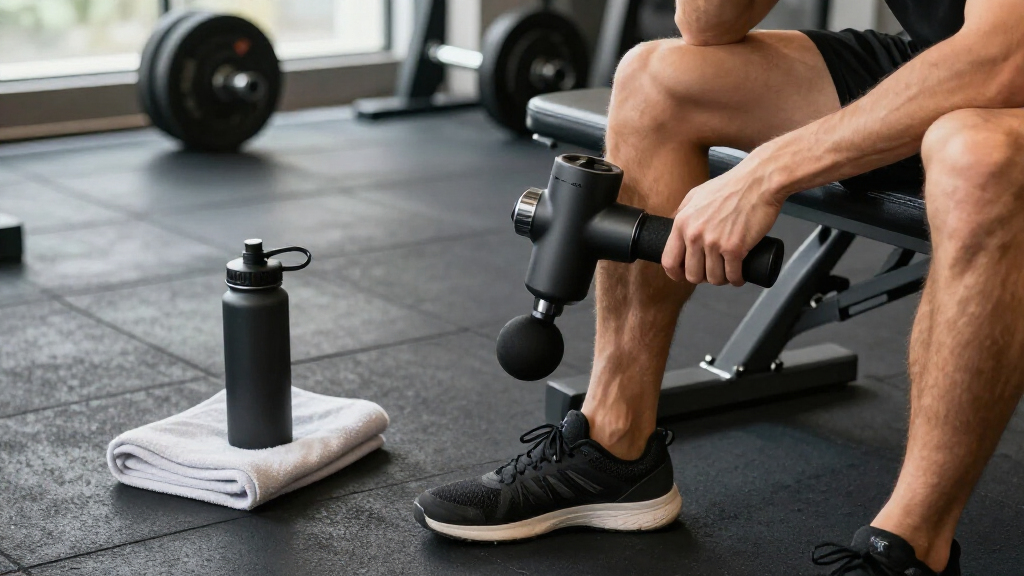
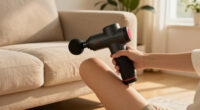
For most people seeking massage guns for muscle recovery, I’d start with the TheraGun Therabody Relief as the best overall option, while the Bob and Brad C2 stands out for practical everyday use and the TheraGun Mini 3rd Gen for portability. The main tradeoff is between a full-size gun’s reach and versatility and a compact model’s easier handling and storage. Heat and cold attachments add another recovery approach, but they can bring extra complexity and won’t suit every routine. I compare all 15 options by their recovery-focused features, usability, and tradeoffs below. Continue reading for the full breakdown and guidance on matching a massage gun to your needs.

Get workout gear delivered free with Prime
- Fast, free delivery on millions of items
- Prime Video, Amazon Music and more included
- Member-only deals all year
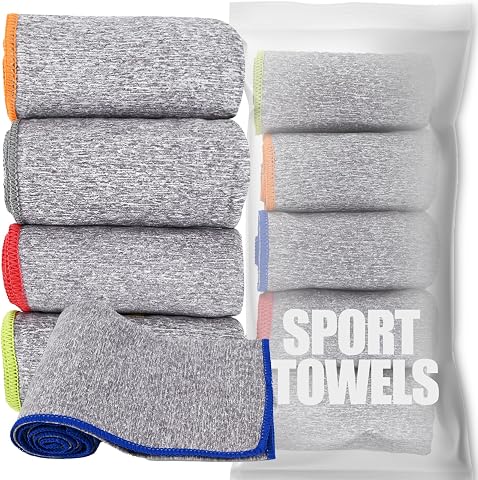
Complete the kit


Key Takeaways
- The lineup divides into three clear groups: full-size percussion guns for broader home use, mini models for portability, and heat-or-cold options for buyers seeking temperature features.
- The Therabody Relief is my best overall pick because it offers a straightforward recovery-focused choice without making heat, cold, or app features the main reason to buy.
- Bob and Brad C2 and Mebak 3 are practical alternatives for shoppers who want a traditional full-size format; compare their handling and included heads rather than choosing by head count alone.
- TheraGun Mini 3rd Gen and Bob and Brad Q2 Mini prioritize carry size, while their compact design can make them less suitable as a single tool for reaching every muscle group.
- Heat-and-cold models add a distinct feature, not a guaranteed recovery upgrade: RENPHO Active Thermacool 2, AERLANG, and the heat-focused picks make most sense when temperature control is a feature you expect to use.


More Details on Our Top Picks
Bob and Brad C2 Massage Gun, Deep Tissue Percussion Massager with 5 Speeds and 5 Heads, FSA/HSA Eligible
The Bob and Brad C2 is my balanced pick for people who want recovery-focused percussion without moving to a heavier, more forceful device. Its 45-pound stall force and five speeds, spanning 2,000 to 3,200 RPM, give it more room to adjust pressure than the gentle Theragun Relief, while its 1.5-pound body stays manageable for shorter sessions. Quiet operation and USB-C fast charging also suit regular home use or trips to the gym. The tradeoff is a 10-minute auto shut-off, which can interrupt longer routines, and five heads offer fewer attachment choices than the Mebak 3 or TOLOCO. I’d choose the C2 for a practical mix of power, portability, and simple charging; buyers seeking the broadest attachment selection should compare those alternatives.
Pros:- Five speed settings cover a useful range from 2,000 to 3,200 RPM.
- 45-pound stall force supports firmer pressure than the gentler Theragun Relief.
- At 1.5 pounds, it is easier to handle and carry than the Mebak 3 with its case.
- USB-C 15W PD charging and a stated 1.5–2-hour charge time make routine charging convenient.
Cons:- The 10-minute auto shut-off may interrupt longer recovery sessions.
- Five included heads provide fewer attachment options than the seven-head Mebak 3 or ten-head TOLOCO.
- Battery runtime is not specified in the supplied product details.
Best for: People who want a lightweight, quiet massage gun with adjustable pressure for routine post-workout recovery and home use.
Not ideal for: Buyers who want many attachment shapes or uninterrupted sessions longer than 10 minutes; the TOLOCO and Mebak 3 offer more heads, while the C2 shuts off automatically.
- Speed settings:5
- Speed range:2,000–3,200 RPM
- Stall force:45 lb
- Weight:1.5 lb
- Massage heads:5
- Noise level:As low as 40 dB
- Charging:USB-C, 15W PD; full charge in 1.5–2 hours
- Auto shut-off:10 minutes
Our verdict“Choose the C2 if you want a quiet, portable everyday recovery gun with more force than a gentle model and fewer extras to manage.”
TOLOCO Deep Tissue Percussion Massage Gun with 10 Heads, Quiet Electric Massager for Athletes and Relaxation
The TOLOCO makes the most sense for buyers who want to experiment with different contact shapes rather than keep their recovery routine to a few standard attachments. Its 10 massage heads and seven speed levels offer more ways to tailor a session than the five-head Bob and Brad C2, and the listed 2,200–3,300 RPM range covers light-to-firmer percussion. A sub-40-decibel noise claim and non-slip handle also suit shared spaces or quick use after training. The compromise is uncertainty: the supplied details give no battery runtime or durability information, so it is harder to judge how reliably it will support frequent recovery sessions. It may also feel heavy during prolonged use. I’d pick it over the C2 for head selection, but not if documented battery performance is a priority.
Pros:- Ten interchangeable heads provide more attachment choice than the Bob and Brad C2.
- Seven speed levels allow finer adjustments than the C2’s five settings.
- Listed noise level is below 40 dB, suitable for quieter indoor use.
- Non-slip handle and portable design support use at home, at the gym, or on the go.
Cons:- Battery life is not specified, making it difficult to plan charging around regular use or travel.
- The supplied details do not state warranty or durability information.
- May feel heavy during extended use.
Best for: Athletes and home users who want several attachment shapes for targeting different muscle areas and prefer multiple speed choices.
Not ideal for: Frequent travelers or people planning long sessions who need known battery runtime or a particularly light device; those details are not provided, and prolonged handling may feel tiring.
- Speed levels:7
- Speed range:2,200–3,300 RPM
- Massage heads:10
- Noise level:Less than 40 dB
- Battery:Rechargeable; runtime not specified
- Charging:USB charger
- Handle:Non-slip
- Design:Portable
Our verdict“Choose the TOLOCO if attachment variety matters more to you than confirmed battery runtime or a particularly light feel.”
TheraGun Therabody Relief Massage Gun
The Theragun Relief is the gentlest choice here, aimed at people who want soothing percussion for everyday comfort rather than a forceful post-training treatment. Its three speeds, one-button control, and lightweight triangle grip keep operation straightforward, while the dampener, standard ball, and thumb attachments cover several common contact styles. Compared with the Bob and Brad C2, the Relief gives up speed range and stronger deep-tissue emphasis in favor of a simpler, softer approach. That makes it a better fit for cautious beginners or people who find intense percussion uncomfortable, but a poor match for buyers seeking high-force muscle work. Its quiet motor is useful in shared spaces; the tradeoff is limited adjustment, with only three speeds specified.
Pros:- Gentle massage approach suits users who find forceful percussion uncomfortable.
- One-button control and three speeds keep operation simple for beginners.
- Triangle grip and lightweight design support comfortable handling.
- Three attachments offer distinct options for broad or more focused contact.
Cons:- Its gentle focus may not satisfy buyers seeking deep-tissue muscle work.
- Three speed options provide less adjustment than the five-speed Bob and Brad C2.
- The supplied details do not state battery capacity, runtime, or charging method.
Best for: Massage-gun newcomers and people seeking gentle, easy-to-control percussion for everyday muscle comfort or sensitive areas.
Not ideal for: Athletes and users who specifically want firm deep-tissue pressure or many intensity steps; the Bob and Brad C2 offers five speeds and a stated 45-pound stall force.
- Speed options:3
- Attachments:Dampener, Standard Ball, Thumb
- Control:One-button
- Motor:Whisper-quiet
- Design:Lightweight with triangle grip
- FDA registration:Registered
Our verdict“Choose the Theragun Relief for simple, gentle recovery sessions, not for the stronger percussion available from the Bob and Brad C2.”
Mebak 3 Deep Tissue Massage Gun – Muscle Massager for Athletes and Pain Relief
For buyers prioritizing pressure and attachment choice, the Mebak 3 has the strongest specified stall force in this group: 53 pounds, paired with 12 mm amplitude. That combination makes it a more compelling option for firmer muscle work than the Bob and Brad C2, whose stall force is 45 pounds, while seven heads give it more targeting options than the C2’s five. Five speed levels span 950 to 3,000 RPM, including a lower starting speed for a more measured approach. The tradeoffs are practical: the supplied details do not give battery life, and the recommended 5V/2A adapter is not included. At 1.68 pounds before the case, it is also heavier than the C2. I’d favor it for pressure and versatility, not for the simplest travel setup.
Pros:- 53-pound stall force is higher than the Bob and Brad C2’s stated 45 pounds.
- 12 mm amplitude and seven heads support firm, varied muscle targeting.
- Five speeds start at 950 RPM, offering a lower listed setting than the C2.
- Carrying case makes transport and storage more organized.
Cons:- Recommended 5V/2A power adapter is not included.
- Battery life is not specified in the supplied product details.
- At 1.68 pounds before the case, it is heavier than the Bob and Brad C2 for extended handling.
Best for: Athletes and fitness enthusiasts who want stronger specified stall force, several attachment choices, and a carrying case for recovery at home or the gym.
Not ideal for: Buyers who need confirmed battery runtime, an included power adapter, or the lightest option for frequent travel; the Bob and Brad C2 is lighter and has stated fast-charging details.
- Amplitude:12 mm
- Stall force:53 lb
- Speed levels:5
- Speed range:950–3,000 RPM
- Weight:1.68 lb (3.08 lb with case)
- Massage heads:7
- Noise level:39–50 dB
- Recommended adapter:5V/2A; not included
Our verdict“Choose the Mebak 3 if stronger specified pressure and seven attachments matter more than low weight or a complete charging setup.”
Bob and Brad Q2 Mini Massage Gun
The Bob and Brad Q2 Mini is the clearest choice when portability matters more than full-size percussion. At 0.95 pounds and 5.7 inches long, it is much easier to pack and handle than the 1.5-pound Bob and Brad C2, with five speeds and USB-C charging for convenient use away from home. Its 35-pound stall force gives it a meaningful recovery role, but the 7 mm amplitude is shorter than the Mebak 3’s 12 mm, so buyers seeking deeper-feeling, firmer treatment may prefer the larger model. The compact body also has less room for extended use, and battery life may require more frequent charging with regular sessions. I’d choose the Q2 for travel and desk breaks, not as the first pick for demanding post-workout muscle work.
Pros:- At 0.95 pounds and 5.7 inches, it is easier to pack than the Bob and Brad C2.
- Five speeds from 1,800 to 3,000 RPM provide several session settings.
- USB-C charging supports convenient everyday and travel use.
- Noise below 40 dB suits quiet settings such as an office or shared home.
Cons:- 7 mm amplitude may feel less deep than the Mebak 3’s 12 mm amplitude.
- 35-pound stall force is lower than the C2’s 45 pounds and Mebak 3’s 53 pounds.
- Battery life may require more frequent charging with regular use.
Best for: Travelers, desk workers, and gym-goers who want a small massage gun for brief recovery sessions and quick muscle breaks.
Not ideal for: People seeking longer, high-force recovery sessions or deeper percussion; the Mebak 3 has 12 mm amplitude and a higher stated stall force.
- Amplitude:7 mm
- Stall force:35 lb
- Speeds:5
- Speed range:1,800–3,000 RPM
- Battery capacity:2,500 mAh
- Charging:USB-C; supports 15W PD
- Auto shut-off:10 minutes
- Weight and length:0.95 lb; 5.7 in
Our verdict“Choose the Q2 Mini when packability and light handling matter most, and pick the Mebak 3 or C2 for stronger recovery work.”
RENPHO Active+ Massage Gun with App Control and Guided Courses
The RENPHO Active+ makes the most sense for people who want direction as well as percussion: its app offers guided video courses for targeting muscle groups, while five speeds and five heads allow adjustments for different areas. Compared with the Medcursor, it has less listed battery runtime—up to three hours versus 4.5—but includes app-based instruction that the Medcursor does not specify. Its 45-pound force rating and 10mm amplitude suggest a strong, relatively compact stroke for routine post-workout work, though those figures alone do not establish how it will feel on every muscle. USB-C charging takes 1.5 hours, a useful advantage over the six-hour charge listed for the heated Massage Gun with Heat and Deep Tissue Massage. The tradeoff is that app guidance depends on a smartphone, and noise details are not provided.
Pros:- App-guided video courses provide direction for targeting muscle groups.
- Five speeds and five attachments allow adjustments for different areas.
- USB-C charging is listed as taking 1.5 hours to reach a full charge.
- Up to three hours of battery life supports repeated recovery sessions.
Cons:- App features require a smartphone.
- Noise level is not specified, making quiet-use suitability harder to judge.
- Its listed battery runtime is shorter than the Medcursor’s up to 4.5 hours.
Best for: People new to percussion massage who want app-guided routines for specific muscle groups and a portable device for home or travel.
Not ideal for: Buyers who want to use guided features without a smartphone, need stated noise specifications, or prioritize the longest listed battery runtime.
- Force:45 lbs
- Amplitude:10 mm
- Speed range:1800–2800 RPM
- Battery life:Up to 3 hours
- Charging:USB-C; 1.5 hours to full charge
- Attachments:5 massage heads
- Controls:One button; 5 adjustable intensities
Our verdict“Choose the RENPHO Active+ if guided muscle routines matter more to you than the Medcursor’s longer stated runtime.”
Medcursor Massage Gun – Handheld Percussion Deep Tissue Massager with 6 Heads, High Intensity Brushless Motor, Quiet Operation, Long Battery Life, Portable
The Medcursor stands out in this group for its stated combination of up to 4.5 hours of battery life, a 1.5-pound body, and a 35 dB noise rating. That makes it a practical choice for someone who wants to keep a massage gun in a gym bag or use it without much disruption at home. Its five speed levels span 1200–3200 RPM, while six heads give it more attachment options than the RENPHO Active+, which lists five. The Medcursor does not offer the Active+’s app-guided courses or the heat-and-cold settings of the RENPHO Active Thermacool 2, so it is more straightforward than feature-rich. A fixed 10-minute timer also caps each session, and the battery arrives partially charged for transport, so it needs a full charge before first use.
Pros:- Up to 4.5 hours of stated battery life exceeds the runtimes listed for the RENPHO Active+ and RENPHO Mini Thermal.
- At 1.5 pounds, it is suited to carrying between home and the gym.
- Listed noise level is 35 dB.
- Six interchangeable heads and five speed levels support varied massage approaches.
Cons:- The 10-minute timer limits each use session.
- The battery requires a full charge before first use because it is shipped partially charged.
- Five speed levels offer less adjustment granularity than the 20-speed heated Massage Gun with Heat and Deep Tissue Massage.
Best for: Frequent gym-goers and travelers who want a lightweight massager with long stated runtime and a listed low noise level.
Not ideal for: People who prefer uninterrupted sessions longer than 10 minutes, want app guidance or temperature therapy, or need fine-grained speed adjustments.
- Motor:Brushless, high-torque
- Battery:Three 2000 mAh rechargeable lithium batteries
- Battery life:Up to 4.5 hours
- Noise level:35 dB
- Speed levels:5; 1200–3200 RPM
- Massage heads:6
- Weight:1.5 lbs
- Timer:10 minutes
Our verdict“Pick the Medcursor if portability, a low listed noise level, and longer runtime matter more than heat, app features, or longer uninterrupted sessions.”
RENPHO Mini Thermal Massage Gun with Heat and 4 Speeds
At 0.8 pounds, the RENPHO Mini Thermal is the easiest pick here to carry for targeted recovery on the go. Its 114°F heated head adds a warming option that the Medcursor lacks, while four speeds and interchangeable silicone heads let you tailor a brief session. The heat may suit people who prefer warmth around tight muscles, but this mini model is not the strongest choice for users seeking forceful deep-tissue work: the product data does not state a force rating or amplitude, and the description warns that power may fall short for some. Compared with the larger RENPHO Active Thermacool 2, it is notably lighter but does not list cold therapy or detailed percussion figures. A 10-minute auto shutoff can also cut short a longer routine.
Pros:- At 0.8 pounds, it is lighter than the other listed massage guns in this batch.
- The heated head reaches 114°F for warmth alongside percussion.
- Four speeds and interchangeable silicone heads support basic adjustments.
- USB-C charging is convenient for portable use.
Cons:- The product data does not state force or amplitude, and its power may not satisfy users seeking deep-tissue pressure.
- The 10-minute auto shutoff may interrupt longer sessions.
- Approximately three hours of battery life is shorter than the Medcursor’s stated runtime.
Best for: Travelers and desk workers who want a very light massager with a heated head for short, targeted sessions.
Not ideal for: Athletes seeking high-force deep-tissue percussion, users who want cold therapy, or anyone who prefers sessions longer than 10 minutes without interruption.
- Heat temperature:114°F / 46°C
- Speeds:4
- Weight:0.8 lb
- Battery life:Approximately 3 hours
- Charging:USB-C
- Auto shutoff:10 minutes
Our verdict“Choose the RENPHO Mini Thermal for light, portable, heat-assisted sessions, not for forceful deep-muscle treatment.”
Massage Gun with Heat and Deep Tissue Massage
This heated massage gun is the most adjustable option in this batch by speed count: 20 settings let users make smaller intensity changes than the five levels on the Medcursor or four on the RENPHO Mini Thermal. Its heated head reaches up to 131°F, and six attachments plus an LCD display give users several ways to tailor a session. That flexibility may suit people who want both warmth and percussion, but the available data does not give a force rating, amplitude, or battery capacity, so it is harder to judge deep-tissue performance and runtime than with the RENPHO Active Thermacool 2. Charging takes six hours, a substantial wait compared with the Active+’s stated 1.5-hour charge. The higher heat ceiling also calls for care; heat is not right for every user or recovery situation.
Pros:- Twenty speed settings offer finer adjustments than the five-speed Medcursor.
- Heated head has adjustable temperature up to 131°F.
- Six massage heads support different target areas.
- LCD display and carrying case add convenience for use and travel.
Cons:- The listed six-hour charging time is much longer than the RENPHO Active+’s 1.5 hours.
- Battery capacity is not specified, limiting runtime comparisons.
- Force and amplitude are not listed, so deep-tissue capability is harder to evaluate.
Best for: People who want many speed adjustments, a heated massage head, and several attachments for varied at-home muscle care.
Not ideal for: Buyers who need a quick recharge, clear battery-capacity information, cold therapy, or specified force and amplitude for comparing deep-tissue performance.
- Heated massage head:Yes; adjustable temperature up to 131°F
- Massage heads:6
- Speed settings:20
- Maximum speed:3200 RPM
- Display:LCD
- Charging time:6 hours
- Heating-head battery duration:2 hours
- Portability:Travel-friendly with carrying case
Our verdict“Choose this model if you value many speed and heat adjustments, but skip it if charging time or clear performance specifications are priorities.”
RENPHO Active Thermacool 2 Massage Gun with Heat and Cold Control
The RENPHO Active Thermacool 2 earns a distinct place for pairing percussion with four heat levels and four cold levels, giving it more temperature options than the heated-only models in this group. It also lists a 45-pound stall force, 10mm amplitude, and speeds up to 3200 RPM, so its recovery pitch is backed by more detail about percussion than the Massage Gun with Heat and Deep Tissue Massage, which leaves force and amplitude unspecified. At 40 dB, it has a stated noise level, though the Medcursor lists a lower 35 dB. Its tradeoffs are its potentially tiring weight for extended holding and a 10-minute auto-off. Buyers should also adjust temperature carefully; the added heat and cold functions are useful only if those sensations fit their preferences and needs.
Pros:- Four heat and four cold levels provide more temperature choice than the heat-only models in this batch.
- 45-pound maximum stall force and 10mm amplitude are specified for comparing percussion performance.
- Maximum speed of 3200 RPM supports a broad intensity range.
- Listed noise level of 40 dB and an intuitive display aid at-home operation.
Cons:- May feel heavy during prolonged use.
- The 10-minute auto-off limits uninterrupted sessions.
- The Medcursor has a lower listed noise level at 35 dB.
Best for: Athletes and active users who want one cordless device for percussion plus adjustable warming or cooling after workouts.
Not ideal for: People who prioritize a lightweight handle, longer sessions without auto-off, or a simpler, lower-feature massage gun.
- Heat levels:4; up to 113°F / 45°C
- Cold levels:4; down to 46°F / 8°C
- Maximum speed:3200 RPM
- Amplitude:10 mm
- Maximum stall force:45 lbs
- Noise level:40 dB
- Battery capacity:2500 mAh
- Auto-off:10 minutes
Our verdict“Choose the Active Thermacool 2 if you want both heat and cold alongside detailed percussion specs, and skip it if low weight is your main concern.”
AERLANG Massage Gun with Heat and Cold
The AERLANG stands apart from the standard percussion options here by pairing muscle massage with three heat and three cold settings. That gives buyers a way to add temperature-based comfort before or after a workout, rather than relying on percussion alone. Its 20 speed levels and seven interchangeable heads offer room to adjust both intensity and contact point, though that many choices may feel busy for someone who wants a simple one-button routine. Compared with the Theragun Mini 3rd Gen, AERLANG is less travel-focused but provides far more adjustment and temperature options. The USB-C charging and carrying case support portability, but the listed six-hour initial charge calls for some planning. I’d choose it for recovery routines built around varied settings, not for buyers seeking the simplest device.
Pros:- Hot and cold settings add temperature options beyond percussion alone.
- Twenty speeds allow fine adjustments to massage intensity.
- Seven heads support different target areas and contact styles.
- USB-C charging and an included carrying case make it easier to take along.
Cons:- The many speed, head, and temperature choices may overwhelm beginners.
- The initial charge takes approximately six hours.
- The product information does not specify battery runtime.
Best for: Home users and active exercisers who want percussion plus adjustable hot and cold settings for different recovery routines.
Not ideal for: First-time massage-gun buyers who prefer a small number of straightforward controls, or anyone needing a device ready to use without a long initial charge.
- Heat settings:3
- Cold settings:44°F, 50°F, and 55°F
- Hot settings:113°F, 122°F, and 131°F
- Speed levels:20
- Massage heads:7
- Charging port:USB-C
- Power source:Rechargeable battery
- Included accessory:Carrying case
Our verdict“Choose AERLANG if you want temperature therapy and extensive settings in one recovery tool; pick the Theragun Mini 3rd Gen for simpler, more travel-oriented use.”
Elefor Deep Tissue Percussion Massage Gun with 8 Heads & 20 Speeds
Elefor’s appeal is its unusually broad set of adjustments in a portable format: 20 speeds and eight heads let users change the feel of a session without moving to a more specialized device. The stated 1,200–3,200 strikes per minute range gives a useful sense of its pace, while the quiet-operation claim suits people who want to use a massage gun around coworkers or at home without drawing as much attention. Unlike the AERLANG, Elefor has no listed heat or cold function, so its flexibility comes from percussion settings and attachments rather than temperature. It is also less clearly specified than the Opove M3 Pro 2: battery runtime and motor durability are not provided. I’d put it on the shortlist for adjustable, quieter sessions, but not for buyers who need clear battery-life guidance.
Pros:- Twenty speed levels give users substantial control over intensity.
- Eight interchangeable heads provide several ways to target muscles.
- The listed 1,200–3,200 strikes-per-minute range clarifies its operating pace.
- Quiet operation and an included case suit shared spaces and travel.
Cons:- Battery life is not specified, making it difficult to plan longer sessions away from charging.
- Motor durability details are not provided.
- It lacks the temperature settings found on the AERLANG.
Best for: Office workers, athletes, and shared-space users who want a quiet percussion gun with many intensity and head options.
Not ideal for: Buyers who need a stated battery runtime, durability details, or heat and cold therapy as part of their recovery routine.
- Massage heads:8
- Speed levels:20
- Strikes per minute:1,200–3,200
- Motor noise:Described as ultra-quiet
- Included accessory:Carrying case
Our verdict“Pick Elefor for a quiet, highly adjustable percussion routine, but choose the Opove M3 Pro 2 if published battery and performance specifications matter more.”
TheraGun Therabody Mini 3rd Gen Massage Gun
The Theragun Mini 3rd Gen is the clearest choice here for recovery on the move: its body is described as 30% smaller and lighter than the original, and its battery can last up to 180 minutes. A one-button control with three speeds keeps operation less involved than the 20-level Elefor or AERLANG, while three attachments cover several common contact styles. Bluetooth-enabled personalized routines add guidance for buyers who like app support, though the full feature set requires an app and may be unnecessary for people who just want to switch it on. Its compact form comes with a performance tradeoff: it may feel less powerful than larger guns such as the Opove M3 Pro 2, which lists 12mm amplitude and 70 pounds of stall force. I’d favor the Mini for portability and simplicity over maximum intensity.
Pros:- Compact design is 30% smaller and lighter than the original model.
- Up to 180 minutes of battery life supports repeated use between charges.
- Three attachments provide options for different target areas.
- Bluetooth-enabled routines can guide users who want structured sessions.
Cons:- Its compact design may deliver less power than larger models such as the Opove M3 Pro 2.
- Three speeds offer fewer intensity choices than the Elefor or AERLANG.
- Full connectivity features require an app.
Best for: Frequent travelers and commuters who want a compact massage gun, straightforward controls, and guided routines between workouts.
Not ideal for: Users seeking the strongest listed deep-tissue specifications, or buyers who want extensive speed selection without app features.
- Battery life:Up to 180 minutes
- Charging:USB-C
- Attachments:3: Dampener, Standard Ball, and Thumb
- Control:One button with 3 adjustable speeds
- Connectivity:Bluetooth-enabled
- Size comparison:30% smaller and lighter than the original
Our verdict“Choose the Mini 3rd Gen for portable, guided recovery, but favor the Opove M3 Pro 2 if deep-tissue performance takes priority over size.”
TOLOCO Massage Gun, Deep Tissue Percussion Massager with 10 Heads and Silent Motor, Pain Relief for Athletes
TOLOCO suits buyers who want a conventional percussion gun with a wide choice of contact points and a stated runtime. Its 10 heads give it more attachment variety than the Elefor’s eight, while its listed up to six-hour battery life makes it a stronger fit for frequent use away from an outlet than models with no runtime figure. A maximum of 3,200 rpm and 12mm penetration point toward a firm recovery style, although the source does not provide a full speed-level count. Noise is listed at 40–50dB, a useful reference for home or gym use. Compared with the Opove M3 Pro 2, TOLOCO offers more heads and a higher stated maximum speed, while Opove lists stall force and a drop-resistant shell. TOLOCO’s missing charger and carrying case reduce its out-of-box convenience.
Pros:- Ten heads provide more attachment variety than the Elefor’s eight.
- Up to six hours of battery life supports extended use between charges.
- Maximum 3,200 rpm and 12mm penetration are useful performance reference points.
- Listed 40–50dB noise level suits users mindful of sound at home or in shared spaces.
Cons:- A charger is not included, so users may need a separate compatible charging setup.
- No carrying case is listed for storing or transporting the heads.
- The source does not state the number of speed levels.
Best for: Regular gym users who want many attachment options and a stated long battery runtime for repeated recovery sessions.
Not ideal for: Buyers who want a complete travel kit or need a charger and accessory case included.
- Maximum speed:3,200 rpm
- Penetration depth:12mm
- Battery life:Up to 6 hours
- Massage heads:10
- Noise level:40–50dB
- Charging:USB; charger not included
Our verdict“Choose TOLOCO for long stated runtime and broad head selection, but opt for the Opove M3 Pro 2 if you want documented stall force and a carrying case.”
Opove M3 Pro 2 Massage Gun Deep Tissue for Workout Recovery, Black
Opove is the performance-focused pick in this group, with a stated 12mm amplitude and 70 pounds of stall force that speak more directly to firm, sustained pressure than the portability-first Theragun Mini. Its five speeds reach up to 2,500 rpm, giving users fewer increments than the 20-speed AERLANG or Elefor but a simpler path to choosing a session intensity. The listed four-to-eight-hour battery life, low-noise operation, and carrying case make it practical for regular workout recovery. Heat-dissipating hidden vents and a drop-resistant outer shell add useful durability details. The tradeoff is size and handling: its stronger build may feel heavy during extended self-massage, and it is more machine than a casual user may need. I’d rank it ahead of the Mini for deep-pressure priorities, but behind it for travel ease.
Pros:- 12mm amplitude and 70 pounds of stall force support a firm deep-tissue approach.
- Battery life is listed at four to eight hours.
- Low-noise operation is suited to use at home or in shared environments.
- Drop-resistant shell, heat-dissipation vents, and included case support regular transport and storage.
Cons:- The heavier build can make extended self-massage tiring.
- Five speeds provide less fine adjustment than the Elefor or AERLANG.
- Its performance-oriented design may be more than casual recovery users need.
Best for: Frequent strength trainers and athletes who prefer firm percussion, want a stated stall-force figure, and need a case for storage or transport.
Not ideal for: Casual users, travelers prioritizing minimal size, or people who find heavier devices difficult to hold through longer sessions.
- Amplitude:12mm
- Stall force:70 lbs
- Battery life:4–8 hours
- Speed settings:5
- Maximum speed:Up to 2,500 rpm
- Noise:Described as low noise
- Durability:Drop-resistant outer shell
- Heat dissipation:Hidden vents
- Included accessory:Carrying case
Our verdict“Choose the Opove M3 Pro 2 for firm, regular workout recovery and stronger published performance details, but pick the Theragun Mini for a lighter travel companion.”
How We Picked
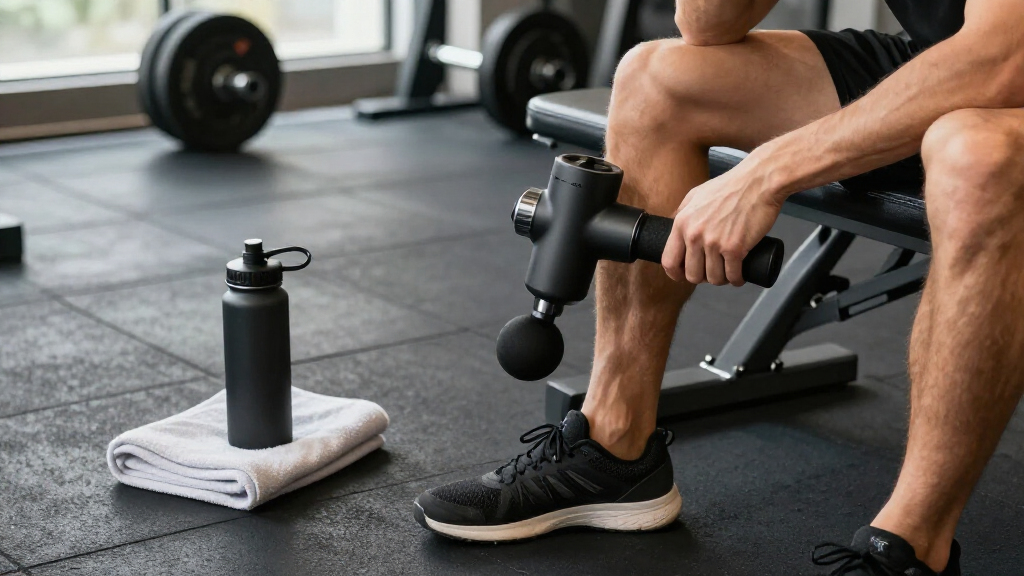
I compared the 15 listed models through the lens of muscle recovery: how well their stated format and features suit regular post-activity use, how easy they appear to handle, and whether their design supports a clear buyer need. I grouped them by purpose—full-size percussion, compact portability, app-guided use, and temperature features—so a longer list of attachments or speed settings would not automatically count as a recovery advantage. Build and usability also mattered: a device that is awkward to position or harder to fit into a routine may be a weaker choice than a simpler model.
The ranking gives priority to useful, broadly applicable recovery features and a clear role, then places more specialized options lower unless their defining feature fits a particular buyer. Models with heat, cold, or app control are not treated as inherently better than straightforward percussion guns; they rank well only for shoppers who want those additions. Since the supplied product information does not establish measured power, weight, noise, battery performance, or comparative test results, I avoid claiming that one model delivers stronger treatment or longer runtime than another. The goal is to make the tradeoffs visible and help readers choose by routine, not by feature count.
Factors to Consider When Choosing Massage Guns For Muscle Recovery
Before choosing a model, I’d match the gun to how and where you plan to use it, rather than assuming more heads, speeds, or add-on features mean better recovery. These broader factors can help you avoid buying a device that looks versatile on paper but does not fit your habits.
Choose the Form Factor You’ll Reach For
A full-size massage gun can be easier to position across larger muscle groups, while a mini is simpler to carry and store. That difference matters if your recovery routine happens at home, at the gym, or while traveling. A compact device may be convenient but can require more effort to reach areas such as the back without assistance. Conversely, a larger model may offer more handling options but take up space and feel cumbersome for brief sessions. Think about where the gun will live and which areas you can comfortably reach before choosing. A portable model is not automatically the more useful one if it makes your regular routine harder.
Treat Speed and Head Counts as Tools, Not Scores
More speed settings and attachments can provide choices, but they do not prove that a gun is more effective for recovery. A small set of heads may be enough if it covers the surfaces and muscle groups you plan to target. Extra pieces can become clutter if you are unsure when to use them or how to store them. Look for a control layout you can operate easily while holding the device, especially if you expect to change settings during a session. Start with gentle pressure and short use rather than assuming the highest setting is best. The useful question is whether the included options make your routine easier to tailor, not whether the box has the largest number.
Decide Whether Heat or Cold Fits Your Routine
Temperature features distinguish several models in this roundup, but they add a different kind of complexity from percussion alone. Consider whether you already use heat or cold as part of your recovery habits and whether you want those steps combined in one device. If you mainly want a straightforward percussive tool, a temperature attachment may add cost and controls without changing how often you use it. Check how the temperature function is operated and whether it can be used separately from the massage function. Do not assume a heated or cooled head replaces guidance from a clinician for an injury or persistent pain. Buy this feature for a specific routine you expect to follow, not because it sounds like a bonus.
Prioritize Comfortable Handling and Reach
Comfort depends on more than the handle’s shape: the device’s size, balance, controls, and the positions you need to reach all play a part. If you plan to treat your own shoulders or back, handling can matter as much as the available attachments. A heavy or awkward-to-angle gun may be less practical for self-use, even if its feature list looks extensive. Compact models can be easier to maneuver but may not give the same reach or feel as a full-size option. If possible, check the manufacturer’s stated weight and dimensions before buying; the product names alone do not establish them. Choose for the areas you can reach safely and comfortably, not just the muscles you hope to target.
Set Expectations for Recovery and Safe Use
A massage gun is a self-care tool, not a diagnosis or a treatment for every source of soreness. Avoid pressing aggressively into bones, joints, the front of the neck, or an area with unexplained pain. Follow the product’s instructions for session length and attachments, and stop if use causes sharp pain, numbness, or worsening symptoms. People with injuries, certain health conditions, or questions about safe use should ask a qualified health professional before using percussion or temperature features. A higher setting is not a shortcut to better results, and soreness after a session is not a measure of success. The best choice is one you can use gently and consistently within appropriate limits.
Pay for Features You’ll Actually Use
App guidance, temperature controls, and multiple attachments can justify choosing a more specialized model when they solve a real problem in your routine. If you prefer a simple post-workout tool, a more direct model may be easier to operate and maintain. Before paying for add-ons, consider whether you will use them weekly or whether they will stay in the case. Also check the practical details that product names do not answer, such as warranty coverage, replacement parts, charging requirements, and care instructions. These details affect ownership after the initial purchase and can matter more than another preset or attachment. Compare the complete package and its ongoing support, not just the headline feature.
Frequently Asked Questions
Should I choose a full-size massage gun or a mini for recovery?
Choose based on where you use it most and which areas you need to reach. A full-size model is generally the more flexible starting point if you want one device for regular home use across several muscle groups. A mini makes more sense when portability and storage are your main constraints, such as carrying a tool in a gym bag. Its smaller format may be less convenient for reaching some areas on your own. If you are unsure, make a list of your usual target areas and consider whether you can comfortably position a compact device there.
Do heat or cold features make a massage gun better for muscle recovery?
Not for every buyer: temperature controls add a separate feature, rather than proving that the percussion itself is better. They may suit you if heat or cold is already part of your routine and you want a combined device. If you mainly want percussive massage, a model without those controls may be simpler to operate. Check how the temperature function works and follow the manufacturer’s safety directions. For an injury or ongoing pain, ask a health professional whether percussion or temperature use is suitable.
Is a massage gun with more heads or speeds a better choice?
Not by itself. Extra heads and settings matter only if they help you adjust use for the areas you target and the way you prefer to handle the device. A long list of attachments can create more storage and selection decisions without adding much to a simple routine. Focus on whether the controls are easy to use and whether the included attachments have a clear purpose for you. The TOLOCO and Elefor listings emphasize multiple heads or speeds, but those counts alone do not establish superior recovery performance. Treat them as options to compare, not as a ranking shortcut.
Can I use a massage gun every day after workouts?
Whether daily use suits you depends on the area, your comfort, and the device’s instructions. Follow the manufacturer’s guidance for session length and pressure, and avoid repeatedly working one spot just because it feels sore. Stop if you feel sharp pain, numbness, or worsening symptoms rather than increasing intensity. A massage gun should not replace rest, gradual training, or care for an injury. If you have a health condition or are uncertain about safe use, ask a qualified clinician before making it part of a daily routine.
What should I check before buying a massage gun for someone else?
Start with the recipient’s likely use, comfort, and ability to handle the device rather than choosing the most feature-packed model. A mini may suit someone who values portability, while a straightforward full-size gun may be easier to make part of a home routine. Confirm that the recipient is comfortable using percussion and that the product’s instructions fit their needs. Check warranty terms, charging requirements, replacement-part availability, and return conditions, since these can matter more than accessories. If the person has an injury, ongoing pain, or a health condition, a massage gun may not be an appropriate surprise without professional guidance.
Conclusion
My best overall pick is the TheraGun Therabody Relief for buyers who want a straightforward recovery-focused choice. For best value, I’d compare the Bob and Brad C2 and Mebak 3, choosing based on preferred handling and the attachments you will use rather than feature counts alone. The best premium option for shoppers drawn to app-guided sessions is the RENPHO Active+; the Therabody Relief remains the simpler alternative if you do not need app features. For beginners, the Bob and Brad C2 is a practical starting point among the full-size options, while the Bob and Brad Q2 Mini makes more sense when compact size is the priority. For specific needs, choose the TheraGun Mini 3rd Gen or Q2 Mini for portability, and look at RENPHO Active Thermacool 2 or AERLANG if heat and cold controls are features you expect to use. Match the format to your routine, and choose the simplest model that covers your actual recovery needs.
Halloween Picks
halloween
As an affiliate, we earn on qualifying purchases.