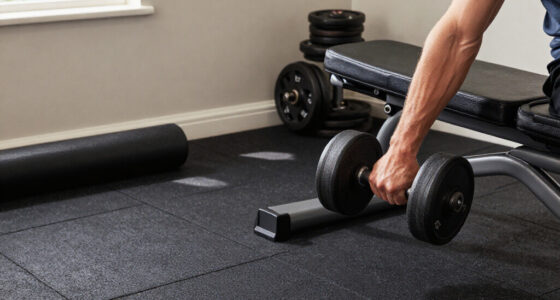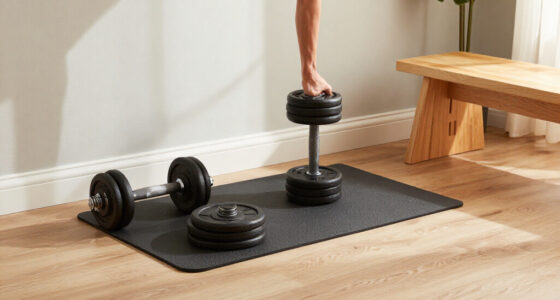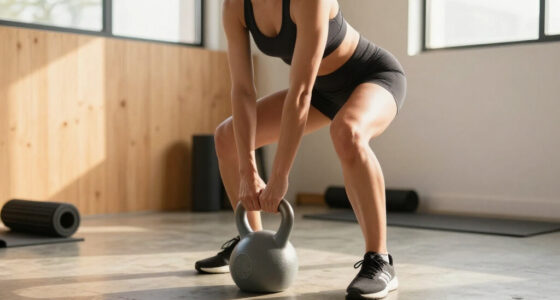
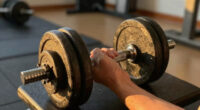
Set up your adjustable dumbbells, choose a manageable starting load, and complete a basic strength session with safe form. This guide is for beginners using selectorized or plate-loaded adjustable dumbbells at home. Allow 15-30 minutes for setup and a short first workout; the exact adjustment method depends on your model.

Get workout gear delivered free with Prime
- Fast, free delivery on millions of items
- Prime Video, Amazon Music and more included
- Member-only deals all year

MouldBody Adjustable Dumbbell Set, Pair, 50 lb
- ✔ Set weight: 50 lb pair
- ✔ Weight settings: 5.5, 11, 15, 22, 25, 31, 35, 41, 45, and 50 lb
- ✔ Adjustment system: One-hand dial

FITPLAM 5-in-1 Adjustable Dumbbell Set, 20–90 lb
- ✔ Set weight options: 20, 35, 45, 55, 70, or 90 lb
- ✔ Dumbbell adjustment range: 6–22.5 lb each
- ✔ Barbell adjustment range: 7.5–45.8 lb

YOLEO 5-in-1 Adjustable Dumbbell Set, 4–20 kg
- ✔ Weight range: 4–20 kg per dumbbell
- ✔ Item weight: 24 kg
- ✔ Configurations: Dumbbells, barbell, kettlebells, and push-up stands
Difficulty: Beginner | Time: 15-30 minutes
What You’ll Need
Tools & Materials:
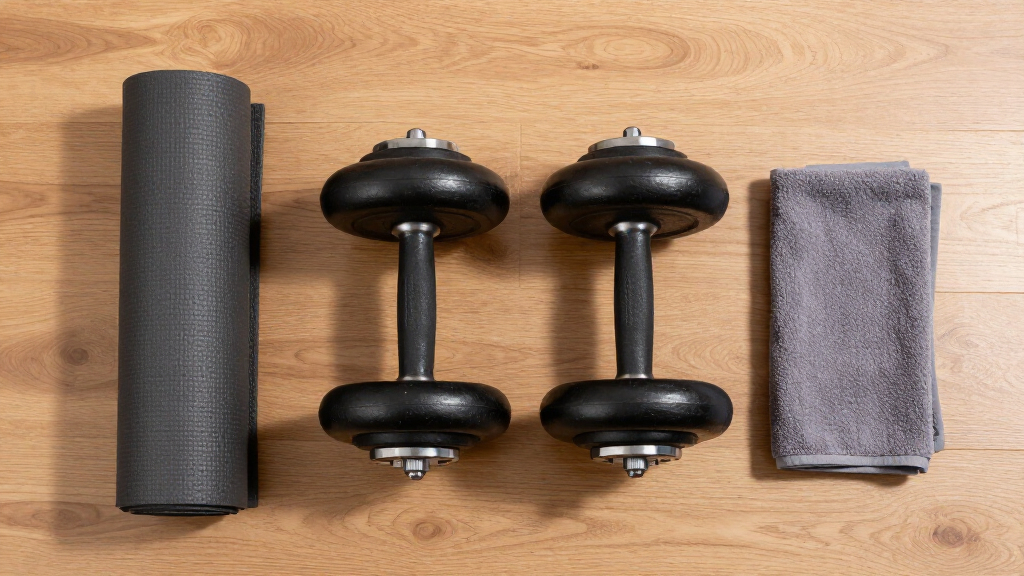
- Adjustable dumbbells and any included base, plates, collars, or selector pins
- A flat, stable workout area with enough clearance to move
- The manufacturer’s assembly and adjustment instructions
Knowledge:
- Ability to lift and lower a light weight with control
- Awareness of any personal movement restrictions or medical advice that affects exercise
Check the dumbbell’s stated weight range and adjustment method before use. If the set is new, assemble it exactly as directed. Do not mix parts from different sets or use damaged plates, handles, collars, or locking mechanisms.
MouldBody Adjustable Dumbbell Set, Pair, 50 lb
For workouts built around alternating exercises or short rest periods, MouldBody’s one-hand dial is the most direct adjustment system in this lineup. It provides ten settings, from 5.5 to 50 lb, within a pair described as 50 lb total. Compared with FITPLAM and YOLEO, it is less about turning one set into several kinds of equipment and more about making ordinary dumbbell training easier to progress without swapping loose plates.The storage tray gives the pair a designated home, while rubber handles are intended to support a non-slip grip. Its secure locking system adds an important layer to the dial format, but we still need to confirm the dial clicks into place and aligns before lifting. That check is a real part of using this design, particularly if we adjust weights repeatedly during a session.We would choose MouldBody over the convertible options when quick dumbbell transitions matter more than having a barbell or kettlebell configuration. The tradeoff is that its listed weight settings are not evenly spaced, and it does not offer the broader equipment formats included with FITPLAM or YOLEO. It is a focused choice for home strength sessions, not a single set meant to cover every type of floor exercise or lift.
Pros:
- Ten dumbbell weight settings from 5.5 to 50 lb
- One-hand dial supports faster weight changes than plate-by-plate assembly
- Locking system helps keep selected plates in place
- Storage tray and rubber handles support organized, comfortable use
Cons:
- Dial must click into place and align before lifting
- Does not convert into the extra equipment formats offered by FITPLAM and YOLEO
Best for: Home lifters who prioritize quick changes between dumbbell exercises and want a range of ten settings in a compact pair.
Not ideal for: People who want one set to convert into a barbell, kettlebells, or push-up stands, or who prefer not to check a dial before each lift.
Bottom line: Choose MouldBody when fast, repeatable dumbbell adjustments matter more than multi-format versatility.
“Choose MouldBody when fast, repeatable dumbbell adjustments matter more than multi-format versatility.”
FITPLAM 5-in-1 Adjustable Dumbbell Set, 20–90 lb
FITPLAM makes the strongest case for buyers who need a small training setup to cover more than dumbbell movements. The set converts into dumbbells, a kettlebell, a barbell, weight plates, and push-up stands, while its stated storage footprint is less than two square feet. That is a more space-conscious package than assembling separate tools; by comparison, MouldBody focuses on dial-adjusted dumbbell work and does not list these alternate formats.Its dumbbells adjust from 6 to 22.5 lb each, and the set also lists a barbell range of 7.5–45.8 lb and a kettlebell range of 3.8–23 lb. Dual-lock nuts are meant to help prevent plates from loosening or shifting, while textured grips and a foam-padded connector address comfort when we change to other configurations. These details make the set versatile, though every format depends on putting the parts together correctly.The chief limitation is the upper end of its barbell range: 45.8 lb may not leave much room for someone hoping to progress into heavier barbell lifts. Weight changes can also involve reconfiguring and assembling parts, so it will not move between exercises as swiftly as MouldBody’s dial. Compared with YOLEO, FITPLAM gives a more specific compact-storage claim, but buyers should decide whether that footprint and five-way conversion outweigh the setup work.
Pros:
- Converts into five workout configurations
- Listed storage footprint is less than two square feet
- Dual-lock nuts help secure plates
- Textured grips and a padded connector support a more comfortable hold
Cons:
- Barbell adjustment range tops out at 45.8 lb
- Changing configurations and combinations may require assembly
Best for: Apartment or small-room lifters who want dumbbells plus several alternate exercise setups and can store the parts together.
Not ideal for: People who want rapid weight changes between sets or need a heavier barbell configuration than the listed 45.8 lb maximum.
Bottom line: Pick FITPLAM when space-saving versatility is more important than fast transitions or a high barbell ceiling.
“Pick FITPLAM when space-saving versatility is more important than fast transitions or a high barbell ceiling.”
YOLEO 5-in-1 Adjustable Dumbbell Set, 4–20 kg
YOLEO is the option to examine when the stated dumbbell ceiling is a priority alongside extra exercise formats. It lists 4–20 kg per dumbbell and converts into dumbbells, a barbell, kettlebells, and push-up stands. That range reaches above MouldBody’s 50 lb setting on a per-dumbbell basis, while MouldBody’s dial is simpler for quick transitions. YOLEO instead relies on safety locking nuts and parts that we configure for the movement at hand.The textured ABS handles, locking nuts, and foam-wrapped steel connector bar are meant to support grip and stability across its configurations. For buyers who want more than a dumbbell pair, that can make the equipment more useful in a small home gym. FITPLAM shares the multi-format idea and includes a stated storage footprint under two square feet; YOLEO provides no comparable footprint figure in the supplied details, so we have less basis for judging how easily it fits away.Material and connector details deserve attention before choosing it. The plates use PVC with iron sand and composite fillers, rather than solid iron, and the connector is a 5 mm steel tube. Those construction choices may not suit buyers seeking a conventional solid-metal feel. As with FITPLAM, switching formats and weights involves locking and assembly, so YOLEO makes more sense for planned exercise blocks than for frequent rapid adjustments. It earns its place for buyers drawn to its stated range and multiple configurations, with less emphasis on compact-storage evidence than FITPLAM.
Pros:
- Stated adjustable range of 4–20 kg per dumbbell
- Converts into dumbbells, barbell, kettlebells, and push-up stands
- Safety locking nuts help keep weights secure
- Textured handles and foam-wrapped connector support grip
Cons:
- PVC plates use iron sand and composite fillers rather than solid iron
- Connector bar uses a 5 mm steel tube
- No storage footprint is stated in the supplied specifications
Best for: Home strength trainees who want a stated 4–20 kg range per dumbbell and the option to configure a barbell, kettlebells, or push-up stands.
Not ideal for: Buyers who want a quick dial adjustment, solid-iron plates, or a clearly stated small storage footprint.
Bottom line: Choose YOLEO if its stated per-dumbbell range and multi-format setup fit your training, and its plate and connector construction suit your expectations.
“Choose YOLEO if its stated per-dumbbell range and multi-format setup fit your training, and its plate and connector construction suit your expectations.”
As an Amazon Associate we earn from qualifying purchases.
Before You Start
Place the base on a level, hard surface and keep the surrounding area clear. Wear closed-toe shoes and move pets, children, and loose objects away from the workout space. Start at the light end of the set’s range; the weight printed on a selector or plate may refer to one dumbbell, so check the manual. Stop if you feel sharp pain, dizziness, or unusual shortness of breath.
Step-by-Step Instructions
Step 1: Inspect the set and clear the workout area
Read the adjustment instructions for your exact model. Check the handle, plates, base, selector pin, and collars for cracks, bending, loose parts, or other damage. Set the dumbbells on their base or on a stable surface, then clear enough floor space to lift, move, and set them down without hitting furniture.
Tip: Keep the base on a level surface. A wobbly base can prevent plates from seating correctly.
Check: The parts are intact, the set is assembled as directed, and the workout area is clear and stable.
Step 2: Choose a light starting weight
Select a load that lets you perform a controlled set of 8-12 repetitions without swinging, holding your breath, or losing your position. If you are new to strength training, begin with the lightest practical setting. For two-dumbbell exercises, set both dumbbells to the same load unless the exercise instructions call for different weights.
Tip: The right starting weight can differ by exercise. A weight that is manageable for a row may be too heavy for an overhead press.
Check: You can lift the selected weight smoothly and keep control through both the lifting and lowering portions of a repetition.
Step 3: Adjust the dumbbell using its designed mechanism
For a selectorized set, place the dumbbell fully in its base, move the dial or selector to the desired setting, and confirm that the indicator points to the same setting on both sides where the model requires it. For a plate-loaded set, place matching plates on each side of the handle and secure each collar as the manual directs. Keep fingers clear of moving parts and never force a selector or plate into place.
Tip: Do not adjust a selectorized dumbbell while holding it or leave it partly out of its base during selection. Plate-loaded models must have their collars fully secured before lifting.
Check: The selector moves freely and matches the chosen setting, or the plates sit evenly and the collars are secure.
Step 4: Confirm the load before lifting
With the dumbbell supported by its base or resting securely, check that the selected plates are engaged and that no plate or collar is loose. Lift the dumbbell a few centimeters with both hands nearby and pause to feel whether the load is stable. Set it down immediately if anything shifts, rattles unusually, or feels uneven.
Tip: Do not rely on a visual check alone when the model uses a locking pin or selector. Confirm that the mechanism has reached its locked position.
Check: The dumbbell lifts as one stable unit, without loose movement or unexpected changes in weight.
Step 5: Warm up and practice the movement
Spend 3-5 minutes moving comfortably, such as marching in place and doing arm circles. Then rehearse your planned exercise without weights or with the lightest setting. Keep your feet planted, brace your midsection gently, and move through a range that feels controlled and pain-free.
Tip: If the movement causes pain or you cannot keep control, stop and choose a different exercise or seek qualified guidance before continuing.
Check: You can perform the movement smoothly without the weight and understand where you will start and finish each repetition.
Step 6: Complete a short first workout
Choose two or three simple exercises, such as a chair-supported row, a goblet squat to a stable chair, or a floor press. Perform 1-2 sets of 8-12 controlled repetitions per exercise, resting about 60-90 seconds between sets. Lower each weight with control, keep it away from your face and feet, and stop a set when your form begins to change.
Tip: Use a stable chair or bench only if it is designed to support you and will not slide. Do not attempt unfamiliar overhead lifts with a heavy load.
Check: You finish each set with steady technique and feel that you could perform a few more controlled repetitions.
Step 7: Return the dumbbells and check the equipment
Lower each dumbbell onto its base or stable storage surface with control. For selectorized models, return the handle fully to the base before changing the setting. For plate-loaded models, set the dumbbell down before loosening collars or changing plates. Wipe the handles if needed and check for loose parts before storing the set.
Tip: Do not drop adjustable dumbbells; impact can damage the adjustment mechanism, plates, or flooring.
Check: The dumbbells are stored securely at their lowest setting if the manual recommends it, and no parts have shifted or been damaged.
Common Mistakes to Avoid
- Choosing a weight that is too heavy for the exercise. — Start light and increase the load only when you can complete all repetitions with steady control and consistent form.
- Changing the setting before the dumbbell is fully seated in its base. — Return the handle completely to the base, then adjust it according to the model’s instructions.
- Leaving one side with a different load or a collar partly secured. — Compare both sides before lifting and check the selector or collar lock after every adjustment.
- Dropping the dumbbell or setting it down carelessly. — Keep a firm grip through the final repetition and guide the weight onto a stable surface.
Troubleshooting
Problem: The selector will not turn or the plates will not seat.
Solution: Set the dumbbell fully in its base and remove any load from the mechanism. Check for a misaligned plate or obstruction, then follow the manual. Do not force the selector; stop using the set if the problem remains.
Problem: The dumbbell rattles or feels uneven when lifted.
Solution: Set it down and inspect the plate alignment, selector engagement, and collars. Re-seat and secure the parts according to the instructions, then retest with a small lift. Do not exercise with a loose load.
Problem: You cannot complete the planned repetitions with good form.
Solution: Stop the set, lower the weight safely, and reduce the load or repetitions. Choose a lighter setting for that exercise and build up gradually.
Problem: The base rocks or slides on the floor.
Solution: Move it to a level, stable surface and remove any debris beneath it. Do not adjust or lift the dumbbell from an unstable base.
What Success Looks Like
Your adjustable dumbbells are intact, set to the intended load, and locked or secured according to the manufacturer’s instructions. You can lift and return them without shifting plates, unexpected rattling, or loss of control. You complete a short workout with smooth repetitions, no sharp pain, and enough control to stop each set safely.
Next Steps
Record the weight, exercises, sets, and repetitions you completed. Repeat the session on nonconsecutive days at first, allowing time to recover. When you can finish every set with steady form and several repetitions still manageable, increase the load by the smallest available increment. Recheck the equipment regularly and follow the manufacturer’s care and storage directions.
Frequently Asked Questions
How heavy should I set adjustable dumbbells as a beginner?
Use a weight that allows 8-12 controlled repetitions while keeping your position steady. Start lighter for unfamiliar exercises, and adjust separately for movements that use smaller or larger muscle groups.
Do both dumbbells need to have the same weight?
For most two-dumbbell exercises, use matching settings so each side carries the same load. Use different loads only when an exercise plan or qualified coach specifically calls for it.
Can I change the weight while holding the dumbbell?
No. Place the dumbbell fully in its base or set it down securely before adjusting it. Follow the instructions for your model, since selectors and plate locks work differently.
What should I do if a dumbbell feels loose?
Stop, set it down, and check the plate alignment, selector engagement, and collars. Do not continue until the load is secure. If the issue persists, stop using the dumbbell and contact the manufacturer or seller.
How often should I increase the weight?
Increase it when you can complete all planned repetitions with controlled form and no pain, while still feeling able to do a few more. Use the smallest available increase and return to fewer repetitions if the heavier setting is difficult.