TL;DR

Get workout gear delivered free with Prime
- Fast, free delivery on millions of items
- Prime Video, Amazon Music and more included
- Member-only deals all year
A Fit&Well report describes three coordination exercises used by a trainer with older adults: opposite-arm knee raises, lateral step-outs with an opposite-arm reach, and a ball catch-and-throw. The trainer says the moves can be adapted for seated or standing practice; a cited 2019 review found balance and coordination exercises can benefit some cognitive and postural measures, but the report does not establish that these specific drills extend lifespan.
A trainer who works with older adults has described three coordination exercises used in chair-based yoga classes and personal training sessions, saying the movements are intended to practise coordination and can be adjusted for different mobility levels. The Fit&Well report presents them as practical exercise ideas, not as proof that the drills extend lifespan or prevent age-related conditions.
The trainer’s routine includes a knee raise paired with the opposite arm, a lateral step paired with an opposite-arm reach, and a ball throw and catch while balancing. The first two are suggested for five or six repetitions on each side; the ball exercise is suggested for five to 10 repetitions. The report describes these as examples rather than a required programme.
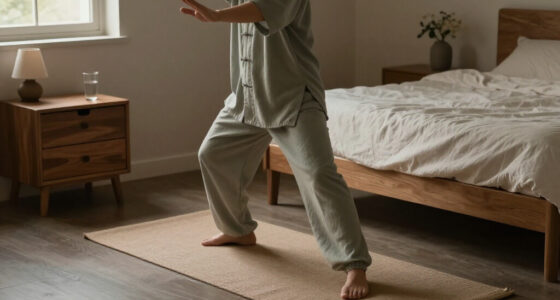
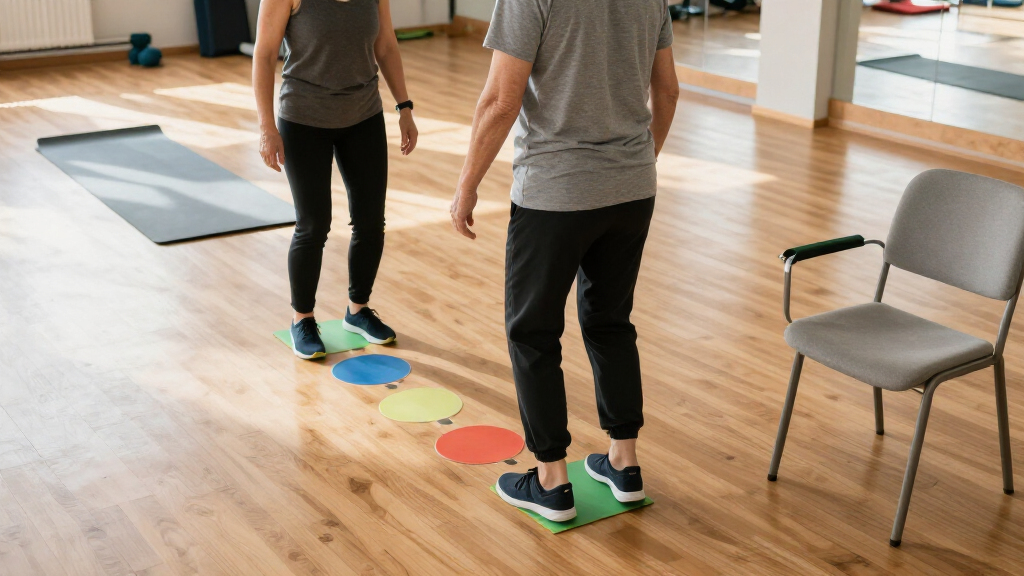
For the knee-and-arm movement, a standing participant raises one knee while moving the other arm, then alternates sides. The seated option is a slow march, with the opposite arm lifted in front or overhead. For the step-out, the participant steps laterally and reaches the opposite arm forward; the seated version pairs a side step with opening the opposite arm to the side. The trainer says the standing step can include a side lunge if comfortable, or remain upright.
The ball drill involves a light underhand throw toward a wall and catching the rebound, initially while balancing on one leg. The report suggests using one or two hands and throwing in different directions to vary the task. Easier options include standing on both feet or practising seated, and the ball’s size can be adjusted. Ability-based modifications are central to the article’s guidance.
Coordination in Everyday Movement
The practical argument in the report is that combining limb movements may give older adults a way to practise timing, balance and controlled movement alongside more familiar strength exercises. The trainer says these skills relate to daily tasks such as moving around people on a bus or handling more than one activity at home. Those examples are the trainer’s rationale, not measured outcomes from a trial of the three exercises.
The report also points to a 2019 review of balance and coordination exercises in older adults. According to the report’s summary, the review found improvements in cognitive processes such as spatial awareness, as well as postural control and stability in distracting environments. The supplied material does not provide the review’s title, methods, participant numbers or effect sizes, so readers cannot use it here to judge the strength or scope of the evidence. It also does not show that these exact exercises were tested or that they increase longevity.
For readers, the most immediately relevant point is adaptability: the described movements have seated versions, and the ball drill can be made less demanding. Anyone trying them should choose a stable setup and a level of challenge suited to their abilities. The report does not give individualized medical advice or a screening protocol.
lightweight soft exercise ball for seniors hand-eye coordination
As an affiliate, we earn on qualifying purchases.
As an affiliate, we earn on qualifying purchases.
How the Trainer Uses These Drills
The source is a Fit&Well exercise report built around the experience of a trainer who says coordination work is routinely included in chair-based yoga classes and personal training for older adults. The article contrasts this work with the more familiar emphasis on strength training, arguing that strength is not the only form of exercise relevant to ageing well.
The trainer describes coordination as moving limbs in different directions and says it may require more intentional practice later in life. That is the trainer’s framing, rather than a detailed account of how coordination changes with age. The report does not identify the trainer in the supplied text or provide further biographical information.
The three drills progress from controlled, alternating arm-and-leg patterns to a lateral movement and then a task involving a moving ball. Standing versions can add balance demands; seated versions preserve an arm-and-leg coordination task while reducing the need to stand. The article supplies repetition suggestions, but it does not state how often to do the exercises, how long a session should last, or how to progress over time.
““I always incorporate coordination training into my chair-based yoga classes and personal training sessions with older adults.””
— The trainer quoted in Fit&Well
chair exercise equipment for seniors non-slip sturdy chair
As an affiliate, we earn on qualifying purchases.
As an affiliate, we earn on qualifying purchases.
Limits of the Evidence and Advice
The supplied report does not identify the 2019 review by title or describe its study methods, participant groups, or findings in detail. It is therefore not possible from this material to assess how large or reliable the reported benefits were, or whether they apply to every older adult. The report also does not say that the three featured drills were evaluated in that review.
No publication date is supplied, and the trainer’s name and credentials are not included in the source excerpt. The article gives repetition ranges but no complete weekly plan, progression schedule, or individualized precautions. It does not establish that coordination exercise alone improves longevity, prevents falls, or treats a health condition. People who are unsure whether a movement is suitable for them can ask a qualified health or exercise professional for guidance.
lightweight therapy ball for seated balance exercises
As an affiliate, we earn on qualifying purchases.
As an affiliate, we earn on qualifying purchases.
How to Approach the Exercises
The source does not announce a study, formal programme or upcoming milestone; it offers exercise instructions for readers to try at a level appropriate to their mobility. Anyone choosing to practise can begin with the seated versions or the ball drill on both feet, then use the report’s standing variations only if they feel steady and the movements are comfortable. A stable chair or other secure support nearby may help reduce the risk of losing balance.
Readers should treat the suggested repetitions as the article’s examples, not as a personalized prescription. The report does not specify how to increase the number of repetitions or how often to train. People with existing health concerns, recent injuries, or uncertainty about balance should seek professional guidance before adding challenging standing or throwing tasks.
Key Questions
Which three coordination exercises does the report describe?
It lists an opposite-arm knee raise, a lateral step with an opposite-arm reach, and a ball throw-and-catch task that can include balancing on one leg.
Can the exercises be done seated?
Yes. The report offers a seated march with the opposite arm raised, a seated side step paired with an arm opening, and a seated version of the ball exercise.
Does the report show that these exercises extend lifespan?
No. It reports a trainer’s reasons for using coordination work and summarizes findings from a 2019 review, but it does not show that these specific drills extend lifespan.
How many repetitions are suggested?
The report suggests five to six repetitions per side for the knee raise and lateral step, and five to 10 repetitions for the ball drill. These are the article’s guidelines, not an individualized exercise plan.
Source: rss
Halloween Picks
halloween
As an affiliate, we earn on qualifying purchases.