
TL;DR

Get workout gear delivered free with Prime
- Fast, free delivery on millions of items
- Prime Video, Amazon Music and more included
- Member-only deals all year
Fit&Well reports that NASM-certified trainer Kelsey Sherwin uses a six-exercise warm-up before lifting weights. The sequence combines mobility, bodyweight movements and light resistance, but the source does not provide evidence that this specific routine prevents injuries or improves results for everyone.
Personal trainer Kelsey Sherwin shared a six-exercise warm-up she says she does before lifting weights, in a Fit&Well report about preparing for strength training. The routine moves from marching and mobility work to planks, squats, hip hinges and resistance-band steps; it is an example from one trainer, not a universal prescription.
Sherwin, described by Fit&Well as a NASM-certified trainer and strength-training specialist with Raeya Wellness in Los Angeles, says her warm-up helps activate muscles used in the workout and gives her a moment to focus before beginning. She recommends adapting warm-ups to the planned activity rather than assuming one sequence fits every session.
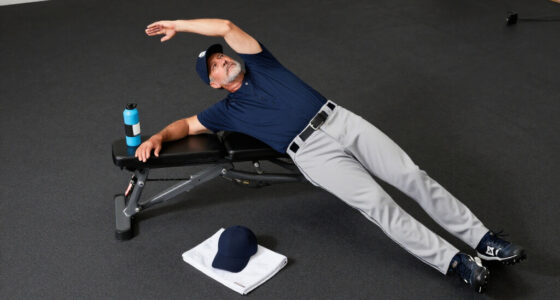
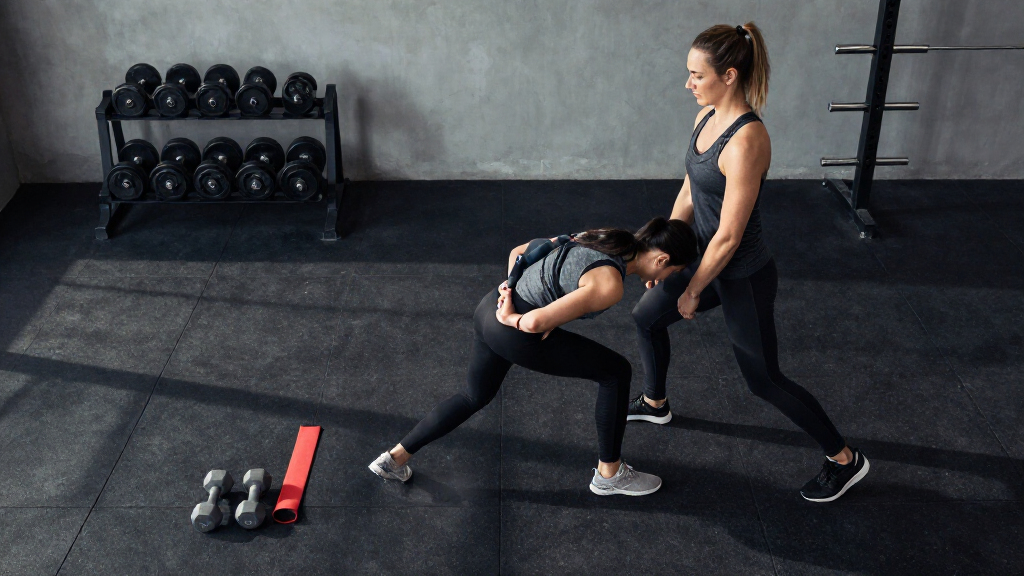
The sequence begins with one minute of marching and reaching, followed by a “world’s greatest stretch,” held for 30 seconds on each side. It then calls for 20 plank shoulder taps per side, with the aim of keeping the torso steady, before moving to 10–15 squat-to-press repetitions with dumbbells.
The final movements are 10–15 hip hinges and 10 lateral steps in each direction with a short looped band above the knees. Fit&Well’s instructions describe the order and suggested duration or repetitions, but do not specify dumbbell weight, rest periods or how to modify the full routine for different levels of mobility or training experience.
A Routine Built Around the Planned Lift
The report offers readers a practical example of how a warm-up can include more than a brief burst of general movement. Sherwin’s sequence combines mobility, core control and lower-body activation, then uses a light loaded movement before a strength session. Those components may help someone prepare for the movements they intend to perform, but the report does not measure the routine’s effects.
Sherwin says warming up can increase blood flow, improve joint mobility and prepare the body for movement, which she says may support performance and reduce injury risk. Those are her explanations in the article; the source does not cite a study testing this particular six-move sequence or establish that it prevents injury. Readers should treat it as one trainer’s approach, not a guarantee.
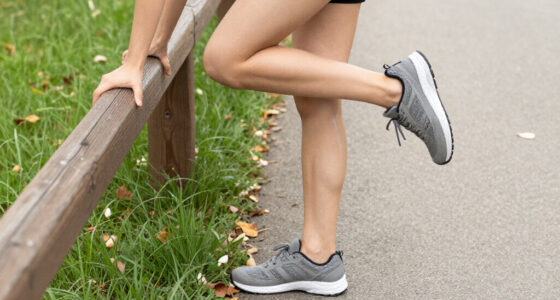
The broader useful point is that preparation can be adjusted to the workout. A person planning a walk, for example, may need different movement preparation from someone about to train their upper body. A warm-up should not be confused with the main workout, and the listed repetitions are a suggested routine rather than a requirement for every lifter.
Products Worth Considering

BowFlex Results Series SelectTech Adjustable Dumbbells, Pair

Oura Ring 4 Smart Ring – Silver – Size 8

Therabody JetBoots Prime Wireless Compression Boots – Short (under 29 inseam)
As an affiliate, we earn on qualifying purchases.
How the Six Moves Progress
Fit&Well’s account contrasts Sherwin’s approach with short school-style warm-ups, which the report’s writer says once seemed like a waste of time. The writer says they changed their view after learning to warm up differently. That personal experience is not presented as a controlled test, but it frames the article’s focus on a more structured sequence.
The routine progresses from general movement to more targeted exercises. Marching raises the pace gradually; the stretch pairs a lunge position with trunk rotation; and shoulder taps challenge stability in a plank. The squat-to-press combines a squat with an overhead press, while the hinge rehearses bending at the hips. Band side steps finish with lateral movement.
Fit&Well advises that the warm-up should reflect the activity ahead and calls the sequence a useful full-body option. Its instructions allow the forward foot in the stretch to land as close to the hand as a person’s mobility allows, but do not give detailed alternatives for every exercise. The article does not report a trial, follow-up or comparison with other warm-ups.
“It helps activate the muscles you’ll be using and allows you to mentally focus before starting your workout.”
— Kelsey Sherwin, as quoted by Fit&Well
What the Report Does Not Establish
The source does not state when the report was published, provide research evaluating Sherwin’s sequence, or compare it with another warm-up. It also does not quantify any change in lifting performance or injury risk. Sherwin’s comments explain her rationale and experience; they are not reported as results from a clinical or sports-science study.
Details that could affect how a reader uses the routine are also absent, including recommended dumbbell weight, whether to repeat the circuit, and how to adapt it for pain, injury history or limited mobility. The article does not say whether Sherwin changes the sequence for particular lifts. Readers who are unsure whether an exercise is appropriate can seek guidance from a qualified trainer or health professional, especially if they have an existing condition or injury.
How Readers Can Use the Routine
Fit&Well suggests trying the six movements before a future weight-training session and observing how movement feels, but it reports no planned follow-up or outcome data. The next step described is therefore an individual trial, not a formal test of the routine’s effectiveness.
Anyone trying it can follow the listed time and repetition guidance while keeping movements controlled and using a manageable load for the squat-to-press. The source does not prescribe a weight or claim the routine suits everyone. If a movement causes pain or feels unsafe, readers should stop rather than force the range of motion and consider getting professional advice.
Key Questions
Who shared the warm-up?
Kelsey Sherwin, identified by Fit&Well as a NASM-certified trainer and strength-training specialist with Raeya Wellness in Los Angeles, shared the routine.
What exercises are included?
The sequence includes march and reach, the world’s greatest stretch, plank shoulder taps, squat to press, hip hinges and banded side steps.
How long does the warm-up take?
The report gives a one-minute duration for marching and reaching and 30 seconds per side for the stretch. It lists repetitions for the other exercises but does not provide a total session time, so the full duration is not specified.
Does this routine prevent injuries?
The report does not establish that it does. Sherwin says warming up may reduce injury risk, but Fit&Well provides no study testing this specific sequence or evidence that it guarantees injury prevention.
Should everyone use the same warm-up?
No single routine is presented as necessary for everyone. Sherwin says warm-ups should vary with the planned activity; people with pain, injuries or health concerns may want to ask a qualified professional about suitable options.
Source: fitandwell.com