
TL;DR
Trainer and longevity-clinic CEO Amanda Lim shared an example of her weekly exercise routine, combining strength training, cardio, walking, yoga and postpartum core rehabilitation. She also recommends measuring progress through strength and muscle changes rather than relying on scale weight as an assessment of health.
Trainer Amanda Lim, who leads the metabolic health center liftCLINIC, has shared a sample of her weekly workouts and argued that scale weight should not stand in for an assessment of health. In an interview with Fit&Well, the 43-year-old described a routine combining strength work, cardio, walking, yoga and postpartum core rehabilitation, alongside advice for people trying to exercise consistently.
Lim’s example week includes two focused strength sessions early in the week: a leg workout on Monday and an upper-body workout on Tuesday. On Wednesday she does postpartum core rehabilitation, followed by walking for active recovery on Thursday. Friday includes running intervals in the morning and yoga in the evening; Saturday is a power-focused workout, and Sunday is a zone two run.
She described her approach as a balance of functional strength training, zone two cardio and daily steps, rather than a complicated or trend-driven program. The schedule is her personal example, not a prescription for every reader. Lim is a trainer with more than 20 years of experience and a mother of three; she said she continues to include pelvic-floor and deep-core work following childbirth.
Lim’s five recommendations are to track progress through measures such as lifting performance and muscle mass, accept the advantages of starting as a beginner, learn new physical skills, begin with walking, and practice self-compassion. She suggested that people who are inactive could start with a five-minute walk, then build from there. Her remarks are personal guidance reported by Fit&Well, not evidence that one routine or measurement is appropriate for everyone.
Progress Beyond Scale Weight
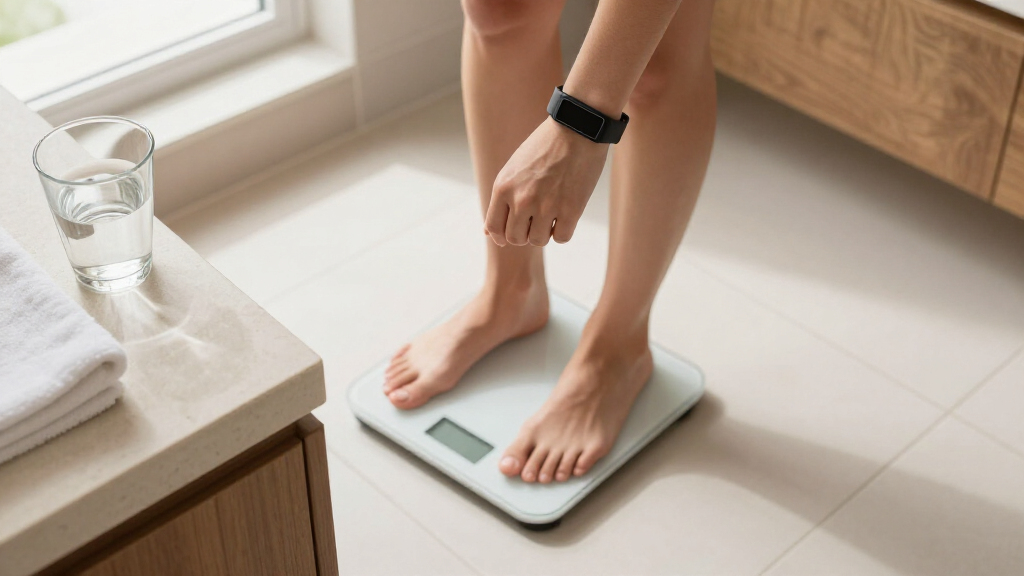
Lim’s central point is that body weight and health are not interchangeable measures. The scale records weight; it does not, by itself, show strength, muscle mass, fitness capacity or how someone feels and functions. Tracking other indicators may give a person a broader view of changes in their training, though those measures also do not replace medical assessment when health concerns arise.
The practical advice is aimed at making exercise feel manageable. A short walk offers a modest starting point, while choosing an achievable routine may help people establish consistency. Lim’s inclusion of recovery, mobility-related work and self-compassion also makes clear that her sample week is not only a list of intense workouts. Readers should adapt activity to their abilities and seek qualified guidance where an injury, health condition, pregnancy or postpartum concern affects exercise choices.
A Routine Built Around Variety
Fit&Well presented Lim’s schedule as an example of her own week, not as a standardized longevity program. The sessions vary by purpose and intensity: strength and power work sit alongside running, walking, yoga and rehabilitation exercises. The schedule also places some activities at different times of day, reflecting Lim’s personal routine rather than a required timetable.
Lim connected her postpartum rehabilitation work with longer-term fitness, saying that pelvic-floor and core concerns can remain relevant beyond the period immediately after childbirth. She also said she sees similarities between postpartum experiences and changes she associates with perimenopause. Those are her observations; the report does not provide clinical findings or a general medical recommendation about those life stages.
“I always joke that I have the most boring workout routine in the world.”
— Amanda Lim, speaking to Fit&Well
Limits of the Personal Example
The article does not provide independent clinical evidence that Lim’s routine produces particular health outcomes, nor does it compare the schedule with other training plans. It also does not report measures of her own health or fitness beyond her stated practice of tracking lifting numbers and muscle mass.
It is unclear whether the listed week is typical across the year, how long each session lasts, or how Lim adjusts intensity and volume. Fit&Well’s report also does not establish that scale weight is irrelevant in every health context; Lim’s stated point is that it should be separated from a broader health assessment, not that weight never matters.
Adapting the Advice Safely
Fit&Well’s account offers a snapshot of Lim’s routine and advice; it does not announce a new program or a follow-up study. Readers considering changes can use the schedule as a personal example, then choose activity suited to their experience, access and health needs. A gradual start, such as short walks, is consistent with Lim’s recommendation to build the habit before making a plan more demanding.
People with existing health conditions, pain, injuries or specific postpartum concerns should discuss exercise choices with an appropriate health professional. The report gives no publication date, further data or announced next milestone, so any additional reporting or guidance from Lim remains unknown.
Key Questions
What does Amanda Lim’s weekly workout routine include?
Her sample week includes leg and upper-body strength sessions, postpartum core rehabilitation, walking, running intervals, yoga, a power-focused workout and a zone two run. She described it as her own routine, not a plan everyone should copy.
What does Lim recommend tracking instead of scale weight?
Lim said she tracks the weights she lifts and her muscle mass. She argues that body weight alone is not the same as an overall assessment of health.
What does Lim suggest for someone new to exercise?
She recommends starting with walking and suggested beginning with a five-minute walk if someone has no other exercise in their routine. People should adapt the starting point to their abilities and health needs.
Is Lim’s workout schedule a medical or fitness prescription?
No. It is a personal example reported by Fit&Well. The report does not establish that the routine suits all ages, fitness levels or health conditions.
Source: rss