
TL;DR
A functional home gym typically needs 150-200 square feet for versatility, with at least 8 feet ceiling height. Smart layout and multi-purpose equipment maximize small spaces, making workouts safe and enjoyable.
Ever tried to fit a treadmill, weights, and yoga mat into a tiny corner? It’s like squeezing a square peg into a round hole. You don’t need a sprawling basement or a huge garage—just the right amount of space, cleverly arranged. In this guide, you’ll learn exactly how much room you need and how to make the most of it, whether you have a small apartment or a dedicated garage.
Planning your home gym isn’t about size alone. It’s about understanding what fits your goals, your space, and your lifestyle. Let’s break down the real requirements so you can create a workout zone that’s safe, motivating, and perfectly suited for your needs.
Home Gym Space Planner
How Much Space You Actually Need for a Functional Home Gym
A versatile home gym typically needs 150-200 square feet, at least 8 feet of ceiling height, and 2-3 feet of clearance around equipment. Smaller spaces can still work beautifully when storage, layout, and gear choices do the heavy lifting.
Think zones, not square footage alone.
The right setup balances movement space, equipment footprint, storage, and ceiling clearance so workouts feel safe instead of squeezed into a corner.
Space Tiers
Match the room to the workout.
Planning a home gym is less about finding a huge room and more about protecting movement quality. A compact corner can be excellent for low-equipment training; larger machines need dedicated clearance and cleaner traffic flow.
50-100 sq ft
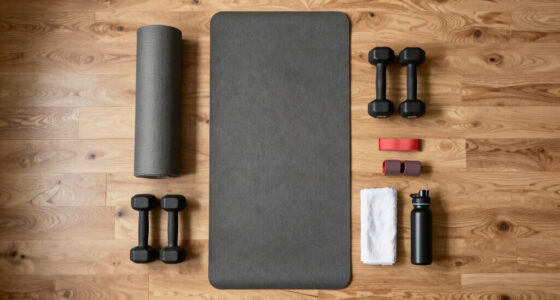
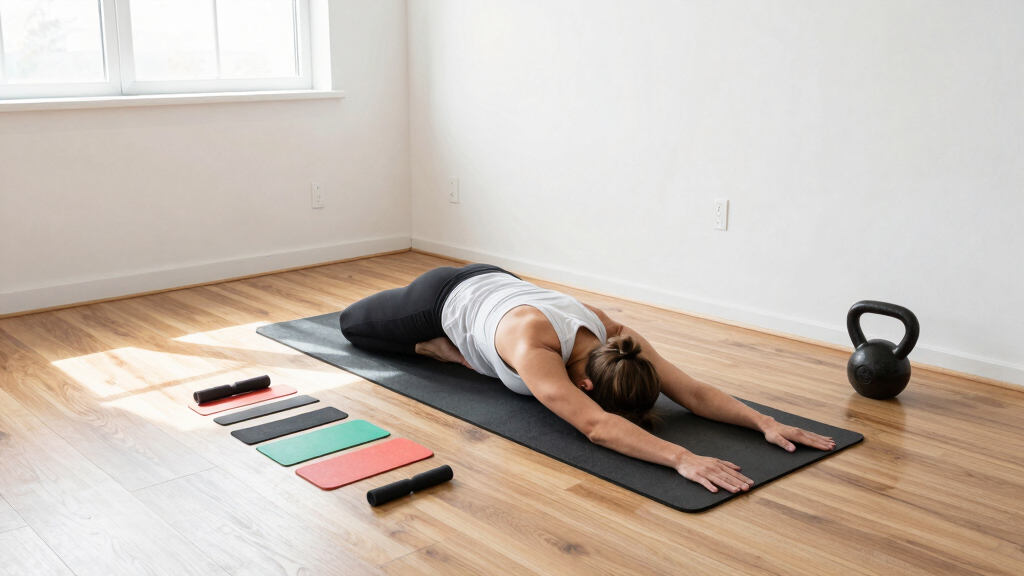
Best for a yoga mat, resistance bands, adjustable dumbbells, kettlebells, and stretching. Leave about 2 feet around your mat so transitions feel natural.
150-200 sq ft
The most useful range for mixed training. You can zone cardio, strength, and mobility without constantly moving equipment out of the way.
150-300 sq ft
Works for a treadmill, rower, squat rack, bench, and free weights. A 10×15 foot room is a practical benchmark for this kind of setup.
Data View
What your square footage buys you.
The jump from tiny to versatile is where comfort changes most. Extra square footage is not just storage; it protects lunges, jumps, overhead lifts, and safe machine entry or exit.
Measure
Start with usable floor area, ceiling height, outlets, doors, and traffic paths.
Clear
Reserve 2-3 feet around machines, benches, racks, and moving zones.
Zone
Place cardio, strength, and mobility areas so transitions stay smooth.
Store
Use walls, hooks, shelves, and foldable gear to recover floor space.
Comparison
Small gym versus full gym.
A small gym can be highly effective, but it asks for compact gear and disciplined storage. A full gym gives you better exercise variety, safer dynamic movement, and room for future expansion.
| Feature | Small Gym: 50-100 sq ft | Full Gym: 150-300 sq ft | Space Verdict |
|---|---|---|---|
| Equipment | ✓Bands, dumbbells, yoga mat, kettlebells | ✓Treadmill, rack, bench, weights, rower | Choose based on training goals first. |
| Movement Space | ~Good for stretching and bodyweight basics | ✓Better for jumps, lunges, carries, and complex lifts | More clearance means safer workouts. |
| Ceiling Height | ~8 feet works for most low-impact work | ✓9-12 feet improves overhead and plyometric work | Height matters as much as floor area. |
| Storage | ✓Wall racks, shelves, hooks, closet storage | ✓Dedicated storage units and larger stations | Vertical storage protects usable space. |
Layout Rules
Design for flow, not clutter.
The best home gyms feel easy to enter, easy to clean, and easy to adjust. Keep the floor open, push bulky gear to walls, and let your most frequent workouts decide the layout.
Small-space priorities
- Use adjustable dumbbells instead of multiple sets.
- Choose foldable cardio gear where stability still feels solid.
- Mount bands, jump ropes, and handles on wall hooks.
- Keep one open mat zone for mobility and bodyweight work.
Full-gym priorities
- Give racks and treadmills dedicated safety clearance.
- Separate cardio from loaded lifting zones.
- Leave a clear path from storage to workout area.
- Plan outlets and device placement for streaming workouts.
Ceiling height comfort scale
Quick Answers
Home gym FAQs.
Most home gym mistakes come from buying equipment before mapping the room. Start with your workout style, then confirm footprint, clearance, ceiling height, storage, and noise needs.
How much room does a treadmill need?
Most treadmills need about 6-7 feet in length and 2-3 feet in width, plus extra space for safe entry and exit.
Can an apartment corner work?
Yes. With bands, adjustable dumbbells, a mat, and wall storage, 50-100 square feet can support a strong routine.
Do I need a dedicated room?
No. A basement corner, garage bay, spare-room wall, or living-room zone can work with thoughtful organization.
What is the best first upgrade?
Improve storage and clearance before buying more gear. Open floor space makes nearly every workout safer and better.
Key Takeaways
- Aim for 150-200 square feet for a versatile, safe home gym setup.
- Leave at least 2-3 feet of clearance around equipment for safety.
- Higher ceilings (9-12 feet) improve workout safety and comfort.
- Use vertical storage and multi-use equipment to maximize small spaces.
- You don’t need a dedicated room—smart planning transforms even tiny corners.
What’s the minimum space for a basic home workout?
If you’re sticking to yoga, light dumbbells, and bodyweight moves, you can get away with just 50-100 square feet. Think of it as a cozy corner where you roll out your mat, lift a few kettlebells, and stretch. For example, a small room or a corner in your living room can turn into a mini gym with a yoga mat, a set of resistance bands, and a wall-mounted rack for your weights.
This setup lets you do effective workouts without clutter or feeling cramped. Just make sure you leave enough room to move comfortably—about 2 feet around your equipment is a good rule of thumb.
How much space do you need for full-body workouts with larger equipment?
If you want to include a treadmill, squat rack, or rowing machine, aim for 150-300 square feet. Imagine a space roughly the size of a small bedroom—around 10×15 feet—to comfortably fit your equipment and still have room to move. For example, a 12×12 foot garage with a treadmill, a weight bench, and enough clearance for safety can serve as a full gym.
Leaving 2-3 feet of space around each machine ensures you can work out safely and switch exercises easily. This extra space is crucial because it allows for natural movement patterns, reduces the risk of accidents, and provides room for dynamic exercises like lunges or jump rope. Without adequate clearance, you might feel restricted, increasing the chance of injury or frustration during workouts. The tradeoff here is between maximizing equipment and maintaining enough space to perform exercises safely and comfortably.
Why ceiling height matters and what you should aim for
Ceiling height is often overlooked but is critical for safe, effective workouts. A minimum of 8 feet works for most exercises, but higher ceilings—9 to 12 feet—are better if you lift overhead or jump. Think of a room with tall ceilings as a stage for your movements—more freedom, less risk of hitting the roof.
Higher ceilings become especially important if you perform exercises like pull-ups, overhead presses, or plyometric jumps. They prevent your movements from feeling restricted or unsafe. If ceilings are too low, you might have to modify your exercises or limit your range of motion, which can compromise your workout effectiveness. The tradeoff with higher ceilings is often space and aesthetic considerations, but investing in a taller room or ceiling modification can significantly enhance your workout quality and safety.
Designing a flexible layout: How to organize your space
Maximize your space by creating zones: a cardio corner, a strength area, and a stretching zone. For instance, place your treadmill or bike against one wall, dumbbells and kettlebells in a corner with vertical storage, and keep open space for bodyweight moves or yoga. Clear pathways prevent accidents and make your workout flow smoothly.
Using mirrors on the walls can make the space seem larger and help you check your form. Also, foldable or multi-purpose equipment—like an adjustable bench or fold-up treadmill—save precious room. When planning your layout, consider the flow of movement—arranging equipment so that you can transition seamlessly from one activity to another without clutter or obstruction. This flexibility allows you to adapt your workout routines over time and makes your space more inviting and efficient.
How to choose equipment for small spaces
In limited space, prioritize versatile, compact gear. Resistance bands, dumbbells, kettlebells, and jump ropes are perfect because they’re lightweight and take up little room. Foldable cardio machines, like a treadmill that folds up or a compact rowing machine, can slide under a bed or into a closet when not in use.
Choosing the right equipment involves balancing functionality with space efficiency. For example, adjustable dumbbells replace multiple sets, saving space while offering a range of weights. Foldable equipment offers the flexibility to store away when not in use, freeing up space for other activities or stretching. The tradeoff is that some foldable or multi-purpose equipment may be less stable or less comfortable than dedicated, larger machines, so weigh your priorities accordingly. The goal is to create a versatile setup that allows for comprehensive workouts without clutter or overcrowding.
Comparison table: Small vs. large home gym spaces
| Feature | Small Gym (50-100 sq ft) | Full Gym (150-300 sq ft) |
|---|---|---|
| Equipment | Resistance bands, dumbbells, yoga mat | Treadmill, squat rack, weights, rowing machine |
| Movement space | Enough for bodyweight exercises and stretching | Room for dynamic moves, jumps, and complex lifts |
| Ceiling height | Minimum 8 feet, higher preferred for overhead lifts | 8-12 feet for added safety and flexibility |
| Storage | Wall-mounted racks, shelves | Dedicated storage units, multi-purpose furniture |
Tips to maximize any home gym space
- Use vertical storage — wall racks, hooks, shelves.
- Opt for foldable or multi-use equipment.
- Keep the area decluttered — less stuff, more space.
- Create zones for different activities.
- Use mirrors to expand the visual space.
Is a dedicated room necessary for your home gym?
Not always. A corner of your living room, basement, or garage can work with thoughtful planning. For example, a 6×8 foot area in your basement with a fold-up treadmill and a small weight rack can become your personal workout zone. The key is organization and choosing space-efficient gear.
If privacy and quiet are important, then a dedicated room makes sense. But for most, a well-planned corner or section does just fine.
Frequently Asked Questions
How much space do I need for a treadmill or cardio machine?
Most treadmills need about 6-7 feet in length and 2-3 feet in width, with extra space for safe entry and exit. A 10×3 foot area often works well, but always check your specific model’s dimensions before buying.
Can I create a home gym in a small apartment or garage?
Absolutely. Focus on compact, foldable, or multi-purpose equipment. Even 50-100 square feet can become an effective workout corner with smart organization and minimal gear.
What equipment should I prioritize for limited space?
Resistance bands, adjustable dumbbells, kettlebells, jump ropes, and foldable cardio machines are ideal. They pack a punch while taking up minimal room, letting you do a full range of workouts.
How can I make the most of small home gym spaces?
Use vertical storage, keep the area decluttered, and create dedicated zones. Mirrors and multi-use equipment further enhance the feeling of space and functionality.
Do I need a separate room for my home gym?
Not necessarily. A corner or section of a larger room can work with good planning. If privacy or noise control is a concern, then a dedicated room might be better—otherwise, smart layout is enough.
Conclusion
Remember, size isn’t everything. With thoughtful layout and smart choices, even a small space can host a powerful workout zone. Focus on what matters—safety, comfort, and your fitness goals—and your home gym will serve you well for years to come.
Imagine stepping into your space, feeling inspired and unencumbered. That’s the real reward of good planning. So, measure, organize, and get moving!