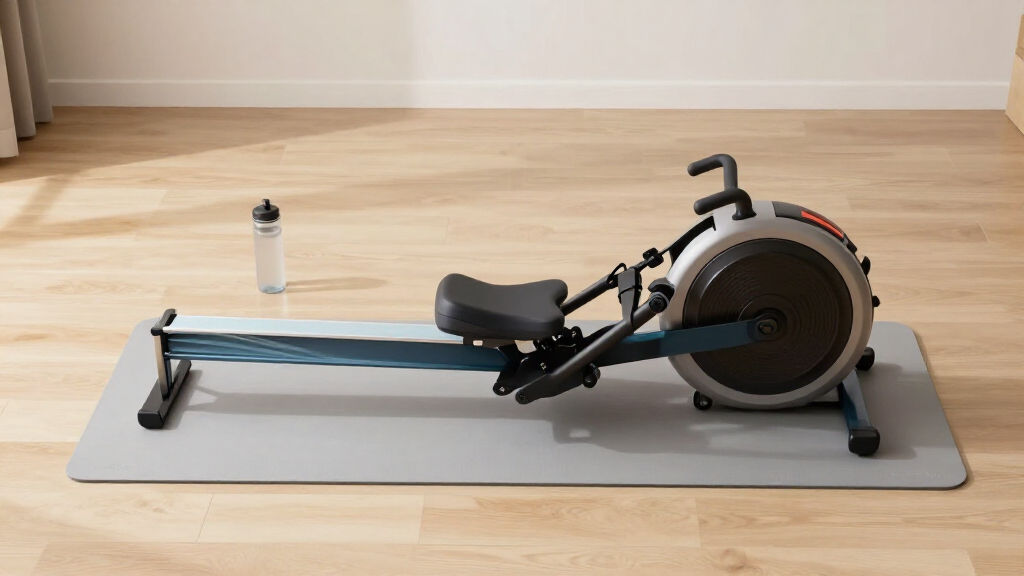

Compact home rowing machines promise a full-body, low-impact workout without surrendering half a room to equipment, and the category splits into two camps: magnetic rowers that trade a longer rail for smooth, silent resistance, and hydraulic rowers that shrink the footprint dramatically but feel less fluid at high intensity. After comparing 14 models on folded size, weight capacity, resistance range, and noise, the YOSUDA Magnetic Rower with 16-Level Resistance stands out as the best overall pick for balancing a foldable frame with a genuinely smooth stroke. Budget shoppers should look at the Sunny Health & Fitness Compact Hydraulic Rower, while the Merach Q1S makes sense if a stable, quiet dual-rail design matters more than a rock-bottom price. The main tradeoff you will face throughout this lineup is storage convenience versus stroke quality. Keep reading for the full breakdown of which machine fits your space, budget, and training goals.
Complete the kit

Key Takeaways
- Magnetic models (YOSUDA 16-Level, Merach Q1S, Dripex, Wenoker) consistently offered smoother and quieter strokes than hydraulic models, but every one of them required more floor length when unfolded than the hydraulic picks.
- Hydraulic rowers (GYMAX, Feierdun, Sunny Compact) won on footprint and price, but capped out at 265-300 lbs capacity and produced a piston feel that serious rowers will notice during long sessions.
- The 350-lb-capacity foldable magnetic rowers (picks 4, 5, and 12) occupied a middle tier: heavier frames and bundled accessories added value, but assembly time and rail weight made daily folding more of a chore.
- The Merach Q1S’s dual slide rail was the biggest stability differentiator in the lineup, eliminating the side-to-side wobble common to single-rail budget rowers at higher intensities.
- Resistance range mattered more than resistance type: 12-level models felt limiting within weeks, while 16-level magnetic rowers left room to progress without upgrading machines.
| Sunny Health & Fitness Smart Full Motion Rower |  | Best for Full-Body Strength Training | Weight Capacity: 400 lbs | Resistance Levels: 12 | Motion Type: 360-degree full motion arms | VIEW LATEST PRICE | See Our Full Breakdown |
| YOSUDA Rowing Machine for Home, Magnetic Rower with 16-Level Resistance |  | Best Overall | Slide Rail Length: 50.2 inches | Resistance Levels: 16 (magnetic) | Maximum User Height: 6’3″ | VIEW LATEST PRICE | See Our Full Breakdown |
| Sunny Health & Fitness Smart Magnetic Rower |  | Best for App-Guided Workouts | Slide Rail Length: 45.7 inches | Maximum Inseam: 40.9 inches | Weight Capacity: 300 lbs | VIEW LATEST PRICE | See Our Full Breakdown |
| YPOO Rowing Machine for Home, 350 LB Capacity, 16-Level Silent Magnetic Resistance, Foldable |  | Best Compact Value | Weight Capacity: 350 lbs | Resistance Levels: 16 (magnetic) | Maximum User Height: 6’3″ | VIEW LATEST PRICE | See Our Full Breakdown |
| Magnetic Rowing Machine with LCD Monitor, Knee Pads, Gloves & Pull Rope |  | Best Starter Bundle | Weight Capacity: 350 lbs | Resistance Type: Magnetic, adjustable with incline | Machine Weight: 10.2 kg (22.5 lbs) | VIEW LATEST PRICE | See Our Full Breakdown |
| GYMAX Hydraulic Rowing Machine with LCD Monitor |  | Best Full-Motion Arms | Resistance: Adjustable hydraulic, up to 110 lbs | Max User Weight: 265 lbs | Seat: Large cushioned seat | VIEW LATEST PRICE | See Our Full Breakdown |
| Feierdun Hydraulic Rowing Machine for Home |  | Best Budget Starter Rower | Weight Capacity: 300 lbs | Resistance Levels: 12 hydraulic levels | Machine Weight: 22.4 lbs | VIEW LATEST PRICE | See Our Full Breakdown |
| Merach Q1S Magnetic Rowing Machine |  | Best Overall | Dimensions: 65L x 19.3W x 24.8H inches | Product Weight: 42 lbs | Max User Weight: 350 lbs | VIEW LATEST PRICE | See Our Full Breakdown |
| YOSUDA Magnetic Rowing Machine for Home |  | Best for Apartment Quiet | Resistance Levels: 16 magnetic levels | Load Capacity: 350 lbs | Dimensions: 59 x 19 x 25 inches | VIEW LATEST PRICE | See Our Full Breakdown |
| Sunny Health & Fitness Compact Hydraulic Rower |  | Best Ultra-Light Pick | Resistance Levels: 12 hydraulic levels | Machine Weight: 22.4 lbs | Frame Material: Alloy steel | VIEW LATEST PRICE | See Our Full Breakdown |
| Dripex Rowing Machine, Upgraded Magnetic Rower for Home |  | Best for Apartment Living | Flywheel Weight: 12 lbs | Resistance Levels: 16 | Maximum User Weight: 360 lbs | VIEW LATEST PRICE | See Our Full Breakdown |
| Rowing Machine for Home Workout with LCD Monitor, 350LBS Capacity, Quiet Resistance, Extras Included |  | Best Starter Bundle | Weight Capacity: 350 lbs | Max User Height: 6’1″ | Monitor: LCD with real-time workout data | VIEW LATEST PRICE | See Our Full Breakdown |
| Wenoker Magnetic Rowing Machine for Home, Full Body Workout, 16 Resistance Levels |  | Best Small-Footprint Storage | Resistance Levels: 16 | Max User Weight: 350 lbs | Slide Rail Length: 39 inches | VIEW LATEST PRICE | See Our Full Breakdown |
| Merach RS3 Rowing Machine for Home Gym |  | Best Smart Training Experience | Resistance: Up to 80 lbs, 16 adjustable levels | Dimensions: 60.6L x 29.5W x 28.3H inches | Weight Capacity: 350 lbs | VIEW LATEST PRICE | See Our Full Breakdown |
| compact home rowing machine | Resistance Levels | Weight Capacity | Connectivity |
|---|---|---|---|
| Sunny Health & Fitness Smart F | 12 | 400 lbs | SunnyFit app |
| YOSUDA Rowing Machine for Home | 16 (magnetic) | 350 lbs | Bluetooth with coaching apps |
| Sunny Health & Fitness Smart M | 16 (magnetic) | 300 lbs | SunnyFit app |
| YPOO Rowing Machine for Home | 16 (magnetic) | 350 lbs | — |
| Magnetic Rowing Machine with L | — | 350 lbs | — |
| GYMAX Hydraulic Rowing Machine | — | — | — |
| Feierdun Hydraulic Rowing Mach | 12 hydraulic levels | 300 lbs | — |
| Merach Q1S Magnetic Rowing Mac | — | — | App-enabled with guided workouts |
| YOSUDA Magnetic Rowing Machine | 16 magnetic levels | — | Smart app with guided training |
| Sunny Health & Fitness Compact | 12 hydraulic levels | — | — |
| Dripex Rowing Machine | 16 | — | Bluetooth |
| Rowing Machine for Home Workou | — | 350 lbs | — |
| Wenoker Magnetic Rowing Machin | 16 | — | — |
| Merach RS3 Rowing Machine for | — | 350 lbs | Bluetooth |
More Details on Our Top Picks
Sunny Health & Fitness Smart Full Motion Rower
Most budget rowers force you into a fixed pulling path, but the 360-degree motion arms on this Sunny model change the workout entirely — you can row straight, arc high, or pull low, which recruits shoulders, chest, and core in ways a standard cable rower like the YOSUDA simply can’t match. The 400 lb weight capacity is the highest in this batch, making it a standout for bigger riders who often get sidelined by 250–300 lb limits elsewhere. Twelve resistance levels are fewer than the 16 you’ll find on magnetic rivals, and hydraulic-style arms feel less smooth than magnetic rails, so stroke quality is the tradeoff here. Still, for buyers who want strength variety rather than pure endurance cardio, this option makes the most sense.
Pros:- 360-degree motion arms add strength-training variety
- 400 lb weight capacity leads this batch
- Compact footprint for a full-motion design
- SunnyFit app adds guided structure
Cons:- Arm-based resistance feels less smooth than magnetic systems
- Only 12 resistance levels versus 16 on competitors
- App requires a compatible device
Best for: Larger riders and strength-focused users who want upper-body variety beyond a straight rowing pull
Not ideal for: Endurance rowers chasing long, smooth cardio sessions — the arm-based motion can’t match magnetic rails for fluidity
- Weight Capacity:400 lbs
- Resistance Levels:12
- Motion Type:360-degree full motion arms
- Connectivity:SunnyFit app
- Foot Pedals:Large anti-slip with adjustable straps
- Assembly:Easy
- Monitor:Stroke rate, time, count, calories, total strokes
Our verdict“Buy this if you want a rower that doubles as a light strength machine and need a high weight capacity; skip it if smooth cardio miles are your priority.”
YOSUDA Rowing Machine for Home, Magnetic Rower with 16-Level Resistance
This is the pick I’d point most buyers toward, because it gets the fundamentals right where cheaper models cut corners. The upgraded heavy-duty flywheel delivers consistent momentum with no dead zones — a real weakness on lighter magnetic rowers like the YPOO — and the 50.2-inch slide rail is the longest in this batch, fitting users up to 6’3″ without cramping their stroke. Compared with the Sunny Smart Magnetic Rower, which offers a similar 16 resistance levels, the YOSUDA pulls ahead on frame rigidity: the reinforced mono-rail eliminates the wobble that taller, heavier rowers notice on budget frames. Operation under 20dB means apartment dwellers can train at dawn without complaints. The tradeoff is size — the long rail makes it bulkier than folding options, and it needs floor space even when rolled away.
Pros:- 50.2-inch slide rail accommodates users up to 6’3″
- Upgraded flywheel eliminates jerky motion and dead zones
- Under 20dB operation is apartment-friendly
- 350 lb capacity on a wobble-free mono-rail frame
Cons:- Doesn’t fold as compactly as dedicated folding models
- Longer rail requires more floor space when stored upright
Best for: Tall or dedicated rowers who want gym-quality stroke length and stability for daily training
Not ideal for: Buyers with very tight storage space — the long rail means it doesn’t fold down as small as compact rivals
- Slide Rail Length:50.2 inches
- Resistance Levels:16 (magnetic)
- Maximum User Height:6’3″
- Weight Capacity:350 lbs
- Noise Level:Under 20 dB
- Frame:Reinforced mono-rail
- Connectivity:Bluetooth with coaching apps
Our verdict“The most complete package for serious home rowing — get it if stroke quality and user fit matter more than minimum storage footprint.”
Sunny Health & Fitness Smart Magnetic Rower
Where this Sunny model earns its spot is the SunnyFit app integration — scenic routes and personalized training plans give structure that most budget rowers, including the YPOO and the generic LCD-monitor options in this guide, simply don’t offer. The 16 magnetic resistance levels match the YOSUDA, so intensity range isn’t compromised. Where it falls behind is fit: the 45.7-inch rail with a 40.9-inch maximum inseam is shorter than YOSUDA’s 50.2-inch rail, so taller rowers may feel their stroke cut short. The 300 lb weight capacity is also the lowest among the magnetic picks here, which matters for heavier buyers. For average-sized users who thrive on guided content rather than raw metrics, this pick makes the most sense — it turns a quiet magnetic rower into something closer to a coached experience.
Pros:- SunnyFit app with scenic routes and personalized plans
- 16 quiet magnetic resistance levels
- Smooth full-body engagement
- Padded seat and foam-covered handlebar for comfort
Cons:- Shorter 45.7-inch rail limits tall users
- 300 lb weight capacity trails the 350–400 lb rivals
- Assembly can be fiddly
Best for: Average-height beginners and app-driven exercisers who want structured, scenic guided workouts
Not ideal for: Tall or heavier users — the shorter rail and 300 lb capacity limit both fit and safety margins
- Slide Rail Length:45.7 inches
- Maximum Inseam:40.9 inches
- Weight Capacity:300 lbs
- Resistance Levels:16 (magnetic)
- Connectivity:SunnyFit app
- Frame Material:Sturdy metal
- Seat:Padded
Our verdict“The right choice if guided app workouts will keep you consistent — just check the inseam limit before buying if you’re over six feet.”
YPOO Rowing Machine for Home, 350 LB Capacity, 16-Level Silent Magnetic Resistance, Foldable
If storage is the deciding factor, this YPOO makes a strong case: it folds down to roughly 2.9 square feet of footprint, something neither the YOSUDA nor the Sunny Smart Magnetic Rower can claim, and transport wheels make stashing it in a closet realistic. You still get the full 16 resistance levels and a 350 lb capacity, so the core specs hang with pricier picks — no hydraulic-style compromise like the GYMAX or Feierdun models. The compromises show up in the details: the 46-inch rail is shorter than YOSUDA’s 50.2 inches, and noise sits under 25dB rather than under 20dB, which is a real (if small) difference for light sleepers in a studio apartment. Assembly also takes patience. For buyers balancing budget and floor space, this is the value sweet spot.
Pros:- Folds to about 2.9 sq. ft. for genuine space savings
- 16 resistance levels match pricier competitors
- 350 lb capacity suits most households
- Under 25dB operation works for shared living spaces
Cons:- Shorter 46-inch rail than the YOSUDA limits stride length
- Slightly noisier than sub-20dB rivals
- Assembly takes real time and effort
Best for: Apartment dwellers and small-home buyers who need a full-spec rower that genuinely folds away
Not ideal for: Very tall users or those wanting the smoothest, quietest ride — the shorter rail and 25dB rating sit a step behind premium picks
- Weight Capacity:350 lbs
- Resistance Levels:16 (magnetic)
- Maximum User Height:6’3″
- Slide Rail Length:46 inches
- Noise Level:Under 25 dB
- Folded Footprint:2.9 sq. ft.
- Storage:Foldable with transport wheels
Our verdict“The smart buy when floor space is scarce — you give up a little rail length and quietness to gain a true folding frame.”
Magnetic Rowing Machine with LCD Monitor, Knee Pads, Gloves & Pull Rope
This option plays a different game: instead of competing on frame specs with the YOSUDA or YPOO, it wins on out-of-the-box completeness. The included knee pads, workout gloves, seat pad, and extra pull rope mean a first-time buyer gets everything needed to start training without extra purchases — and the pull rope opens up accessory exercises no other pick here offers. At just 10.2 kg, it’s far lighter than any rival, so moving it between rooms is genuinely easy, though that lightness hints at a lighter-duty build. The basic LCD monitor can’t match the app-connected experience of the Sunny Smart Magnetic Rower, and serious rowers will find the resistance ceiling limiting. For a beginner testing whether home rowing sticks, this bundle lowers the barrier better than anything else in the lineup.
Pros:- Includes gloves, knee pads, seat pad, and extra pull rope
- Very light 10.2 kg frame is easy to relocate
- Foldable design suits small spaces
- Adjustable resistance and incline for varied beginner training
Cons:- Light build suggests less durability than heavier rivals
- Basic LCD monitor lacks app connectivity
- Resistance may feel limited as fitness improves
Best for: Fitness newcomers who want a complete starter package with accessories rather than a bare machine
Not ideal for: Experienced rowers — the light frame, basic monitor, and modest resistance ceiling will be outgrown quickly
- Weight Capacity:350 lbs
- Resistance Type:Magnetic, adjustable with incline
- Machine Weight:10.2 kg (22.5 lbs)
- Dimensions:125 x 47.5 x 67 cm
- Frame Material:Stainless steel and plastic
- Monitor:LCD monitor
- Includes:Rower, knee pads, gloves, pull rope, seat pad, user manual
Our verdict“A low-commitment entry point for beginners who value included extras over long-term performance — upgrade later if rowing sticks.”
GYMAX Hydraulic Rowing Machine with LCD Monitor
Most compact rowers make you pull a single handlebar, but the GYMAX full-motion arms move independently, which mimics the feel of real water rowing and works the shoulders and back through a wider range. That alone separates it from the Feierdun and the Sunny Health & Fitness Compact Hydraulic Rower, both of which use fixed handles. The resistance tops out at 110 lbs, which is generous for a hydraulic unit, and the LCD monitor covers the basics — time, count, calories, distance.
The tradeoff is familiar: hydraulic pistons feel less fluid than the Merach Q1S magnetic system, and there’s no folding frame. This option makes the most sense for buyers who value the arm motion over silence or storage footprint.
Pros:- Full-motion arms mimic real water rowing and engage more of the upper body
- Adjustable hydraulic resistance up to 110 lbs suits a range of fitness levels
- Large cushioned seat adds comfort for longer sessions
- Oversized textured pedals with adjustable straps keep feet secure
Cons:- Hydraulic resistance feels less smooth than magnetic rowers like the Merach Q1S
- No foldable design, so it takes up permanent floor space
Best for: Buyers who want a more authentic, muscle-engaging stroke than a fixed-handle rower can offer
Not ideal for: Apartment dwellers with zero storage space — it doesn’t fold, so it lives fully assembled in the room
- Resistance:Adjustable hydraulic, up to 110 lbs
- Max User Weight:265 lbs
- Seat:Large cushioned seat
- Display:LCD monitor showing time, count, calories, distance
- Frame Material:Steel
- Foot Pedals:Oversized, textured with adjustable straps
- Arm Design:Full-motion independent arms
Our verdict“A solid pick for anyone who prioritizes a realistic rowing motion and doesn’t need to stash the machine under a bed.”
Feierdun Hydraulic Rowing Machine for Home
At just 22.4 lbs, the Feierdun is one of the lightest machines in this roundup — half the weight of the Merach Q1S — which means one person can tilt and roll it into a closet without effort. Its 12 resistance levels and roughly five-minute assembly make it a low-commitment entry point, whereas the YOSUDA Magnetic asks for a 25-minute build and more floor space. Compared with the similarly lightweight Sunny Health & Fitness Compact Hydraulic Rower, the Feierdun’s 300 lb capacity is the standout advantage for heavier beginners.
The compromises are real, though: no app connectivity, no advanced metrics, and a hydraulic stroke that won’t feel as buttery as a magnetic flywheel. This pick makes the most sense for first-timers testing whether rowing sticks.
Pros:- Featherlight 22.4 lb frame is effortless to move and store
- Quick 5-minute setup gets you rowing almost immediately
- 12 resistance levels allow gradual progression for beginners
- Low-impact motion is easy on knees and joints
Cons:- Hydraulic resistance is less smooth than magnetic options like the Merach Q1S
- Basic feature set with no smart connectivity or advanced metrics
- Not built for commercial or heavy daily gym use
Best for: Fitness beginners who want a cheap, low-commitment way to try rowing at home
Not ideal for: Data-driven trainees — there’s no app integration or detailed performance tracking here
- Weight Capacity:300 lbs
- Resistance Levels:12 hydraulic levels
- Machine Weight:22.4 lbs
- Assembly:Quick 5-minute setup
- Resistance Type:Hydraulic (low-impact)
- Design:Compact, portable
Our verdict“An easy, low-risk first rower for casual users — as long as you don’t expect smart features or a silky stroke.”
Merach Q1S Magnetic Rowing Machine
If I had to point one buyer at a single machine in this lineup, the Merach Q1S would be it. The magnetic flywheel delivers the quiet, consistent stroke that every hydraulic model here — the GYMAX, Feierdun, and Sunny Compact — simply can’t match, and the dual slide rails add stability that single-rail designs lack. With a 350 lb capacity and accommodation for users up to 6’5″, it fits a wider range of bodies than the YOSUDA Magnetic, which tops out around 5’11”. App connectivity rounds it out with guided workouts.
It isn’t flawless: assembly can frustrate, the 42 lb frame is heavier to move than the 22 lb Feierdun, and you’ll need to supply your own tablet. But the storage footprint of 1.6 x 2.1 feet keeps it compact enough for most homes.
Pros:- Quiet, smooth magnetic flywheel works in apartments and shared spaces
- Dual slide rails provide stability and prevent tipping during hard strokes
- Supports up to 350 lbs and users up to 6’5″ tall
- App integration offers guided workouts and performance tracking
Cons:- Assembly can be challenging for some users
- Heavier at 42 lbs than hydraulic competitors like the Feierdun
- Tablet or phone not included for app features
Best for: Serious home rowers who want a quiet, stable, app-connected machine that fits tall users
Not ideal for: Buyers who want the absolute lightest machine to carry around — at 42 lbs, it’s nearly double the Feierdun
- Dimensions:65L x 19.3W x 24.8H inches
- Product Weight:42 lbs
- Max User Weight:350 lbs
- Height Fit:Up to 6’5″
- Resistance Type:Magnetic flywheel
- Space Needed:1.6 x 5.7 feet
- Storage Space:1.6 x 2.1 feet
- Seat Dimensions:9.5L x 11.5W x 2.3H inches
- Connectivity:App-enabled with guided workouts
Our verdict“The best all-around balance of quiet performance, stability, and smart features — worth the extra heft if rowing is your main cardio.”
YOSUDA Magnetic Rowing Machine for Home
The YOSUDA Magnetic earns its spot through whisper-quiet operation and a 16-level resistance range that gives it more headroom than the 12-level hydraulic models from Feierdun and Sunny Health & Fitness. The wide-track design keeps the machine planted during aggressive strokes, and like the Merach Q1S, it supports 350 lbs while adding app-based guided training. At 59 inches long, it’s also slightly shorter than the 65-inch Merach, which matters in tight rooms.
Where it falls short of the Merach Q1S is user height: it fits riders 4’5″ to 5’11”, so taller households should steer toward the Merach instead. Assembly takes about 25 minutes, and advanced rowers may find the resistance ceiling limiting. For average-height apartment dwellers, though, this model hits a sweet spot of quiet, stability, and price.
Pros:- Quiet magnetic resistance with 16 levels for fine-grained intensity control
- Engages over 85% of muscles while staying gentle on knees
- Wide track and 350 lb capacity provide a stable, planted ride
- Smart app connectivity for guided training and tracking
Cons:- User height limit of 5’11” excludes taller rowers
- 25-minute assembly is longer than the Feierdun’s 5-minute setup
- Resistance ceiling may not challenge advanced athletes
Best for: Apartment residents under 6 feet who need silent workouts and don’t want to disturb neighbors
Not ideal for: Taller users over 5’11” — the Merach Q1S accommodates them, this one doesn’t
- Resistance Levels:16 magnetic levels
- Load Capacity:350 lbs
- Dimensions:59 x 19 x 25 inches
- Suitable User Height:4’5″ to 5’11”
- Track Design:Wider track for stability
- Connectivity:Smart app with guided training
- Noise Level:Quiet, apartment-friendly
Our verdict“A quiet, stable, well-connected rower for average-height users — just check the height limit before buying.”
Sunny Health & Fitness Compact Hydraulic Rower
Weighing in at 22.4 lbs, the Sunny Compact is built for people who row in shared living rooms and need the machine gone afterward. Compared with the Merach Q1S at 42 lbs, this thing practically disappears into a corner or under furniture. The 12-level hydraulic resistance and included device holder give it a slight convenience edge over the similarly weighted Feierdun, letting you follow along with videos during a session. Setup is quick and operation stays quiet enough for shared spaces.
But the light frame has consequences: it’s not built for intense or long sessions, and the digital display is bare-bones with no app ecosystem, unlike the Merach or YOSUDA Magnetic. Treat this as a light-cardio convenience machine, not a training tool.
Pros:- Ultra-lightweight 22.4 lb design is effortless to move and store
- 12 resistance levels cover a decent range for casual workouts
- Built-in device holder lets you follow workout videos
- Quiet operation works in shared living spaces
Cons:- Not suitable for intense or long-duration rowing sessions
- Basic digital display lacks app connectivity and advanced tracking
- Hydraulic stroke is less smooth than magnetic machines like the YOSUDA
Best for: Casual users in small apartments or dorms who want light cardio and easy stowaway
Not ideal for: Serious trainees — the light frame and basic display can’t support intense or endurance sessions
- Resistance Levels:12 hydraulic levels
- Machine Weight:22.4 lbs
- Frame Material:Alloy steel
- Device Holder:Yes
- Assembly:Quick and easy
- Operation:Quiet
- Display:Basic digital monitor
Our verdict“The easiest machine in this roundup to live with day-to-day — as long as your ambitions stay casual.”
Dripex Rowing Machine, Upgraded Magnetic Rower for Home
This option stands out for one reason above all: near-silent operation below 15 decibels, which makes it quieter than the Wenoker (under 30 dB) and quiet enough to row during a phone call in the next room. The dual slide design adds a stability advantage that single-rail budget rowers like the LCD Monitor model lack, and the 360 lb weight capacity beats most magnetic competitors in this lineup by ten pounds. Assembly in roughly 20 minutes means it arrives usable the same day. Compared with the Merach RS3, the tradeoff is clear: no interactive courses, no games, just Bluetooth metrics. This pick makes the most sense for buyers who value silence and storage over smart features, and who accept a basic connected experience in exchange for it.
Pros:- Below 15 dB operation makes it one of the quietest machines in this roundup
- 360 lb weight capacity exceeds most magnetic competitors here
- Dual slide rail keeps the seat steady under hard efforts
- Assembles in about 20 minutes with easy move and store features
Cons:- Bluetooth-only connectivity with no Wi-Fi or app ecosystem
- No built-in workout programs to guide training progression
Best for: Apartment dwellers and shared-office users who need an almost silent machine they can wheel into a closet
Not ideal for: Data-driven trainees who want structured workouts, since there are no built-in programs and connectivity is Bluetooth-only
- Flywheel Weight:12 lbs
- Resistance Levels:16
- Maximum User Weight:360 lbs
- Slide Length:48.8 inches
- Noise Level:Below 15 decibels
- Connectivity:Bluetooth
- Assembly Time:20 minutes
Our verdict“Buy it if silence is your top priority and you don’t need interactive training content.”
Rowing Machine for Home Workout with LCD Monitor, 350LBS Capacity, Quiet Resistance, Extras Included
Where the Dripex and Wenoker machines ship bare, this model arrives like a starter kit: knee pads, workout gloves, a seat cushion, and a spare pull rope come in the box, which softens the true cost of getting into rowing for a first-timer. The 350 lb steel frame and support for users up to 6’1″ cover most households, and the quiet, low-impact resistance keeps it living-room friendly. The catch is intelligence. Compared with the Wenoker, which supports app tracking, this machine’s basic LCD offers no connectivity at all — no Bluetooth, no app, no guided workouts. That simplicity is either a feature or a flaw depending on the buyer. For someone who wants to sit down, row, and see time and distance on a screen, the extras here justify choosing it over the app-connected alternatives.
Pros:- Includes knee pads, gloves, seat cushion, and an extra pull rope at no added hassle
- 350 lb capacity with support for users up to 6’1″ tall
- Quiet, low-impact resistance suits shared living spaces
- Compact footprint and easy storage for small homes
Cons:- No app integration, Bluetooth, or built-in workout programs
- LCD tracking is limited to basic metrics only
Best for: First-time rowers who want a complete out-of-the-box setup with comfort accessories included
Not ideal for: Tech-oriented users or anyone over 6’1″ who wants app tracking or a taller frame
- Weight Capacity:350 lbs
- Max User Height:6’1″
- Monitor:LCD with real-time workout data
- Resistance:Quiet, low-impact magnetic
- Included Extras:Knee pads, workout gloves, seat cushion, extra pull rope
- Storage:Space-saving design
- Warranty:1 year
Our verdict“The smart choice for beginners who value included accessories over smart features.”
Wenoker Magnetic Rowing Machine for Home, Full Body Workout, 16 Resistance Levels
Among the compact machines in this roundup, the Wenoker makes its case through storage. It folds to a vertical footprint of just 3.1 square feet, standing up against a wall more neatly than the Dripex, which lacks a comparable vertical-fold spec, and far more compactly than the floor-hogging Merach RS3. The 16-level magnetic resistance at under 30 dB gives beginners room to grow, and app compatibility puts it a step ahead of the LCD Monitor bundle, which offers no connectivity at all. The honest tradeoff is the 39-inch slide rail — noticeably shorter than the Dripex’s 48.8 inches — which taller rowers will feel as compressed stroke length. This model is better suited to small-space buyers of average height than to lanky athletes chasing a full-range rowing motion. Assembly takes about 20 minutes, and transport wheels make repositioning easy.
Pros:- Vertical storage at just 3.1 sq ft — the tightest folded footprint in this batch
- 16 silent magnetic resistance levels with room to progress
- App connectivity for workout tracking
- Heavy-duty steel frame rated to 350 lbs with transport wheels
Cons:- Short 39-inch slide rail limits stroke length for taller users
- No built-in workout programs — app provides data but not guided sessions
Best for: Small-apartment residents who need a machine that stands vertically in a corner between workouts
Not ideal for: Tall users or long-stroke rowers — the 39-inch rail restricts full leg drive
- Resistance Levels:16
- Max User Weight:350 lbs
- Slide Rail Length:39 inches
- Noise Level:Less than 30 dB
- Frame Material:Steel
- Storage Footprint:Vertical, 3.1 sq ft
- App Compatibility:Yes
- Assembly Time:20 minutes
Our verdict“Pick it when a tiny stored footprint matters more than a long rail.”
Merach RS3 Rowing Machine for Home Gym
If the Wenoker is a data tracker and the LCD Monitor bundle is a bare screen, the Merach RS3 is the closest thing in this batch to a connected training platform. Bluetooth unlocks access to over 1,000 interactive courses and games, plus multiple workout modes that keep sessions from going stale. Its 80 lb maximum magnetic resistance outmuscles every standard 16-level rower here, making it the pick for stronger users who find typical home resistance topping out too early. It also accommodates users up to 6’4″ — taller than the LCD Monitor model’s 6’1″ ceiling. The RS3 gives up the compactness race, though. At roughly 60 by 30 inches with no vertical-fold spec matching the Wenoker’s 3.1 square feet, it demands real floor space, and full features require a Bluetooth connection. Compared with the Dripex, it trades near-total silence for a far richer workout library.
Pros:- Access to over 1,000 interactive courses and games via Bluetooth
- Up to 80 lbs of resistance — far more ceiling than standard 16-level magnetic rowers
- Accommodates users up to 6’4″ and 350 lbs
- Pre-assembled components make setup quick
Cons:- Largest footprint in this batch; not ideal for small rooms
- Requires a Bluetooth connection and paired device for full functionality
Best for: Motivated trainees and taller users who want interactive classes, games, and resistance headroom for hard efforts
Not ideal for: Buyers in tight apartments — the large footprint and Bluetooth dependence make it a poor fit for minimal spaces
- Resistance:Up to 80 lbs, 16 adjustable levels
- Dimensions:60.6L x 29.5W x 28.3H inches
- Weight Capacity:350 lbs
- Max User Height:6’4″
- Connectivity:Bluetooth
- Training Content:1,000+ interactive courses and games
- Assembly:Pre-assembled components for quick setup
Our verdict“The strongest pick for engaged training — as long as you have the floor space and a phone handy.”

How We Picked
I evaluated every model through one specific lens: how well it delivers a real rowing workout in a small living space. That meant prioritizing folded footprint and whether folding was a one-person, ten-second job or an awkward two-step process, stroke smoothness across the resistance range, noise at moderate intensity (a dealbreaker for apartment dwellers and early-morning sessions), and weight capacity plus rail length to confirm each machine actually fits a range of body sizes rather than just claiming to.
I also weighed build quality signals like seat roller construction, monitor usefulness, and warranty coverage, plus the practical realities of assembly and moving the machine between workouts. Machines ranked higher when their tradeoffs were honest: a compact hydraulic rower that owns its size limitation beat a magnetic rower with a wobbly rail or a folding mechanism nobody would use daily. Bundled extras like gloves and knee pads influenced value scoring only when they addressed a genuine need, never as padding.
| compact home rowing machine | Connectivity |
|---|---|
| Sunny Health & Fitness Smart F | SunnyFit app |
| YOSUDA Rowing Machine for Home | Bluetooth with coaching apps |
| Sunny Health & Fitness Smart M | SunnyFit app |
| YPOO Rowing Machine for Home | — |
| Magnetic Rowing Machine with L | — |
| GYMAX Hydraulic Rowing Machine | — |
| Feierdun Hydraulic Rowing Mach | — |
| Merach Q1S Magnetic Rowing Mac | App-enabled with guided workouts |
| YOSUDA Magnetic Rowing Machine | Smart app with guided training |
| Sunny Health & Fitness Compact | — |
| Dripex Rowing Machine | Bluetooth |
| Rowing Machine for Home Workou | — |
| Wenoker Magnetic Rowing Machin | — |
| Merach RS3 Rowing Machine for | Bluetooth |
Factors to Consider When Choosing Compact Home Rowing Machines
Choosing between compact rowing machines comes down to matching the machine’s core compromise to your living situation and training habits, not just picking the cheapest foldable option.Hydraulic vs. Magnetic Resistance: The Defining Choice
This is the single biggest fork in the road, and it explains most of the price spread across the category. Hydraulic pistons let manufacturers build rowers with much shorter rails because the resistance cylinder sits at the front of the machine rather than requiring a long glide path for a flywheel or magnet band. That makes them the default choice for genuinely tight spaces, under 6 feet of clearance, but pistons heat up during long sessions, can feel sticky or jerky as they age, and rarely replicate the connected, building resistance of a real stroke. Magnetic resistance feels smoother, runs nearly silent, and holds its feel over years, but the machines are longer and heavier even when folded. A common mistake is buying hydraulic for the footprint without testing your tolerance for the piston feel — many buyers abandon these machines within months for this reason alone. If you plan to row more than three times per week, magnetic is almost always the better long-term answer.
Measure Your Space Unfolded, Not Folded
Manufacturers market folded dimensions, but you row on the machine unfolded, and rail lengths in this category range from under 50 inches for hydraulic models to well over 70 for magnetic ones. Add your own body to that math: you need your full leg extension plus roughly a foot of clearance behind the seat at the catch position. Height limits are the hidden trap here — budget magnetic rowers often specify inseam maximums around 35 to 38 inches, and taller rowers regularly discover mid-assembly that they cannot complete a full stroke. Another overlooked factor is ceiling height and ceiling fans, since the handle travels above head height at the finish. Finally, check the folded depth against wherever the machine will actually live, whether that is a closet, beside a sofa, or standing upright against a wall, because some ‘foldable’ models only fold flat and still demand floor space.
Weight Capacity and Rail Stability
Capacity ratings in this roundup span from 265 lbs to 350 lbs, and the gap reflects real structural differences, not marketing. Single-rail budget designs concentrate the seat and user weight on one track, which is fine at lower intensities but can develop side-to-side flex during aggressive drives — this is where dual-rail designs like the Merach Q1S earn their price premium. My advice: treat the stated capacity as a ceiling for comfort, not a target. If you are within about 40 lbs of a machine’s limit, expect more frame flex, faster seat-roller wear, and a less stable feel over time. Also look at seat height from the floor, since very low seats make the machine harder for anyone with knee or hip mobility limits to mount and dismount — a detail almost never mentioned in listings but immediately obvious in daily use.
Resistance Range and Room to Progress
A 12-level machine and a 16-level machine sound similar, but progression headroom is where budget rowers quietly fail buyers. Beginners start anywhere, but within six to eight weeks of consistent rowing, most people outgrow the top settings on entry-level hydraulic machines, leaving nowhere to go. Magnetic rowers with 16 levels solve this by spacing resistance finely enough that there is always a next step, which matters if rowing becomes your primary cardio rather than a supplement. Resistance adjustability also affects household sharing: fine level increments let two users of different fitness levels share one machine without one person always rowing at a compromise setting. When comparing specs, look at how resistance is adjusted too — a simple dial or pull-handle you can reach mid-stroke beats a setting you can only change while stopped.
Noise, Neighbors, and Workout Timing
Resistance type drives most of the noise profile, but it is not the whole story. Magnetic rowers are near-silent in resistance, yet their seat rollers, rail joints, and footplate adjustments can still squeak or clack, and cheap rollers degrade into noise over months of use. Hydraulic pistons produce a faint whoosh plus occasional creaks that intensify as cylinders wear. If you row in an apartment or before household members wake up, prioritize magnetic machines with solid or dual rails, and read the seat mechanism details rather than just the resistance description. One practical upgrade worth planning for: a thick rubber mat under any rower cuts both transmitted vibration through floors and operational noise dramatically, and it costs a fraction of trading up to a premium model for quiet alone.
Assembly, Portability, and the Realities of Folding
Compact rowing machines arrive in boxes that weigh 50 to 90 lbs, and assembly difficulty varies from a 30-minute bolt-on job to a two-person, multi-hour project — heavier 350-lb-capacity magnetic models tend toward the latter. Check transport wheel placement if you will move the machine regularly, because wheels at the front only work well when you can tip the machine safely. On folding, distinguish between machines that fold in seconds with a pin or latch and those requiring rail removal or tool work; the second kind rarely gets folded, which defeats the point of buying compact. Also confirm whether the machine can stand upright for storage, since vertical storage against a wall recovers the most floor space of any design in this category. If daily folding is part of your plan, weight matters as much as mechanism — an 80-lb rower you fold after every session becomes a chore by week two.
Frequently Asked Questions
Can a compact hydraulic rower give me as good a workout as a magnetic one?
For calorie burn and muscle engagement, yes — your effort determines the workout, not the resistance mechanism. Where hydraulic machines fall short is stroke feel and durability of that feel: pistons can feel uneven through the pull and may degrade after months of regular use, which quietly reduces how much you enjoy and stick with rowing. Magnetic rowers deliver consistent resistance for years with almost no maintenance. If you row occasionally or need the smallest possible footprint, hydraulic is a reasonable choice; if rowing is becoming your main cardio, the smoother magnetic stroke is worth the extra length and cost.
Will a compact rowing machine actually fit me if I’m tall?
Height compatibility is the most common return reason in this category, so check inseam or maximum user height before anything else. Hydraulic rowers, with their shorter rails, are the riskiest for tall users — many max out around 6 feet or slightly under. Magnetic models with full-length rails typically accommodate users up to about 6’4″, though some budget magnetic machines still cut the rail short to save space. As a rule, if a listing does not state a height limit, assume the conservative case and measure your seated leg extension against the published rail length before ordering.
Is a 350-lb capacity rower necessary even if I weigh much less?
Not strictly necessary, but capacity is a useful proxy for overall build quality. A higher rating usually means a heavier frame, thicker rail, and more robust seat rollers, all of which translate into a more stable feel and slower wear regardless of your weight. Users near a machine’s limit will notice flex and premature component wear, so a comfortable buffer of 40 lbs or more is smart. That said, paying for a 350-lb rating when a well-built 300-lb machine fits your space better is unnecessary spending — judge the frame construction and seat mechanism alongside the number.
Are bundled extras like knee pads, gloves, and extra ropes worth paying attention to?
Mostly no — these bundles are common in this price tier and rarely represent meaningful value. The gloves, resistance ropes, and knee pads included with several machines in this roundup are low-cost accessories you would probably replace or ignore, so they should never be the deciding factor between two models. The one partial exception is a phone or tablet holder, which genuinely affects workout enjoyment if you follow rowing videos or stream shows while training. Judge the machine itself — rail, resistance, seat, monitor — and treat everything in the box as a bonus rather than a benefit.
How much floor space do I realistically need to use and store one of these?
Budget two zones: the working footprint and the storage footprint. For use, plan on the unfolded rail length plus about two feet of clearance at each end so your body and handle travel are never cramped — for most magnetic models that means a strip roughly 8 feet long and 2 feet wide. Hydraulic machines shrink that to around 5 to 6 feet. For storage, check whether the machine folds flat, folds vertically, or stands upright, and measure the exact spot you intend to use, since a 20-inch folded width beside a couch is a very different commitment than a closet depth. Folding models that stand upright take up the least space of anything in this category.
Conclusion
The right compact rower depends on which compromise you can live with, because every machine here trades something. For the best overall balance of smooth magnetic resistance, 16 progression levels, and a genuinely usable folding frame, the YOSUDA Magnetic Rower with 16-Level Resistance is the pick I would point most buyers toward. For best value, the Sunny Health & Fitness Compact Hydraulic Rower delivers a serviceable full-body workout at the category’s lowest commitment level — ideal if you are testing whether rowing sticks. The Merach Q1S earns the premium-leaning spot for its dual-rail stability and quiet stroke, making it the choice for regular, higher-intensity training. Beginners who want simplicity and a forgiving entry point should look at the Feierdun Hydraulic Rower with its 12 easily understood levels. For specific needs: heavier users up to 350 lbs should choose between the foldable magnetic rowers in picks 4, 5, and 12, while anyone with the tightest possible space — a small apartment corner or RV — should accept the hydraulic compromise and prioritize the smallest folded footprint. Match the machine to your space and your realistic training frequency, and you will end up with a rower you actually use.