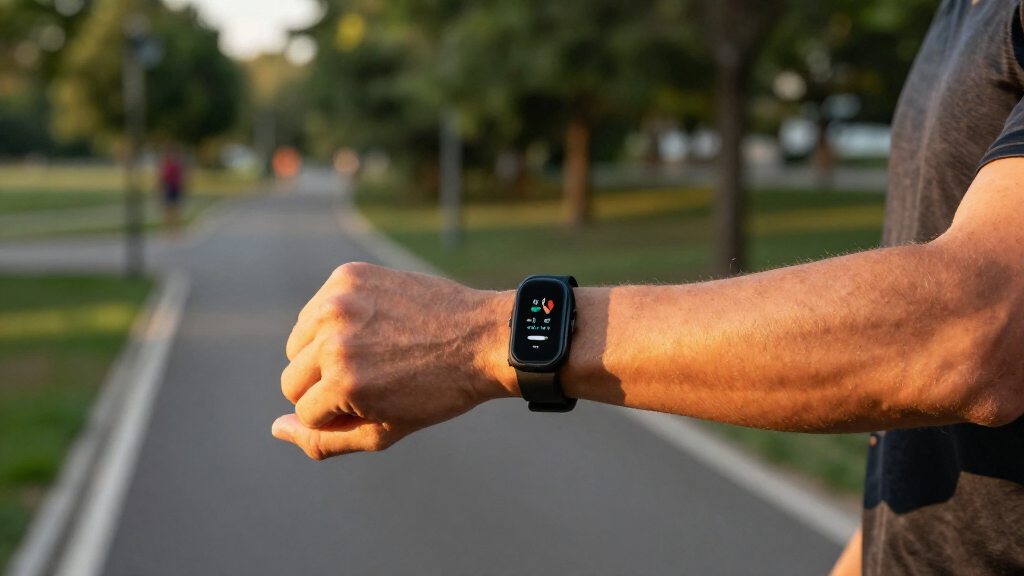
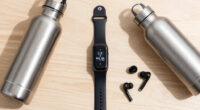
Smart fitness trackers sit between basic step counters and full-size smartwatches. The Fitbit Charge 6 and Garmin Vivosmart 5 are two compact bands aimed at people who want daily activity and health data without wearing a large watch. Their key difference is how much technology they put on your wrist: Charge 6 adds built-in GPS, a color touchscreen, and connected features, while Vivosmart 5 keeps the experience simpler and can last longer between charges.

Get workout gear delivered free with Prime
- Fast, free delivery on millions of items
- Prime Video, Amazon Music and more included
- Member-only deals all year
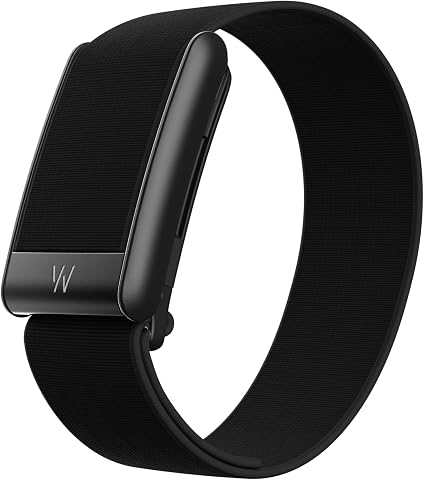
WHOOP 5.0 Screenless Fitness Health Sleep Wearable – 12-Month Membership
- ✔ Membership: 12 months included
- ✔ Battery life: 14+ days
- ✔ Water resistance: IP68; stated up to 10 meters for 2 hours

Ultra Slim Fitness Tracker Smart Band with Heart Rate, Blood Oxygen, HRV, Stress & Sleep Monitoring, 10 ATM Waterproof, 100 Sport…
- ✔ Brand and model: ZiCOWAY H31
- ✔ Thickness: 2.6 mm
- ✔ Screen: 0.49-inch OLED touchscreen
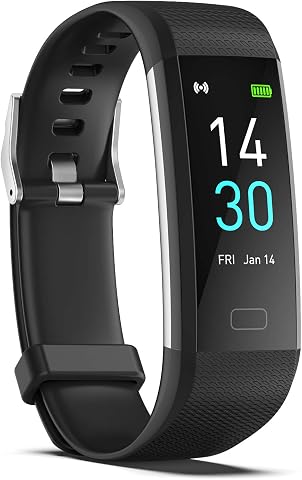
ENGERWALL Fitness Tracker with Heart Rate, Blood Pressure & Sleep Monitor – IP68 Waterproof Slim Band
- ✔ Brand and model: ENGERWALL S5-Black
- ✔ Battery life: 5–7 days
- ✔ Charging: Built-in USB-A connector
That makes this a choice between convenience and restraint. Charge 6 is the stronger fit if you want to leave your phone behind on a run, review more information on the band, and use Fitbit’s app and services. Vivosmart 5 makes more sense if you value battery life, Garmin’s activity and training tools, and a small, straightforward tracker. Neither is a full smartwatch, and the right pick depends on whether you will use Charge 6’s extras often enough to justify its higher typical price.
At a Glance
| Criteria | Fitbit Charge 6 | Garmin Vivosmart 5 | Winner |
|---|---|---|---|
| GPS and workout tracking | Built-in GPS plus connected GPS; tracks common exercise types | Connected GPS uses a paired phone; broad activity tracking | A |
| Health and sleep data | Heart rate, sleep, stress, and other wellness metrics through Fitbit | Heart rate, sleep, stress, Body Battery, and wellness tracking through Garmin Connect | Depends |
| Display and daily use | Color touchscreen with more at-a-glance detail | Small monochrome touchscreen with a simpler interface | A |
| Battery life | Up to about 7 days, less with frequent GPS use | Up to about 7 days, depending on use | B |
| Apps and connected features | Google services and Fitbit app; some insights and features may require Premium | Garmin Connect data and training ecosystem; fewer smartwatch-style extras | A |
| Comfort and simplicity | Compact band with a responsive touchscreen | Lightweight, narrow band with physical button control | Depends |
| Ongoing value | More features for the upfront price, though some app benefits sit behind a subscription | Strong value for people who prefer Garmin’s tools and do not need built-in GPS | Depends |
WHOOP 5.0 Screenless Fitness Health Sleep Wearable – 12-Month Membership
WHOOP 5.0 is the most purpose-built tracker in this group for people who want to understand patterns across sleep, exertion, and recovery. It continuously monitors metrics such as heart rate, HRV, respiratory rate, sleep stages, and strain, then offers personalized coaching through its membership platform. Compared with the ZiCOWAY H31 and ENGERWALL S5, WHOOP puts less emphasis on a quick glance at the wrist and more on interpreting trends over time.That choice shapes the experience. With no screen, we cannot check a workout stat or notification directly on the band, so this suits people comfortable consulting the platform instead. The screenless form can also be easier to wear overnight, and the stated 14+ day battery life reduces charging interruptions compared with the other two picks. Its IP68 specification includes a stated depth and duration, while the included CoreKnit band and basic charger cover the essentials.The main ownership tradeoff is the 12-month membership: continued use of the platform requires a subscription afterward. ZiCOWAY includes a free companion app and an on-band display, making it more straightforward for buyers who want low-friction checks. WHOOP makes more sense when coaching and recovery data are central enough to justify that ongoing commitment.
Pros:
- Continuous tracking covers sleep, recovery, strain, and a broad set of health metrics.
- Screenless design supports discreet all-night wear.
- Stated battery life of 14+ days helps reduce charging interruptions.
- Includes a 12-month WHOOP One membership.
Cons:
- A membership is required after the included 12 months to continue using the platform.
- No on-wrist display for real-time stats or quick checks.
- Basic corded charger is included; the waterproof wireless PowerPack is optional.
Best for: People who prioritize sleep, recovery, and training-strain patterns and are comfortable using a membership-based platform.
Not ideal for: Buyers who want a screen for instant workout feedback, built-in GPS, or a tracker that does not require a continuing membership.
Bottom line: Choose WHOOP 5.0 when recovery insights and coaching matter more than on-band feedback or subscription-free ownership.
“Choose WHOOP 5.0 when recovery insights and coaching matter more than on-band feedback or subscription-free ownership.”
Ultra Slim Fitness Tracker Smart Band with Heart Rate, Blood Oxygen, HRV, Stress & Sleep Monitoring, 10 ATM Waterproof, 100 Sport…
ZiCOWAY H31 is the clearest alternative for buyers who want a tracker that feels unobtrusive but still shows basic information at the wrist. Its listed 2.6 mm thickness and small 0.49-inch OLED screen set it apart from WHOOP’s screenless approach. We get the convenience of quick checks without moving up to a larger watch-style device, though the display is necessarily compact.It covers heart rate, blood oxygen, HRV, stress, and sleep, with 100 sports modes for people who like selecting a specific activity. The 10 ATM water-resistance claim also gives it the broadest stated water rating in this lineup, making it an appealing option for swimming and other water activities. A choice of silicone and metal Milanese bands adds flexibility in how the tracker looks and feels. The stated 12-day battery life is solid, though shorter than WHOOP’s 14+ days.The key limitation is no built-in GPS. For outdoor runs or rides where accurate route and distance data matter, this tracker may depend on a connected phone or leave a gap compared with GPS-equipped devices. ENGERWALL is also more basic, while WHOOP offers a stronger recovery-coaching focus. ZiCOWAY sits between them: more immediately interactive than WHOOP, but less specialized in interpreting training readiness.
Pros:
- Very slim 2.6 mm profile is designed for lightweight everyday wear.
- Small OLED touchscreen provides quick on-wrist checks.
- Tracks heart rate, SpO₂, HRV, stress, and sleep.
- Lists 10 ATM water resistance and 100 sports modes.
Cons:
- No built-in GPS for independent outdoor distance tracking.
- The 0.49-inch display is small for reviewing detailed workout information.
- Remote camera shake requires a compatible phone and app.
Best for: Buyers who want a very slim band with a small display, broad activity-mode selection, and a stated 10 ATM water rating.
Not ideal for: Outdoor runners and cyclists who need built-in GPS, or buyers looking for in-depth recovery coaching.
Bottom line: Pick the ZiCOWAY H31 when a slim, screen-equipped tracker and water-friendly design matter more than built-in GPS or advanced recovery coaching.
“Pick the ZiCOWAY H31 when a slim, screen-equipped tracker and water-friendly design matter more than built-in GPS or advanced recovery coaching.”
ENGERWALL Fitness Tracker with Heart Rate, Blood Pressure & Sleep Monitor – IP68 Waterproof Slim Band
ENGERWALL S5 is the uncomplicated option for people who want a slim band to record everyday activity alongside several health measurements. It tracks steps, distance, calories, heart rate, blood oxygen, sleep, and body temperature, with blood pressure monitoring available through the app. That gives it a wider basic metric list than a simple step counter, but it does not provide WHOOP’s recovery-led coaching or ZiCOWAY’s extensive 100-mode activity selection.Its 16 sport modes are enough for a narrower set of common activities, and the stated 5–7 day battery life can suit buyers willing to charge about weekly. IP68 protection is listed for daily exposure and swimming, though the product guidance says to avoid prolonged hot baths or saunas. For wearers who value a modest, lightweight band, this can be easier to live with than a more feature-dense tracker.Charging is its most practical drawback: the tracker has a built-in USB connector, so we need a USB-A port available rather than a separate cable. The blood pressure feature also depends on downloading and enabling the Runmefit app. Compared with ZiCOWAY, ENGERWALL provides a simpler and shorter activity list; compared with WHOOP, it avoids the same stated membership arrangement in the supplied product details but offers less emphasis on recovery trends and coaching.
Pros:
- Tracks steps, distance, calories, heart rate, sleep, blood oxygen, and body temperature.
- Blood pressure monitoring is available through the companion app.
- Slim, lightweight band is designed for everyday wear.
- Stated battery life is up to a week, with IP68 water resistance.
Cons:
- Built-in USB-A connector requires access to a compatible port; no separate cable is included.
- Blood pressure monitoring requires the Runmefit app to be downloaded and enabled.
- Lists 16 sport modes, fewer than ZiCOWAY’s 100.
Best for: People seeking a slim daily tracker for steps, sleep, and several health metrics, with a straightforward app-based setup.
Not ideal for: Buyers who need many sport profiles, convenient cable-based charging, or detailed recovery coaching and training analysis.
Bottom line: Choose ENGERWALL S5 for basic daily health and activity tracking if its USB-A charging setup and smaller sport-mode selection fit your routine.
“Choose ENGERWALL S5 for basic daily health and activity tracking if its USB-A charging setup and smaller sport-mode selection fit your routine.”
As an Amazon Associate we earn from qualifying purchases.
Key Differences
The most practical advantage of Charge 6 is GPS independence. Its built-in GPS can record an outdoor route without carrying a phone, which matters to runners and walkers who travel light. Vivosmart 5 relies on connected GPS, so the phone must come along for route tracking. For indoor workouts and everyday movement, that gap matters less; both can log activity and provide a useful view of routine.
Vivosmart 5 counters with a quieter, simpler experience. Garmin Connect presents activity, sleep, stress, and recovery-oriented data, including Body Battery, without making the band feel like a miniature smartwatch. Charge 6 gives more information on its color screen and connects with Google services, but some Fitbit insights are tied to Premium. That subscription distinction affects long-term value for users who want expanded reports.
Battery life is close on paper, with both rated around a week under suitable use. Frequent GPS sessions reduce Charge 6’s runtime, and actual battery life varies with settings. The decision is less about a guaranteed multi-day advantage and more about habits: choose Charge 6 for route recording and richer on-band interactions, or Vivosmart 5 for a smaller, simpler tracker integrated with Garmin’s platform.
Detailed Comparison
GPS and workout tracking (Fitbit Charge 6 wins — moderate)
Charge 6 wins by a moderate margin for outdoor workouts because it has built-in GPS and can record routes without a phone. Vivosmart 5 uses connected GPS, which works when a paired phone is present but adds one more thing to carry. Both cover common activity tracking, so this difference matters most to runners and walkers who exercise phone-free.
Health and sleep data (moderate difference)
This is a close match, with the better choice depending on the app and metrics you prefer. Fitbit organizes sleep and wellness information in an accessible interface, while Garmin adds tools such as Body Battery and connects activity with its broader training ecosystem. Neither band should be treated as a medical device; for everyday trends, both provide useful context.
Display and daily use (Fitbit Charge 6 wins — moderate)
Charge 6 wins by a moderate margin if you want to read more on your wrist. Its color touchscreen presents notifications and workout details with more visual detail than Vivosmart 5’s small monochrome display. Garmin’s compact screen is functional for checking basic stats, but people who often interact with the band may find Charge 6 easier to use.
Battery life (Garmin Vivosmart 5 wins — minor)
Vivosmart 5 has a minor practical edge for people who want fewer charging interruptions, while both are rated for roughly seven days depending on settings and use. Charge 6’s GPS can consume power more quickly during outdoor workouts. If you frequently track GPS sessions, the Garmin’s phone-connected approach can help preserve the band’s charge, at the cost of carrying a phone.
Apps and connected features (Fitbit Charge 6 wins — moderate)
Charge 6 wins by a moderate margin for people who want a more connected band. It supports Google services and Fitbit’s app experience, while Vivosmart 5 keeps the emphasis on Garmin Connect and fitness data. Fitbit Premium can be needed for some expanded insights, so the extra features are most valuable if you will use them and accept the potential subscription cost.
Comfort and simplicity (minor difference)
Neither is a clear winner for every wrist. Vivosmart 5’s narrow, lightweight design and button-led controls suit users who want a low-profile band and a straightforward interface. Charge 6 remains compact but offers more screen interaction. The gap is minor and personal: try the fit if possible, especially if you plan to wear the tracker overnight.
Ongoing value (major difference)
Value depends on whether the extras see regular use. Charge 6 is worth paying more for if built-in GPS, its color screen, or connected features solve a recurring need. Vivosmart 5 is the better-value purchase when Garmin’s tracking is enough and avoiding extra services matters more than phone-free routes. Compare current prices and Fitbit Premium terms before buying.
Fitbit Charge 6: Pros and Cons
Pros:
- Built-in GPS records outdoor routes without a phone
- Color touchscreen offers more detail at a glance
- Google and Fitbit features add convenience for connected users
- Broad health, sleep, and activity tracking
Cons:
- GPS use can shorten time between charges
- Some expanded Fitbit insights may require Premium
- More screen and service features may be unnecessary for basic tracking
Garmin Vivosmart 5: Pros and Cons
Pros:
- Lightweight, low-profile design with straightforward controls
- Garmin Connect and Body Battery suit users who value activity and recovery trends
- Connected GPS can preserve band battery during tracked outdoor workouts
- No need to pay for a smartwatch-style feature set
Cons:
- Phone must be present for GPS route tracking
- Small monochrome screen shows less detail
- Fewer connected features than Charge 6
Who Should Choose What
Choose Fitbit Charge 6 if:
- You run or walk outdoors without wanting to carry your phone for GPS
- You want a more detailed touchscreen and connected features on your band
- You already use Fitbit or Google services and will make use of the app experience
Choose Garmin Vivosmart 5 if:
- You want a lightweight tracker with a simple interface
- You already use Garmin Connect or value Body Battery and Garmin activity tools
- You usually carry your phone during GPS workouts and prefer to avoid paying for features you will not use
Skip both if: Skip both if you need a large smartwatch display, extensive app support, or advanced multisport training controls; compare full smartwatches or dedicated sports watches instead.
Value for Money
Pay more for Charge 6 when built-in GPS and the richer display will change how you exercise or check your data. Phone-free route recording is a concrete convenience for outdoor runners, and the screen and connected services can make daily use more engaging. Those benefits do not justify the premium for someone who mostly tracks steps, sleep, and phone-carried workouts.
Vivosmart 5 is better value for Garmin users and people who prefer a smaller band with core tracking. Its value improves when it is substantially cheaper and you do not need onboard GPS. Check the current device price and whether Fitbit Premium features matter to you: a lower purchase price can lose its appeal if you end up paying for insights you expected to be included.
Final Verdict
For most people who want a smart fitness tracker with useful independence from a phone, Fitbit Charge 6 is the stronger all-round choice. Its built-in GPS and more capable screen make a noticeable difference in everyday use, especially for outdoor workouts. Choose Garmin Vivosmart 5 if your phone is usually with you, you prefer Garmin Connect, or you care more about a low-profile, simpler band than extra features.
The deciding question is whether you will use GPS without your phone. If yes, Charge 6’s higher typical price is justified. If no, Vivosmart 5 is the more sensible buy when its current price is lower. If you need a full smartwatch or advanced sports metrics, choose neither.
Frequently Asked Questions
Which tracker is better for running?
Charge 6 is the better fit for phone-free outdoor runs because it has built-in GPS. Vivosmart 5 can track a route using connected GPS, but you need to carry a paired phone. Either can handle basic workout tracking.
Does Garmin Vivosmart 5 have GPS?
It uses connected GPS from a paired phone rather than recording a route with built-in GPS. Bring your phone if you want GPS route data during an outdoor workout.
Do either of these trackers require a subscription?
Core tracking does not require Fitbit Premium, but some expanded Fitbit insights and features may. Garmin Connect provides many of the Vivosmart 5’s tracking tools without a paid subscription. Check current service terms before purchase.
Which one lasts longer on a charge?
Both are rated for roughly a week under suitable conditions. Actual runtime depends on settings and use; frequent GPS activity can reduce Charge 6 battery life. Vivosmart 5’s connected GPS shifts route tracking to the phone.