TL;DR

Get workout gear delivered free with Prime
- Fast, free delivery on millions of items
- Prime Video, Amazon Music and more included
- Member-only deals all year
A study reported that older adults whose eating patterns more closely followed the Mediterranean diet had higher blood levels of the mitochondrial microproteins humanin and SHMOOSE, along with lower indicators of oxidative stress. The findings suggest a possible biological link between diet and cellular health, but do not show that the diet caused the changes or that the proteins prevent heart or brain disease.
A study of older adults found that those whose eating habits more closely matched the Mediterranean diet had higher blood concentrations of two tiny proteins produced by mitochondria, humanin and SHMOOSE, and lower indicators of oxidative stress. The USC Leonard Davis School of Gerontology researchers say the association offers a possible biological clue to the diet’s links with health, but the findings do not establish that the diet caused the protein differences or that the proteins prevent disease.
The researchers examined blood samples from older adults with varying degrees of adherence to the Mediterranean diet. Participants whose reported habits aligned more closely with the pattern had significantly higher concentrations of both microproteins, according to the report. They also showed lower indicators of oxidative stress, a process in which reactive oxygen species can overwhelm the body’s defenses and damage cellular components.
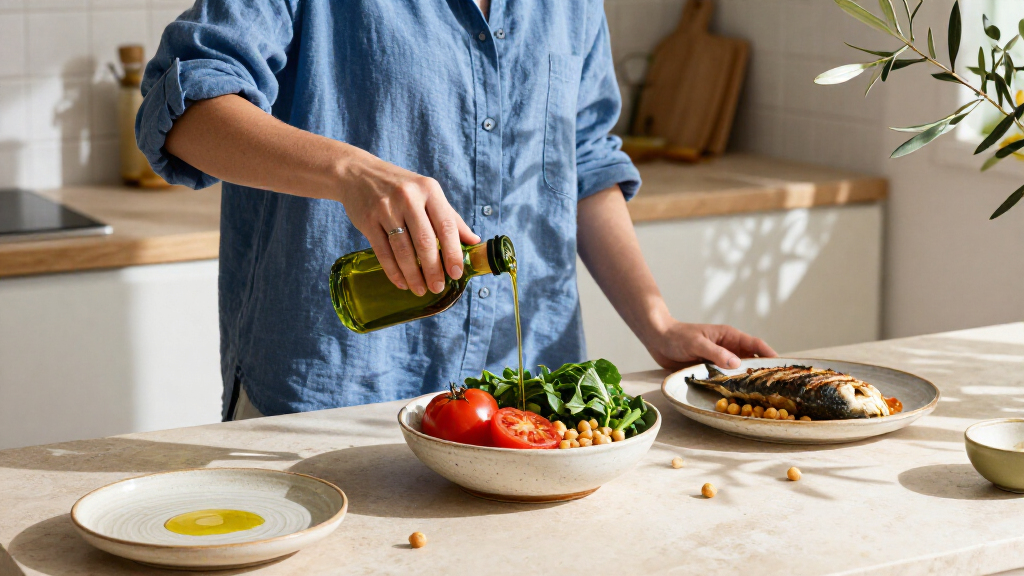
Food-specific patterns differed between the proteins. Greater consumption of olive oil, fish and legumes was associated with higher humanin levels. Olive oil consumption and eating fewer refined carbohydrates were associated with higher SHMOOSE levels. These are reported associations; the material does not establish that any one food directly raises either protein.
The study was led by Roberto Vicinanza, an instructional associate professor of gerontology at USC Leonard Davis. Senior author Pinchas Cohen, dean of the school and a USC distinguished professor, said the findings suggest that elements of the diet may influence mitochondrial biology. Researchers also raised the possibility that the proteins could serve as biomarkers of diet adherence or cellular response, but that potential would need to be tested before clinical use.
A Possible Link Between Diet and Cell Health
The results point to a potential mechanism that could help explain why the Mediterranean eating pattern has been associated in other research with lower risks of heart disease, type 2 diabetes and cognitive decline. Rather than showing a direct health outcome, this study connects dietary habits with mitochondrial microproteins and markers of cellular stress, offering a direction for future research into how nutrition relates to aging.
Humanin and SHMOOSE are of interest because earlier research has linked them to processes relevant to cardiovascular and brain health. Those links do not mean that higher levels in this study translate into protection for participants. The research, as described in the report, measured protein concentrations and oxidative-stress indicators; it did not demonstrate fewer heart attacks, slower cognitive decline or longer life.
That distinction matters for readers weighing dietary claims. The findings add biological evidence to a broader area of study, but they do not show that a particular food or diet can replace medical care or guarantee protection from disease. The practical value for now is a testable research hypothesis, not a new clinical recommendation based on these proteins.
Products Worth Considering

Oral-B iO Series 3 Rechargeable Electric Toothbrush for Adults, Black, with 2 Brush Heads and Travel Case

Garmin Forerunner 570 GPS Running Smartwatch, 47mm, Aluminum, Black

Withings Body Scan Smart Scale with Segmental Body Composition and ECG, Black
As an affiliate, we earn on qualifying purchases.
What Humanin and SHMOOSE Do
Mitochondria are best known for generating much of the energy cells use, but they also participate in metabolism and cellular stress responses. The microproteins in the study are encoded by small sections of mitochondrial DNA, rather than by the much larger set of instructions in the cell nucleus. Researchers have been investigating these molecules for more than two decades.
Humanin was identified by Cohen and colleagues in 2003. Subsequent studies have associated it with insulin sensitivity, cardiovascular health, longevity and cognitive function. SHMOOSE was identified more recently by Cohen’s team and has drawn interest for possible roles in brain health. The source report says a genetic variant of SHMOOSE has been associated with increased Alzheimer’s disease risk, while the normal version appears to help protect neurons from amyloid-related damage in research. These earlier findings provide context, not proof of effects in the diet study.
The Mediterranean pattern typically emphasizes olive oil, fish, beans, lentils, fruits and vegetables. It has been associated with several health outcomes, while the specific biological pathways behind those associations remain under study. The new findings add microproteins to that research, rather than settling how the diet affects health.
“These peptides are emerging as key regulators of aging biology.”
— Pinchas Cohen
What the Study Cannot Establish
The supplied report does not provide the study’s sample size, detailed participant characteristics, length of observation, or the full statistical results. It also does not describe an intervention in which participants were assigned to change their diets. Without those details, the strength and limits of the reported associations cannot be fully assessed from the available material.
It remains unclear whether diet caused the protein differences, whether other factors contributed, or whether higher levels of humanin and SHMOOSE lead to measurable improvements in heart or brain outcomes. The report also does not establish whether these proteins are reliable clinical biomarkers or whether measuring them would help guide care. The findings concern associations in blood samples, not demonstrated prevention or treatment of disease.
Further Testing of the Protein Link
Next steps will require studies that report the full methods and participant data, then test whether the associations hold across larger and more diverse groups. Researchers could also examine whether changes in diet precede changes in humanin, SHMOOSE and oxidative-stress indicators, and whether those markers predict health outcomes over time.
Before the proteins could be used as clinical biomarkers, studies would need to show that their measurements are consistent and meaningfully related to health or dietary patterns. The supplied report does not identify a specific follow-up study or timeline. For now, the results support further investigation of the relationship between diet, mitochondria and aging, rather than a claim that raising either protein will protect an individual’s heart or brain.
Key Questions
What did the study find?
Older adults whose eating patterns more closely followed the Mediterranean diet had higher blood levels of humanin and SHMOOSE and lower indicators of oxidative stress, according to the report.
Does the study prove the diet raises these proteins?
No. The findings describe an association between diet adherence and protein levels. The supplied material does not show that changing diet caused the differences.
Which foods were linked to the protein levels?
Higher consumption of olive oil, fish and legumes was associated with more humanin. Olive oil and fewer refined carbohydrates were associated with more SHMOOSE. These links do not establish that the foods directly caused higher levels.
Do the results show protection from heart disease or Alzheimer’s?
No. The study reported protein concentrations and oxidative-stress indicators, not fewer cases of heart disease, Alzheimer’s disease or other clinical outcomes. Earlier research on the proteins provides background but does not prove protection in this study.
Source: sciencedaily.com