TL;DR

Get workout gear delivered free with Prime
- Fast, free delivery on millions of items
- Prime Video, Amazon Music and more included
- Member-only deals all year
Fit&Well reports that Alison Brie’s trainer, Jason Walsh, uses hard isometric holds before repetitions of the same movement. The report also outlines a four-round home workout designed by trainer Mark Harris; its listed exercises pair holds with squats, push-ups and rows.
Alison Brie’s trainer, Jason Walsh, uses isometric holds before repetitions of the same exercise, according to a Fit&Well report on the actor’s strength routine. The approach—holding a position while pushing or contracting without joint movement, then performing regular reps—has also been adapted into a four-round home workout by personal trainer Mark Harris.
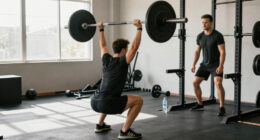
In an interview with Women’s Health discussed by Fit&Well, Walsh described using a hard effort against a fixed object before Brie performs a moving version of the exercise. In the example cited, Brie pushes against a fixed bar in a Zercher squat position and then completes Zercher squats with a barbell. Walsh said the hold recruits the nervous system at a high rate and can build strength without necessarily adding size; that is his explanation of the method, not a reported measurement of Brie’s results.
Fit&Well says Brie began strength training about 15 years ago, after working with Emily Blunt, and increased her training while preparing to play a wrestler in the series GLOW. The report gives weighted pull-ups with 45-pound plates as one example of her training. It does not provide a testing protocol or independent assessment of her strength.
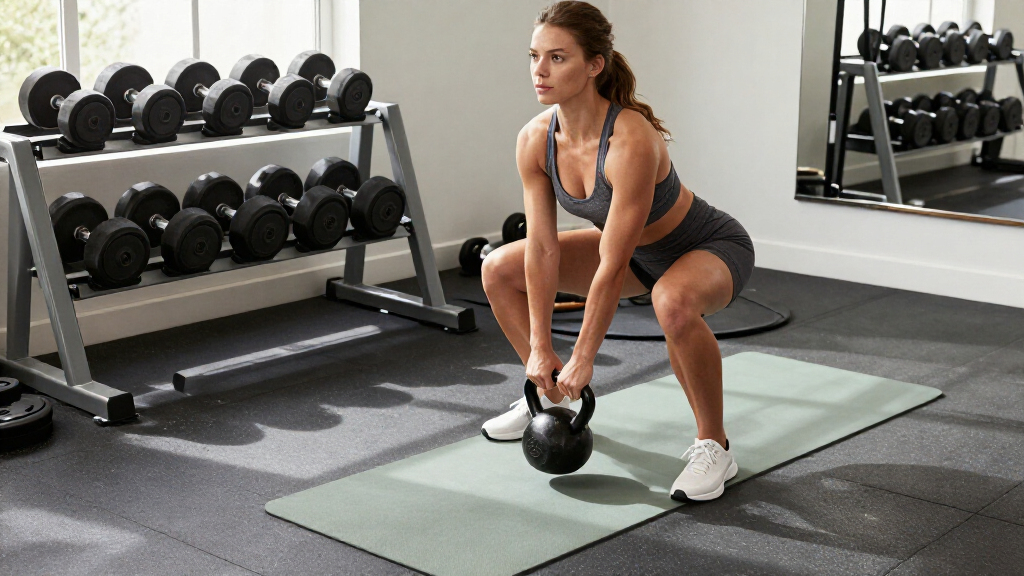
Harris’s suggested workout pairs a 30-second goblet squat hold with 10 goblet squats, a 10-second push-up hold with 10 push-ups, and a 15-second bent-over row hold with 10 rows. The source also describes a fourth exercise, but the supplied workout details end partway through its instructions. Harris advises moving between exercises with minimal rest, resting 60 to 90 seconds after each circuit, and completing four rounds. Beginners can do push-ups from their knees, according to the instructions.
How Holds Change a Strength Session
The workout offers readers a straightforward way to try isometric training without copying Brie’s heavy lifting. Pausing in a challenging position can make an exercise more demanding with a lighter load or body weight, while the following repetitions let the trainee practice the movement dynamically. The routine is presented as a training option, not proof that this method alone accounts for Brie’s strength.
Harris says isometrics can increase time under tension and help people work on a difficult point in a lift. Those are trainer-provided explanations in the report; no research findings or outcome data are included there. For readers, the practical point is to scale the hold and the repetitions to their current ability rather than treat a celebrity’s routine as a standard to match.
Brie’s Training and the Workout Plan
Brie is 43, according to Fit&Well, and is known for roles in Mad Men, Community and GLOW. The report links her increased training to the physical demands of playing a wrestler on GLOW, while tracing her earlier introduction to strength work to training with Emily Blunt. It gives this timeline as background, not a detailed account of her full program.
The routine Harris designed is distinct from Walsh’s example with Brie: it is an accessible workout provided for readers, rather than a claim that Brie performs all of those exercises. The source lists squat, push-up and row hold-and-repetition pairs and says the workout has four exercises, but the supplied material cuts off during the third exercise’s instructions. The complete fourth movement cannot be confirmed from the information provided.
“It recruits the nervous system at such a high rate that you can get really strong without getting bigger.”
— Jason Walsh, Brie’s trainer, as quoted in the Fit&Well report
What the Report Does Not Establish
The report does not give controlled evidence that isometric holds were the cause of Brie’s strength gains, nor does it compare the approach with other training methods. Walsh’s comments describe his coaching view. The source also does not specify how often Brie uses the technique, the loads used in the example, or how her strength was measured.
The workout details supplied are incomplete: the instructions stop during the bent-over row and do not identify the fourth exercise. Readers should not assume a missing movement or its prescribed hold and repetition count. The suggested timing is attributed to Harris, but the report provides no information about individual modifications beyond the kneeling push-up option.
Scale the Holds to Your Ability
Anyone trying the workout can begin with a manageable hold and load, keep the movements controlled, and stop if they feel pain. A qualified fitness professional can help adapt exercises for a person’s experience, equipment and physical needs. The supplied report does not offer further follow-up data or a date for additional guidance, so claims about Brie’s routine and the workout’s outcomes remain limited to what the trainers and publication describe.
Key Questions
What is an isometric hold?
It is a forceful muscle contraction in which the person holds a position without moving the joint, such as pausing near the bottom of a squat.
What is the workout’s basic format?
Harris’s plan pairs a timed hold with repetitions of the same movement, then moves to the next exercise. The report says to rest 60 to 90 seconds after a circuit and complete four rounds.
Which exercises are specified?
The supplied details include a goblet squat hold followed by 10 squats, a push-up hold followed by 10 push-ups, and a bent-over row hold followed by 10 rows. The fourth exercise’s details are missing from the source material provided.
Does the report prove isometric holds made Brie stronger?
No. It reports Walsh’s account of the technique and Brie’s training history, but gives no independent measurement or evidence isolating the holds as the cause of her strength.
Source: rss
Halloween Picks
halloween
As an affiliate, we earn on qualifying purchases.