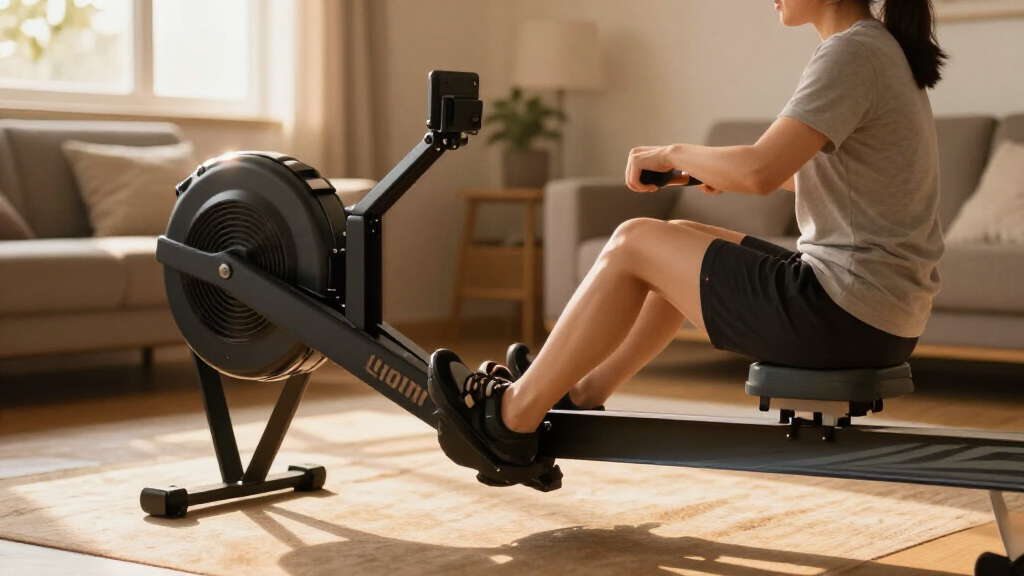
Compact home rowing machines promise full-body cardio in a footprint small enough for an apartment corner, and after comparing 14 popular models, the Winfita Magnetic Rowing Machine stands out as the best overall pick thanks to its 32 resistance levels and dual-track folding design that balances intensity range with a slim stored profile. The MERACH R25 makes a strong case for connected fitness on a budget with app-based coaching courses, while the Feierdun Hydraulic wins on pure affordability if you just want occasional low-impact sessions. The main tradeoff in this category is resistance type: magnetic rowers run quieter and smoother but fold into longer shapes, while hydraulic models shrink down smaller but deliver a less fluid stroke. Budget, ceiling height, and whether you’ll actually use app features matter more here than raw spec counts. Keep reading for the full breakdown of where each machine excels and where it falls short.
Complete the kit

Key Takeaways
- Magnetic resistance dominated the top of the ranking because the 16- and 32-level models (Winfita, MERACH R25, YOSUDA) delivered smoother, quieter strokes than any hydraulic option — a decisive factor for apartment use.
- Hydraulic rowers (Feierdun, GYMAX, Sportneer, Sunny Compact) consistently folded smaller and cost less, but their piston resistance degrades over time, making them short-term buys rather than decade machines.
- App connectivity split the lineup into two tiers: MERACH and Winfita offer structured coaching, while most budget models provide only a basic LCD that reads distance, time, and strokes.
- A 350 lb weight capacity appeared on five mid-range magnetic models, meaning heavier buyers no longer need to pay a premium for frame stability.
- Sunny Health & Fitness appeared three times in this comparison with distinct designs (full-motion arms, magnetic, hydraulic), but only the Smart Magnetic Rower competed with the top tier on stroke feel.


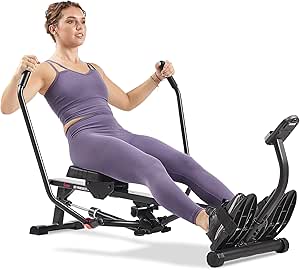


| compact home rowing machine | Resistance levels | Weight capacity |
|---|---|---|
| Dripex Magnetic Rowing Machine | 16 | — |
| Foldable Magnetic Rowing Machi | 16 | — |
| MERACH R25 Foldable Magnetic R | 16 | 350 lbs |
| Rowing Machine for Home Workou | — | 350 lbs |
| Winfita Magnetic Rowing Machin | 32 | — |
| Sunny Health & Fitness Smart F | 12 | 400 lbs |
| Feierdun Hydraulic Rowing Mach | 12 | 300 lbs |
| GYMAX Hydraulic Rowing Machine | — | 265 lbs |
| YOSUDA Magnetic Rowing Machine | 16 | — |
| YPOO Rowing Machine for Home | 16 | 350 lbs |
| Sportneer Foldable Hydraulic R | 12 (hydraulic) | — |
| Merach Q1S Magnetic Rowing Mac | — | — |
| Sunny Health & Fitness Smart M | 16 (magnetic) | 300 lbs |
| Sunny Health & Fitness Compact | 12 (hydraulic) | — |
More Details on Our Top Picks
Dripex Magnetic Rowing Machine for Home – Upgraded Full-Body Workout
The Dripex Magnetic Rower earns the top spot because it balances the things compact-machine buyers actually care about: quiet operation, stability, and storage. Its dual slide rail is the standout — most budget foldables like the Foldable Magnetic Rowing Machine (B0GQXDRT23) use a single rail, which can wobble during hard drives. Here, the extra stability comes with a 360 lb weight capacity, the highest in this batch, and noise below 15 dB means apartment dwellers can row at 6 a.m. without consequence.
The tradeoff is footprint. It doesn’t fold as small as the MERACH R25, so anyone with a truly tiny space should look there instead. Assembly is quick at around 20 minutes, though the Bluetooth-only tracking feels basic compared with the MERACH’s coaching library.
Pros:- Dual slide rail keeps the stroke stable even during intense sprints
- Below 15 dB operation is the quietest in this batch
- 360 lb weight capacity leads the lineup
- Assembles in about 20 minutes
Cons:- Folding footprint isn’t as small as dedicated foldables like the MERACH R25
- Metrics tracking is limited to Bluetooth devices with no structured coaching content
Best for: Apartment dwellers and heavier users (up to 360 lbs) who want a stable, whisper-quiet rower for regular cardio
Not ideal for: Buyers who want guided workouts — tracking is Bluetooth-basic with no coaching ecosystem like MERACH’s app
- Flywheel weight:12 lbs
- Resistance levels:16
- Maximum user weight:360 lbs
- Slide length:48.8 inches
- Noise level:Below 15 decibels
- Compatibility:Bluetooth-enabled devices
- Assembly time:20 minutes
Our verdict“If you want one compact rower that handles daily use, heavier riders, and thin apartment walls without compromise, this is the pick.”
Foldable Magnetic Rowing Machine with 16 Resistance Levels, LCD Monitor & App Support
Storage is where this rower justifies its place. Folded, it shrinks to roughly 2.9 square feet of floor space — small enough to slide beside a refrigerator or behind a door, which neither the Dripex nor the Winfita can match. For studio-apartment buyers, that difference decides the purchase.
The compromises are real, though. The 320 lb weight capacity is the lowest of the magnetic options here, and the aluminum-iron frame, while sturdy enough for most, doesn’t feel as planted as the Dripex’s dual-rail build during aggressive strokes. Its 20 dB noise rating is respectable but sits behind the Dripex’s sub-15 dB figure. Compared with the MERACH R25, you get similar app connectivity but a slightly less polished software experience.
This model makes the most sense for light-to-moderate users where square footage matters more than maximum capacity.
Pros:- Folds down to about 2.9 sq ft of floor space, the smallest footprint in this batch
- 16 resistance levels cover beginner through intermediate intensity
- LCD monitor plus app connectivity for tracking progress
- Quiet 20 dB operation works for shared living spaces
Cons:- 320 lb weight capacity trails the Dripex (360 lbs) and MERACH R25 (350 lbs)
- Assembly takes real effort despite the included video guide
- Single-rail design is less stable during high-intensity drives
Best for: Studio-apartment and dorm residents who need a rower that virtually disappears when folded
Not ideal for: Taller or heavier riders — the 320 lb capacity and shorter rails limit who fits comfortably
- Resistance levels:16
- Max user weight:320 lbs
- Dimensions:32 x 45 x 23 inches
- Folded size:1 x 2 x 3 ft
- Floor space:2.9 sq ft
- Incline:4.5%
Our verdict“Buy this if folded size is your number-one constraint; skip it if you’re over 300 lbs or want a rock-solid frame for sprint workouts.”
MERACH R25 Foldable Magnetic Rowing Machine with 16 Levels, Space-Saving Design, 350 lbs Capacity, App Connectivity & Coaching Courses
What separates the MERACH R25 from every other rower here is software. Access to 1,000+ workouts and structured coaching courses turns it from a piece of equipment into a training program — the difference between owning a treadmill and having a running coach. Compared with the Winfita, which offers app support but no preset programming, the R25 is clearly the better choice for beginners who need guidance to stay consistent.
The hardware holds its own too: an 80 lb peak resistance ceiling gives it headroom the 16-level Dripex can’t match at the top end, and the folding design cuts its footprint by 20%.
The catches: you need your own smartphone or tablet since there’s no built-in screen, connectivity is Bluetooth-only, and users over 6’1″ won’t fit — the Dripex‘s longer 48.8-inch slide accommodates taller riders better.
Pros:- App includes 1,000+ workouts and coaching courses, unmatched in this batch
- 80 lb peak resistance offers more top-end challenge than other 16-level rowers
- Folding design trims footprint by 20% for easier storage
- 350 lb capacity and 85% pre-assembled out of the box
Cons:- No built-in display — all coaching requires your own phone or tablet
- 6’1″ maximum user height excludes taller rowers
- Bluetooth-only connectivity with no Wi-Fi option
Best for: Beginners and structure-driven exercisers who want guided workouts rather than figuring out routines alone
Not ideal for: Riders taller than 6’1″ or anyone unwilling to prop up a phone for every session
- Resistance levels:16
- Peak resistance:80 lbs
- Weight capacity:350 lbs
- Maximum user height:6’1″
- Dimensions:58.3L x 18.9W x 28.4H inches
- Product weight:38 lbs
Our verdict“This is the pick if guided training will keep you rowing; taller riders or screen-averse buyers should look at the Dripex instead.”
Rowing Machine for Home Workout, Quiet Resistance, 350 lbs Capacity, LCD Monitor, Accessories Included
This rower takes a different approach to winning buyers: instead of software or folding tricks, it ships a complete starter kit — knee pads, workout gloves, a seat cushion, and a spare pull rope. For someone buying their first home equipment, that’s genuinely useful, because it removes the little purchases that usually follow. No other machine in this roundup bundles anything comparable.
The tradeoff is raw capability. With no adjustable resistance levels, it can’t scale intensity the way the 16-level MERACH R25 or 32-level Winfita can, so fitter users will outgrow it within months. The LCD monitor covers basics only — no app, no coaching, no workout history. Where the Foldable Magnetic Rowing Machine (B0GQXDRT23) invests in foldability, this one invests in accessories, and upright storage still needs dedicated wall space.
The included one-year warranty rounds out a sensible, low-friction entry point.
Pros:- Bundled knee pads, gloves, seat cushion, and spare pull rope save accessory purchases
- Quiet operation with no noisy gears or chains
- 350 lb capacity matches pricier models in this batch
- Backed by a 1-year warranty
Cons:- No adjustable resistance levels — intensity cannot scale with your fitness
- LCD monitor lacks app connectivity and advanced tracking
- Upright storage still requires clear wall space
Best for: First-time buyers who want everything in one box and simple, app-free operation from day one
Not ideal for: Intermediate or advanced rowers — fixed resistance offers no progression path
- Weight capacity:350 lbs
- Maximum user height:6’1″
- Monitor:LCD display
- Resistance:Fixed, non-adjustable
- Extras:Knee pads, workout gloves, seat cushion, extra pull rope
- Warranty:1 year
Our verdict“A smart first rower for casual, low-commitment exercisers — anyone serious about progression should pay more for adjustable resistance.”
Winfita Magnetic Rowing Machine with 32 Resistance Levels, 350lb Capacity, Compact Dual-Track Design, LCD Monitor & App Support
Double the resistance levels of nearly everything else here — 32 versus 16 — is the Winfita’s whole argument. Finer increments mean smoother progression and finer control at the top end, which matters if you’re rowing for strength as well as cardio. The Dripex matches the dual-track stability and the MERACH R25 offers 80 lbs of peak resistance, but neither gives you this many steps between easy and hard.
The commercial-grade alloy steel frame and 44-inch rowing length support riders up to 350 lbs comfortably, and under-25 dB noise keeps it apartment-viable, if slightly louder than the Dripex’s 15 dB.
The weak spot is transparency: assembly instructions aren’t well documented, app compatibility details are thin, and there are no preset workout programs — a real gap against the MERACH’s coaching library. Buyers who value hardware range over software depth get the better end of this deal.
Pros:- 32 resistance levels give the finest adjustability in this batch
- Dual-track commercial-grade steel frame stays stable at high intensity
- Supports users up to 350 lbs
- Compact footprint of about 3.9 sq ft when stored
Cons:- Poorly documented assembly instructions
- App features and compatibility are underspecified
- No preset workout programs, unlike the MERACH R25
Best for: Intermediate users building strength and endurance who want fine-grained resistance control
Not ideal for: Beginners who want guided workouts — the sparse app and lack of preset programs offer little structure
- Resistance levels:32
- Max user weight:350 lbs
- Rowing length:44 inches
- Noise level:<25 dB
- Material:Commercial-grade alloy steel
- Space required:3.9 sq ft
- App support:Yes
Our verdict“The strongest hardware pick for self-directed training — choose it for resistance range, not for software or hand-holding.”
Sunny Health & Fitness Smart Full Motion Rower
Most compact rowers treat rowing as pure cardio, but the 360-degree full-motion arms on this Sunny Health & Fitness model turn each stroke into an upper-body strength session — arms, shoulders, and back all work independently rather than following a fixed handle path. Compared with the GYMAX hydraulic rower, which offers similar motion arms, this Sunny model pulls ahead with a 400-lb weight capacity, the highest in this batch, plus a wider, elevated padded seat that suits larger or older users. The SunnyFit app adds guided rowing simulation the Feierdun simply can’t match. The tradeoff: hydraulic-style motion arms feel less like true rowing than a magnetic slider like the YOSUDA, and assembly takes real effort out of the box.
Pros:- Highest weight capacity in this batch at 400 lbs
- 360-degree motion arms engage more upper-body muscle than standard handle rowers
- Wider, elevated padded seat improves comfort for larger users
- SunnyFit app adds guided workouts and rowing simulation
Cons:- Assembly requires meaningful time and effort
- Full-motion arms sacrifice authentic rowing feel
- 12 resistance levels feel coarse compared with 16-level magnetic rivals
Best for: Larger users or strength-focused buyers who want a rower that doubles as an upper-body resistance machine
Not ideal for: Purists seeking an authentic catch-and-drive rowing stroke — the motion arms feel more like a hybrid gym machine than a true rower
- Weight Capacity:400 lbs
- Resistance Levels:12
- Monitor Features:Stroke rate, time, count, calories, total strokes
- Seat:Ergonomic padded, elevated, wider design
- Foot Pedals:Large anti-slip with adjustable straps
- App Connectivity:SunnyFit App
Our verdict“This pick makes the most sense for bigger-framed buyers who want strength training built into their cardio, not a pure rowing simulation.”
Feierdun Hydraulic Rowing Machine for Home
At just 22.4 lbs, the Feierdun is the featherweight of this lineup — you can carry it to a closet or slide it under a bed in seconds, something neither the YOSUDA nor the YPOO can claim despite their foldability. Setup is a five-minute affair, which makes it the easiest entry point for anyone who dreads flat-pack assembly. The 12 resistance levels cover basics for light cardio and rehab-style training. Be realistic about what you’re getting, though: hydraulic resistance feels stickier than the magnetic systems on the YOSUDA, and the 300-lb capacity falls short of the 350-lb ratings common elsewhere in this roundup. Compared with the similarly hydraulic GYMAX, the Feierdun wins on portability but gives up the full-motion arms.
Pros:- Ultra-light 22.4-lb frame is the most portable in the roundup
- Five-minute assembly with no tools drama
- Cushioned ergonomic seat keeps longer sessions comfortable
- 12 resistance levels offer decent range for light-to-moderate training
Cons:- Hydraulic resistance is noticeably less smooth than magnetic rivals
- 300-lb weight capacity is among the lowest here
- No app connectivity or guided training options
Best for: Apartment dwellers, beginners, or casual users who want the cheapest, lightest way to try rowing without commitment
Not ideal for: Serious fitness builders — hydraulic resistance caps intensity and feels less fluid than magnetic or air alternatives
- Weight Capacity:300 lbs
- Resistance Levels:12
- Machine Weight:22.4 lbs
- Assembly:Quick 5-minute setup
- Resistance Type:Hydraulic
Our verdict“Buy it if portability and price trump everything; skip it if smooth stroke quality or heavy training is on your list.”
GYMAX Hydraulic Rowing Machine with LCD Monitor and Full-Motion Arms
The GYMAX occupies a middle ground that’s easy to overlook: it delivers the full-motion arm experience of the pricier Sunny Health & Fitness Smart Full Motion Rower at a friendlier price, with adjustable hydraulic resistance up to 110 lbs for genuine strength work. The oversized textured pedals and large cushioned seat make it comfortable for steady sessions, and the LCD monitor tracks the essentials. Where it compromises: the 265-lb weight capacity is the lowest in this entire roundup, and taller users may find the fixed geometry cramped compared with the YPOO’s 6’3″ clearance. There are also no built-in workout programs, so self-motivated users will get more from it than those who want guided structure.
Pros:- Full-motion arms mimic water rowing and engage the upper body
- 110 lbs of adjustable hydraulic resistance suits strength-focused training
- Sturdy steel frame feels solid for the price
- Clear instructions make setup straightforward
Cons:- 265-lb weight capacity is the lowest in this batch
- No built-in workout programs or app coaching
- Hydraulic stroke is less smooth than magnetic rivals like the YOSUDA
Best for: Budget buyers who want the full-motion arm strength benefit without paying the Sunny premium
Not ideal for: Tall or heavier users — the 265-lb capacity and compact geometry exclude anyone over roughly 6 feet
- Maximum Resistance:110 lbs
- Weight Capacity:265 lbs
- Frame Material:Steel
- Display:LCD monitor
- Seat:Large cushioned seat
- Foot Pedals:Oversized, textured with adjustable straps
- Resistance Type:Hydraulic
Our verdict“This model is better suited to average-sized buyers chasing strength-rowing value; taller or heavier users should step up to the Sunny or a magnetic option.”
YOSUDA Magnetic Rowing Machine for Home
If noise is your deciding factor, the magnetic resistance on the YOSUDA delivers the near-silent stroke that hydraulic models like the Feierdun and GYMAX can’t replicate — you can row during a naptime or a work call without anyone noticing. Sixteen resistance levels give it finer gradation than the 12-level hydraulic trio, and smart app connectivity adds guided training that the GYMAX lacks entirely. The 350-lb capacity also puts it a clear class above the GYMAX and Feierdun. Two honest limits: the 4’5″ to 5’11” height range excludes taller rowers (the YPOO accommodates up to 6’3″), and it needs a corner to live in since it doesn’t fold as tightly as the MERACH R25.
Pros:- Magnetic resistance is quiet enough for apartment living
- 16 resistance levels offer finer control than 12-level hydraulic rivals
- 350-lb capacity rivals the sturdiest picks here
- App connectivity provides guided training and progress tracking
Cons:- Height range caps at 5’11”, excluding taller users
- Assembly takes around 25 minutes
- No fold-flat storage — needs dedicated corner space
Best for: Apartment residents and shared-space households who need whisper-quiet cardio with app-guided structure
Not ideal for: Anyone over 5’11” — the slide rail simply runs out of room for a full stroke
- Resistance Levels:16
- Resistance Type:Magnetic
- Load-Bearing Capacity:350 pounds
- Dimensions:59 x 19 x 25 inches
- Suitable User Height:4’5″ to 5’11”
- App Connectivity:Smart app for guided training
Our verdict“The YOSUDA is the pick for quiet, app-connected rowing in tight apartments, provided you fit under the 5’11" ceiling.”
YPOO Rowing Machine for Home, 350 LB Capacity, 16-Level Silent Resistance
The YPOO stakes its claim on space: a 2.9 sq.ft. folded footprint is the smallest storage story in this entire 14-product roundup, and it still folds down with transport wheels rather than needing to be carried like the 22-lb Feierdun. Operation under 25 dB puts it on par with or quieter than the YOSUDA, and its 6’3″ maximum user height beats the YOSUDA’s 5’11” ceiling — a real difference for taller households. The unique 6.5% incline feature adds a hill-climb element no other pick here offers. The tradeoffs are familiar: assembly takes patience, resistance is magnetic only with no water or air option for rowing purists, and the app requires you to supply your own phone or tablet.
Pros:- Folds to a 2.9 sq.ft. footprint — the most space-efficient here
- Under 25 dB operation suits early-morning and apartment sessions
- Accommodates users from 4’5″ to 6’3″, wider than the YOSUDA
- 6.5% incline adds variety beyond standard flat rowing
Cons:- Assembly takes real time and effort
- Magnetic-only resistance, no water or air option
- App features require supplying your own device
Best for: Small-space residents and taller users (up to 6’3″) who need a rower that disappears when not in use
Not ideal for: Rowing traditionalists who want water or air resistance feel — this is magnetic only
- Weight Capacity:350 lbs
- Resistance Levels:16
- Resistance Type:Magnetic
- Noise Level:Less than 25 dB
- Slide Rail Length:46 inches
- Incline:6.5%
- Folded Footprint:2.9 sq.ft.
- User Height Range:4’5″ to 6’3″
Our verdict“For buyers whose biggest constraint is floor space, the YPOO’s fold-down footprint and tall-user range make it the smartest compact compromise in this lineup.”
Sportneer Foldable Hydraulic Rowing Machine, 12-Level Home Gym Rower, Black
This Sportneer model makes the list because it attacks the space problem more aggressively than almost anything else here. The foldable frame plus casters means it can live in a closet between sessions, something the Merach Q1S can’t fully match despite its own compact storage footprint. Beyond rowing, the adjustable height positions and included backrest open up supplementary exercises — a versatility angle the Sunny Compact Hydraulic Rower doesn’t attempt. The tradeoff is hydraulic resistance: it works fine for steady-state sessions but feels less refined than the magnetic systems elsewhere in this roundup. Buyers should also be aware that the maximum user weight isn’t clearly documented, which is frustrating for heavier users comparing specs. This pick makes the most sense for someone prioritizing storage over a silky stroke.
Pros:- Genuinely foldable frame with casters for rolling into storage
- Height and seat adjustments accommodate different users
- Multiple grip positions plus a backrest for exercises beyond rowing
- Straightforward assembly with minimal parts
Cons:- Hydraulic resistance feels less smooth than magnetic options like the Merach Q1S
- No clearly stated maximum user weight, which is a real gap for heavier buyers
Best for: Apartment dwellers who need a rower that disappears into a closet and doubles as a light full-body gym
Not ideal for: Heavier or taller buyers — the undocumented weight capacity and fixed seat positions leave too much uncertainty
- Resistance Levels:12 (hydraulic)
- Foldable:Yes
- Height Adjustment:3 gears
- Seat Adjustment:2 fixed gears
- Grip Positions:Multiple
- Extras:Backrest for added exercises
- Assembly:Easy, minimal parts
- Color:Black
Our verdict“Choose this if storage space is your single biggest constraint and you want bonus exercises; skip it if you need a confirmed high weight capacity.”
Merach Q1S Magnetic Rowing Machine Indoor, Dual Slide Rail, Quiet & Smooth
Where the Sportneer keeps its specs vague, the Merach Q1S is refreshingly concrete: 350-pound weight capacity and accommodation for users up to 6’5″, numbers that beat both Sunny machines in this batch by a wide margin. The dual slide rail is the other standout — it eliminates the wobble and flip risk that single-rail budget rowers sometimes suffer, which matters if you row hard. Magnetic resistance keeps things quiet enough for early-morning sessions, and app connectivity adds structured workouts that basic hydraulic models can’t offer. The compromises are modest but real: it needs 1.6 x 5.7 feet of floor space in use, the largest working footprint in this group, and assembly can run half an hour. Compared with the Sunny Smart Magnetic Rower’s 300-pound limit, this is clearly the stronger pick for bigger frames.
Pros:- 350 lb weight capacity with fit for users up to 6’5″
- Dual slide rail design prevents tipping during aggressive strokes
- Very quiet magnetic flywheel suits apartments and shared spaces
- App compatibility with courses and real-time data tracking
Cons:- Requires the largest working footprint of the four rowers reviewed here
- Assembly can take around 30 minutes
Best for: Taller riders up to 6’5″ and heavier users up to 350 lbs who want a stable, quiet magnetic rower
Not ideal for: Buyers in truly tiny spaces — its in-use footprint of 1.6 x 5.7 feet is the largest of this batch
- Dimensions:65L x 19.3W x 24.8H inches
- Weight:42 lbs
- Max User Weight:350 lbs
- Height Fit:Up to 6’5″
- Resistance Type:Magnetic flywheel
- Rail Design:Dual slide rail
- Space for Use:1.6 x 5.7 feet
- Space for Storage:1.6 x 2.1 feet
- App Support:Yes
Our verdict“If you’re tall, heavy, or row with intensity, this is the stability-and-capacity pick of the batch; smaller users with tight floors can save space elsewhere.”
Sunny Health & Fitness Smart Magnetic Rower
This model earns its spot as the training-content champion of the group. The SunnyFit app with scenic routes and personalized plans turns workouts into something closer to guided coaching, while the Merach Q1S offers app tracking but leans more on raw data. With 16 resistance levels — four more than either hydraulic option here — there’s more headroom for progressive training, and the 45.7-inch slide rail with a 40.9-inch max inseam gives taller legs room to extend. The catch is transparency: unlike the Merach, Sunny publishes no overall machine dimensions, so measure-first buyers are left guessing whether it fits their space. Its 300-pound capacity also trails the Merach’s 350 pounds. This pick makes the most sense for motivated beginners who want structure and variety without paying subscription prices for it.
Pros:- 16 magnetic resistance levels — the widest range in this batch
- SunnyFit app with scenic routes and personalized training plans
- Smooth, stable dual-track rowing motion
- 45.7-inch slide rail comfortably fits longer legs
Cons:- No published overall dimensions, making pre-purchase space planning difficult
- 300 lb weight capacity lags the Merach Q1S by 50 pounds
Best for: Motivated beginners who want scenic routes and structured plans to stay consistent
Not ideal for: Space-obsessed planners and users over 300 lbs — no published dimensions and a lower capacity than the Merach Q1S
- Resistance Levels:16 (magnetic)
- Slide Rail Length:45.7 inches
- Max Inseam:40.9 inches
- Weight Capacity:300 lbs
- Rail Design:Dual-track
- Frame Material:Sturdy metal
- Connectivity:SunnyFit app
Our verdict“Pick this for the guided-training experience and resistance range; pick the Merach instead if capacity and published dimensions matter more than app content.”
Sunny Health & Fitness Compact Hydraulic Rower with 12-Level Resistance
At 22.4 pounds, this is the featherweight of the entire roundup — light enough to carry to another room, let alone slide under a bed. That portability is its whole reason for being, and it beats even the foldable Sportneer for effortless relocation. The basics are covered: 12 resistance levels, a digital display, and a device holder, so beginners get feedback without paying for connectivity they may never use. But the tradeoffs are honest ones. Hydraulic resistance simply isn’t as smooth as the magnetic systems on the Sunny Smart Magnetic Rower or Merach Q1S, and the stroke feel will feel choppy to anyone who has rowed on better machines. Compared with the Sportneer, you also lose the backrest and multi-position grips. This option stands out as the low-commitment entry point for someone testing whether home rowing sticks.
Pros:- Ultra-light 22.4 lb frame with easy portability between rooms
- 12 adjustable resistance levels suitable for all fitness levels
- Quiet operation works in shared living spaces
- Digital monitor and device holder included at a budget price
Cons:- Hydraulic resistance feels less smooth than magnetic rivals like the Merach Q1S
- Resistance ceiling is too low for advanced training
Best for: Budget-conscious beginners or occasional users who want a trial run at home rowing without a big spend or commitment
Not ideal for: Intermediate and advanced rowers — the hydraulic stroke and capped resistance ceiling will feel limiting within weeks
- Resistance Levels:12 (hydraulic)
- Weight:22.4 lbs
- Material:Alloy steel
- Display:Digital monitor
- Extras:Device holder, adjustable foot pedals
- Seat:Padded
- Noise Level:Quiet operation
- Assembly:Easy assembly and transport
Our verdict“A sensible, low-risk first rower for casual use — but if you already know you’ll row regularly, spend up for a magnetic model.”
How We Picked
I evaluated each machine through the lens that defines this category: space efficiency without ruining the workout. That meant comparing folded dimensions and whether the machine folds vertically, rolls on transport wheels, or splits in half, because a “compact” rower that can’t stand up in a closet fails its core promise. I then weighed resistance quality — magnetic systems with more levels scored higher for progressive training, while hydraulic pistons were judged on durability risk and stroke consistency rather than raw adjustability numbers.
Beyond footprint and resistance, I scored noise output, weight capacity relative to price, monitor and app usefulness, and warranty coverage. Connectivity only boosted a ranking when the app offered structured workouts, not just a mirrored stats screen. The final ordering rewards machines that justify their price with a genuine durability or experience advantage, which is why the connected magnetic rowers cluster at the top and the no-name budget listings sit lower despite their attractive price tags.
Factors to Consider When Choosing Compact Home Rowing Machines
Before locking in a purchase, it helps to understand the structural differences between compact rower types and the mistakes buyers commonly make when trading full-size performance for a smaller footprint. These factors shaped the ranking above and should shape your decision too.
Resistance Type Determines Longevity
The single biggest mistake I see compact-rower buyers make is treating hydraulic and magnetic resistance as interchangeable. Hydraulic pistons feel fine in week one, but the seals wear, resistance becomes inconsistent between sessions, and within a few years many units drift noticeably. Magnetic resistance has no contact parts wearing against each other, so the 16th resistance level feels the same in year three as it did on day one. If rowing will be your primary cardio three or more times per week, magnetic pays for itself in lifespan alone. Reserve hydraulic models for supplementing other workouts or for households where multiple light users share the machine.
Measure Your Folded Space, Not the Box
Listed dimensions almost always describe the machine in use, which is misleading when your real constraint is storage. A rower needs roughly eight feet of clear rail length while you’re exercising, but what matters for your living room is whether it folds vertically against a wall, splits at the rail, or just stays fully assembled in the corner. Check whether the folded unit is freestanding or needs wall support, and confirm the transport wheels work on your flooring — carpet can make rolling a heavy magnetic rower miserable. Also verify ceiling height for vertical storage; a folded rower standing on end often needs over seven feet of clearance.
Resistance Levels Mean Little Without Range
Manufacturers love advertising big numbers — 16 levels, 32 levels — but the count matters far less than the spread between the easiest and hardest settings. A 32-level system with a narrow magnetic range can top out easier than a well-designed 8-level machine. Read reviews for whether experienced rowers find the top setting genuinely challenging, and whether the lowest setting is light enough for rehab or beginner pacing. This is one reason the Winfita ranked highest despite similar level counts elsewhere in the lineup: the range between its floor and ceiling settings accommodates both beginners and conditioned athletes. If only one or two household members will use light resistance, save money and ignore the level count entirely.
Rail Length and Weight Capacity Exclude Buyers First
Two hard limits disqualify machines before any feature comparison matters: inseam length and user weight. Most budget rowers have rails accommodating inseams up to roughly 36-38 inches, so taller users over about 6’2″ need to verify rail length or their stroke gets truncated at full extension — which trains bad form and kills the leg drive that makes rowing effective. Weight capacity is a proxy for frame quality, not just a safety line: a 350 lb-rated machine will feel more solid and rattle less under a 200 lb user than a 250 lb-rated unit under the same person. Never buy at the exact edge of either spec.
App Connectivity Is Only Worth It for Structure
Many budget rowers now advertise app support that amounts to a phone screen duplicating the LCD numbers — that adds nothing. Genuine value comes from apps with guided workouts, form coaching, and progressive training plans, like MERACH’s built-in courses, because the number one reason home rowing machines become clothes racks is boredom, not hardware failure. If you’re self-motivated and follow your own interval plan, skip connectivity and put the savings toward resistance quality. But if you’ve abandoned home equipment before, structured programming is arguably the highest-impact feature on the machine. Just confirm whether the app requires a subscription, because recurring costs can quietly double the price over two years.
The Seat and Handle Are Where Cheap Machines Reveal Themselves
Spec sheets rarely highlight seat rail bearings, handle ergonomics, or footplate adjustability, yet these determine whether 30-minute sessions feel comfortable or punishing. Cheap hydraulic models often ship with narrow seats that wobble on short rails, and hard plastic handles that fatigue your grip. Full-motion arm designs, like the Sunny Full Motion and GYMAX, add a component of upper-body engagement but introduce more moving parts that can loosen and squeak. If possible, look for user reviews that mention the machine after three months of ownership rather than the unboxing — long-term comfort complaints are the most honest signal of build quality in this price bracket.
Frequently Asked Questions
Is a compact rowing machine actually effective for serious fitness, or just for light exercise?
A compact magnetic rower can absolutely deliver serious training — rowing engages roughly 85% of your muscle mass per stroke, and that physiology doesn’t change because the frame folds. What separates serious machines from casual ones is resistance ceiling and stroke smoothness: models like the Winfita with 32 levels or the Merach Q1S with its dual slide rail can support interval training hard enough to leave conditioned athletes gasping. The genuine limitation is stroke length and feel — compact rails sometimes truncate the catch-to-finish motion for tall rowers, and hydraulic pistons never replicate the fluid pull of air or water resistance. If you’re training for on-water rowing specifically, no compact magnetic or hydraulic model will fully satisfy you. For general conditioning, fat loss, and low-impact cardio, a good compact rower is limited only by your consistency.
How much floor space do I realistically need for a compact rowing machine?
Plan for two separate footprints. In use, nearly every rower in this category needs about 8 feet by 2 feet of clear floor, because the rail plus your extended legs at full stroke define the working length — manufacturers list assembled dimensions, but your body extends beyond them. For storage, folding magnetic models like the MERACH R25 or YOSUDA stand vertically and occupy roughly 2 square feet, leaning against a wall, while hydraulic models with folding arms often store flat under a bed or upright in a closet. Measure your tallest user’s inseam plus about two feet to sanity-check rail length before buying. And don’t forget clearance at the seat ends — you’ll want at least a foot of walkable space on one side to actually mount the machine comfortably.
Are hydraulic rowing machines a waste of money compared to magnetic ones?
No, but they’re a different purchase with a different lifespan expectation. Hydraulic rowers cost $100-200, fold smaller than almost any magnetic model, and work well for beginners, older adults, or anyone wanting occasional low-impact movement — the Sportneer and Sunny Compact models fill that role well in this lineup. The honest tradeoff is durability and feel: piston resistance can feel sticky at the start of a stroke, produces uneven tension as pistons heat up during long sessions, and typically degrades within a few years of regular use. Magnetic machines cost more upfront but maintain consistent resistance indefinitely and run quieter. My rule of thumb: if you’ll row fewer than two sessions a week, hydraulic is fine; if rowing becomes your main cardio, the magnetic premium pays for itself in both experience and longevity.
Do I need app connectivity on a compact rower, or is an LCD monitor enough?
It depends entirely on your self-discipline, not the hardware. A basic LCD that shows time, stroke count, distance, and calories is technically sufficient — rowing workouts are simple intervals that you can program yourself. Where apps earn their keep is adherence: guided sessions, form coaching, and progress tracking measurably reduce the abandonment rate that plagues home cardio equipment. MERACH’s coaching courses are the standout example in this roundup because they give a hesitant beginner a reason to return on day 30. One caution: check whether the connected features sit behind a subscription, because a ‘free app’ rower can become the most expensive option over three years. If you already follow structured training plans from a coach or another platform, skip the app entirely and buy on resistance quality instead.
What’s a safe weight capacity, and does it matter if I weigh much less than the rating?
Yes, it matters even when you’re well under the limit, because weight capacity is the clearest available proxy for frame robustness. A 350 lb-rated rower like the MERACH R25 or YOSUDA will use heavier-gauge steel, a sturdier rail, and better bearings than a 250 lb-rated machine, which translates to less flex, wobble, and squeaking for every user regardless of size. Aim for a rated capacity at least 25-30% above your actual weight as a baseline. Be skeptical of no-name listings that claim 350 lb capacity without a brand reputation behind it — some budget units copy the spec but not the construction. Also check the warranty terms, because a short warranty on a high-capacity claim tells you the manufacturer doesn’t fully trust the frame either.
Conclusion
Matching the right rower to your situation matters more than any single spec in this category. For best overall, the Winfita Magnetic Rowing Machine earns the top spot with the widest resistance range in the lineup, a genuine 350 lb frame, and a folding dual-track design that respects small-space living. For best value, the MERACH R25 delivers app-based coaching and a 350 lb capacity at a mid-range price — it gives up some resistance breadth to the Winfita but undercuts it meaningfully on cost. Best for beginners goes to the YOSUDA Magnetic Rowing Machine, whose 16 gentle, well-spaced levels and straightforward operation remove the intimidation factor without the durability risks of hydraulic units.
For best premium experience, the Merach Q1S with its dual slide rail offers the smoothest, quietest stroke among the compact options here. Best ultra-budget pick is the Feierdun Hydraulic, ideal for light, occasional use where under $150 spend matters more than long-term durability. And for specific needs: taller or heavier users should prioritize the 350 lb magnetic models, while anyone storing the machine under a bed or in a shallow closet should look at the folding hydraulic units from Sportneer or Sunny Health & Fitness despite their shorter lifespans. Whatever you choose, buy the resistance type that matches your usage frequency — that single decision predicts satisfaction more accurately than any feature list.