TL;DR
AI is increasingly being integrated into drug discovery processes, with recent breakthroughs demonstrating its potential to accelerate development. However, challenges remain regarding validation, regulation, and practical implementation. The future of AI-driven drug discovery hinges on addressing these issues and fostering collaboration.
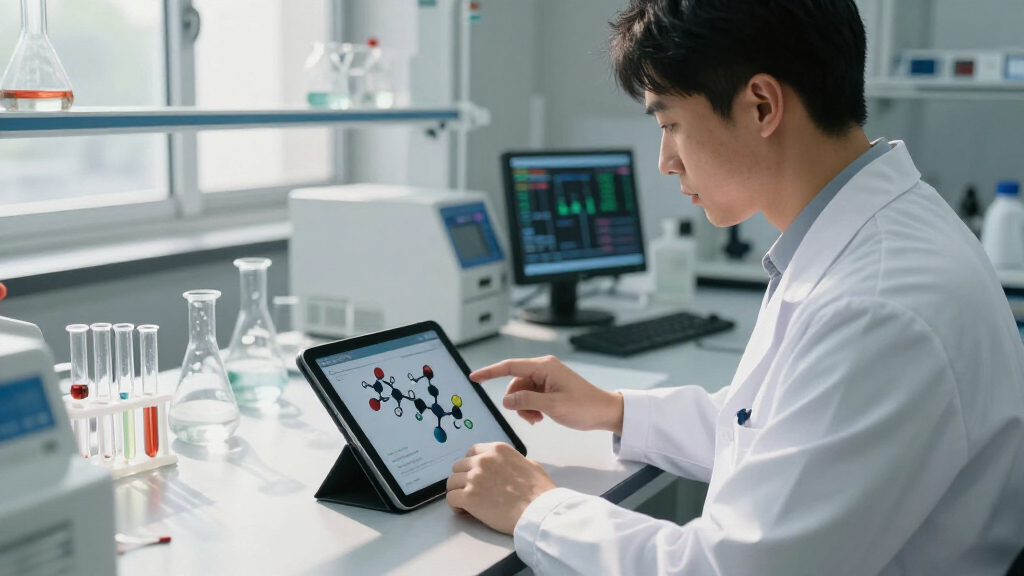
Recent developments confirm that artificial intelligence is now playing an integral role in drug discovery, with multiple companies reporting successful use of AI algorithms to identify potential drug candidates faster and more cost-effectively. This progress highlights AI’s growing influence on the pharmaceutical industry and underscores the importance of understanding its current capabilities and challenges.
Several biotech firms and pharmaceutical companies, including major players like Novartis and Pfizer, have announced pilot projects utilizing AI to streamline drug target identification and compound screening. For example, Insilico Medicine reported that its AI platform identified promising candidates for fibrosis treatment within months, a process traditionally taking years. Experts note that these advances demonstrate AI’s potential to reduce the time and cost associated with early-stage drug development. However, experts caution that many AI models remain in experimental phases, with validation and regulatory approval still pending. Industry leaders emphasize that integrating AI into existing pipelines requires careful validation to ensure safety and efficacy, and that current models often lack transparency, raising concerns about interpretability and trustworthiness.Why AI-Driven Drug Discovery Could Transform Healthcare
The integration of AI into drug discovery could significantly accelerate the development of new medicines, potentially saving lives by bringing treatments to market faster. It also offers the possibility of identifying novel drug targets that were previously overlooked, opening new avenues for treating complex diseases. For patients, this means earlier access to innovative therapies; for the industry, it could mean reduced costs and increased efficiency. Nonetheless, widespread adoption depends on overcoming validation, regulatory, and technical challenges.
Recent Advances and Industry Adoption of AI in Pharma
Over the past few years, AI has transitioned from experimental research to practical application in drug discovery. Companies like DeepMind, with its AlphaFold protein folding model, have demonstrated AI’s capacity to predict protein structures with high accuracy, a breakthrough that aids in target identification. Several startups have launched AI platforms aimed at virtual screening and compound optimization, attracting significant investment. Despite these advances, most AI tools are still at pilot or early deployment stages, with full regulatory approval and clinical validation yet to be achieved at scale.
Key Challenges and Uncertainties in AI-Driven Drug Discovery
It is not yet clear how quickly AI tools will achieve regulatory approval for widespread clinical use, or how effectively they will perform across diverse disease areas. Validation standards are still evolving, and there is ongoing debate about the transparency and interpretability of AI models. Additionally, questions remain about the scalability of AI solutions and their integration into existing pharmaceutical workflows, with many models still in experimental or pilot phases.
Next Steps for AI Integration and Industry Validation
Moving forward, the industry is expected to focus on rigorous validation studies, establishing regulatory frameworks, and increasing collaboration between AI developers and pharmaceutical companies. Large-scale clinical validation trials will be crucial to demonstrate AI’s reliability and safety. Additionally, ongoing research aims to improve model transparency and interpretability. As these efforts progress, AI’s role in drug discovery is likely to expand, potentially transforming the landscape of pharmaceutical development within the next few years.
Key Questions
How is AI currently used in drug discovery?
AI is used to identify potential drug targets, predict protein structures, virtual screening of compounds, and optimize drug candidates, aiming to speed up and reduce costs in early development stages.
What are the main challenges facing AI in drug discovery?
Key challenges include validation and regulatory approval, model transparency, interpretability, scalability, and integration into existing workflows.
When might AI become standard in pharmaceutical development?
Widespread adoption depends on successful validation, regulatory acceptance, and overcoming technical barriers, which could take several years.
Will AI replace traditional drug discovery methods?
AI is expected to complement rather than replace traditional methods, enhancing efficiency and discovery speed while requiring human oversight and validation.
Source: hn